
The 40-hour workweek is as American as apple pie, and it’s been around almost just as long. So, is it finally time to re-think our Monday-through-Friday lifestyle? Producer Jimmy Gutierrez looks into the history of work culture, where it’s being challenged, and makes the argument that we ALL should be working less, you know, to save the planet.

Here's a humdinger of a thought experiment: How fast could people go before the combustion engine and other technologies drastically increased the speed of the human race? And how did they pull it off? Skis? Sled-dogs? Catapults? From ancient horseriders and viking ships to primitive luges and "Russian Mountains", the Outside/In team researches all sorts of old-fashioned methods of locomotion and presents biggest the speed trial of the millenium.

Pirate trails are everywhere: the pioneers of mountain biking built them on private land, public land and everything in between. They were built by riders just looking for a place to take their new bikes, and in the process they simply appropriated land that they wanted for their trails.
But what happens when the evolution of a sport threatens the very thing that made it so attractive in the first place?

Everyone's heard of Vikings - their daring North Atlantic voyages, their mysterious runes. But there's another ancient culture in Arctic Scandinavia that's much older, and just as fascinating - the Sámi. While the Vikings have been celebrated, Sámi music, language and traditions were forced underground. Why?

There's only one place in the world that you can find the axolotl—the Mexican salamander—in the wild. This creature is the living embodiment of Xolotl, the Aztec god of heavenly fire, of lightning and the underworld, and the renegade twin brother of Quetzalcoatl. But the wild axolotl’s fate might be bound to the Aztecs by more than myth: its life in 21st century could rely on the last surviving fragments of a landscape both very old and very human.

Ask Sam: that special time when scientists worldwide cringe as Sam & the team speculate wildly on a diverse range of topics before picking up the phone to call in the real experts.
This time, we've got another hirsute mystery: Are insect and plant hairs also made from the magical (seeming) protein called keratin? Also, do bugs get cancer? And which came first: the chachalaca (not a typo) or the turkey? And finally, why do ocean mollusks have tougher shells than their freshwater comrades?

Listener feedback is a big part of working in radio and podcasting. We try to look for the lesson in every critical email, phone call, or tweet (even the cranky ones). However, there is one listener who has probably gotten in touch with producers at New Hampshire Public Radio more than any other - a vegan advocate named Laura Slitt.
![So Over Population [Parts I & II]](https://images.squarespace-cdn.com/content/v1/54f9c2cce4b025c50f0f64de/1539288071273-X5WUB0MT5RRIJ9GRRJD7/My+Post+%286%29.jpg)
Today, we’re talking about population. How it went from being on the front pages of our newspapers and all over late night television to being the issue that you’ll only hear from out of the mouth of a comic book super-villain.

This week, the results of our contest from last week. And a chance to revisit one of our favorite stories from two years ago.

While this show is often about serious stuff, it’s hard to be serious all the time. Often our ideas meetings turn into total chaos when one of us starts shouting our favorite facts about our favorite animals. So rather than fight this tendency, we’re leaning in.

News flash: men aren't the only people who enjoy the outdoors. No sh*#, right? But the outdoor gear industry has only recently started to realize that there are more people wanting high quality gear than traditionally fit white men. Today, with Nancy podcast co-host Kathy Tu, we're digging in to the fraught relationship between the gear industry and gender.

Last week we told you about boring wildfires. This week, what its like to be right in the middle of a decidedly *not* boring fire. And the fires that have been in the news are decidedly not boring.

Another year… another record-breaking wildfire season. Thanks to climate change the fire season now starts sooner and ends later. Scientists also say climate change will make lightning more frequent, and winds more powerful… basically the world is a tinderbox.
But what if I told you that maybe the problem with all these big, out of control fires was *not enough* fire.

Bengal cat is an attempt to preserve the image of a leopard in the body of a house cat… using a wild animal’s genes, while leaving out the wild animal personality. But is it possible to isolate the parts of a wild animal that you like, and forgo the parts that you don’t?
Can you have your leopard rosette, and your little cat too?

It took 200 years of dealing with with the invasive European green crab before American scientists finally decided to head back to the source. And when they did, they discovered that the invasive scourge of our estuaries is a straight up Italian delicacy.

On June 27th, 1981, a bodybuilder, a stockbroker, and 10 other men entered the woods of New Hampshire, determined to settle an argument. They called it The First Annual Survival Game, and the details are the stuff of the legend. The game marked the birth of a multi-billion dollar sports industry, but also sheds light on the squishy art of myth-making.

Mysteries are brewing in the sugar shack. Changes are coming to New England’s sugar bushes. And the very identity of a product that we’ve been crafting in basically the same way for centuries, could be on the verge of a radical shift. But a shift towards what?

Storm chasing is a pursuit we love to hate in the comment section, but if you look at the TV ratings, or YouTube views, it’s clear that we can’t look away, either. So what motivates chasers to actively put themselves in front of a storm when everyone is else is taking shelter? And, ultimately, do we owe them an apology?

Curiosity abounds in the listener ranks and the Ask Sam Hotline (1-844-GO-OTTER) has been ringing off the hook! Sam and the gang tackle your questions about decorative fountains, land fish and the difference between dog hair and dog fur. Oh, and think you love wood stoves? Think again. It's time for another Sam Ruined It!

If you ask John Forester, there’s a war being fought, between the forces that want to eject cyclists from the roads, and those that want to preserve their right to ride. According to him, it’s been underway for at least a century, and environmentalists and cycling advocates have all been co-opted by the car lobby.


Over the years, cities and towns have found ways to make recycling virtually effortless for us. Most places in the country have curbside pickup. You put the recycling out with the trash, it gets hauled away for free, and you get to feel good about it. It’s the right thing to do.
But the reality is, recycling doesn’t work because we believe in it. It works because it’s an industry. You might be keeping that plastic bottle out of your trash bin, but the commodities market keeps it out of the landfill. That plastic bottle is cash in someone’s pocket.
But what happens when the way we recycle no longer fits the rest of the equation? Where does our trash go when our partners aren’t buying?

When you watch the Olympics, you think you’re watching the best in the world competing at the pinnacle of their fitness.
And while that is often true when it comes to America’s very best, when you start to get farther down the list, choosing which athletes deserve a ticket to the Olympics gets much more difficult… much more subjective
And it’s often those margin calls, those athletes on the bubble, who have some of the most inspiring stories to tell.
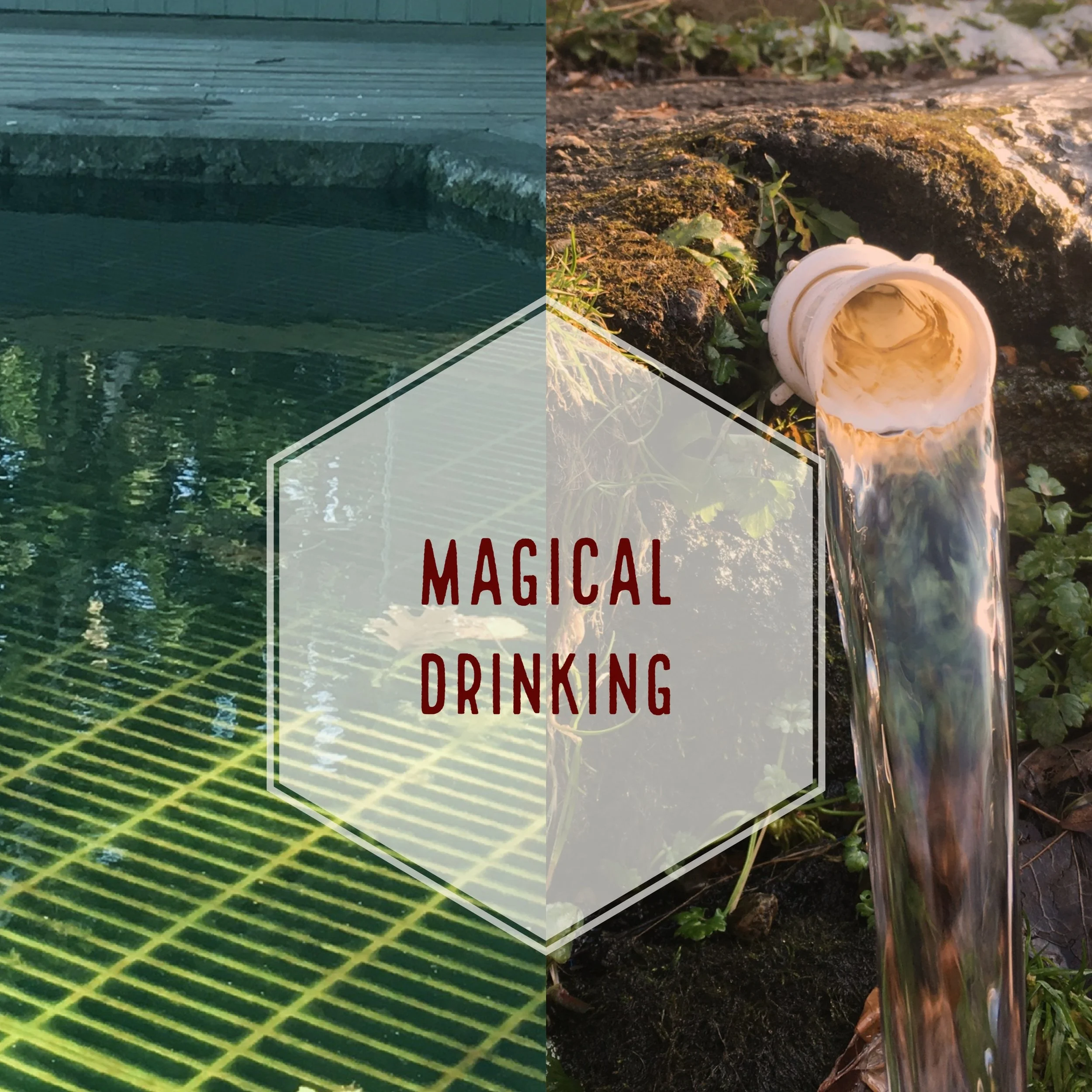
For thousands of years some natural spring waters have been associated with health. But recently something called the “raw water movement” has scientists and health officials reminding the public that drinking from untested springs can make you sick. Today, we try to sort it all out: are springs a healing tonic, a source for unadulterated H20, or a passing fad and a dangerous throwback?

This week we are revisiting some stories to see how things have changed since we first reported them. Updates abound! Archive them in your brain.

In 2010 a researcher found a clutch of hybrid American-European lobster eggs in a Norwegian fjord. This kicked off a decade of research in attempt to determine if Scandinavia was in the midst of a foreign lobster invasion. This question is hard to answer, especially when the fate of a business worth $150 million dollars a year hangs in the balance.


There’s a legend among renewable energy nerds. It’s the kind of thing that is whispered to the new guy at the water cooler, “You want to know where this business really got its start?” It’s the sort of thing that, as a reporter, you hear over and over again. We set out to find out if it's true.

This canine can be found all the way from Panama to Alaska, and shows no sign of going away anytime soon. But what are they? In this episode from Brave Little State, a podcast made next door in Vermont, we get some answers.
Outdoorsy types are the among the biggest ambassadors of Leave No Trace, a set of principles and best practices for sharing and conserving wilderness areas. But while most people agree on the broad strokes - DON'T SCREW UP NATURE! - sorting out the details can be an emotional and argumentative affair... especially when it comes to rocks.
Episode photo courtesy of Paul St. Cyr.