
With so many of our favorite outdoor activities currently off-limits, we’re look for accessible ways to explore the magic of the nature from the safety of our homes our neighborhoods. This is the first in a series of short episodes for families and individuals who want to discover how, even when we’re stuck inside, the natural world ties us together. This time: How to be a backyard birder.

"If you're looking for something that will educate you and not make you feel slimy afterwards, then Tiger King might not be the best option.”
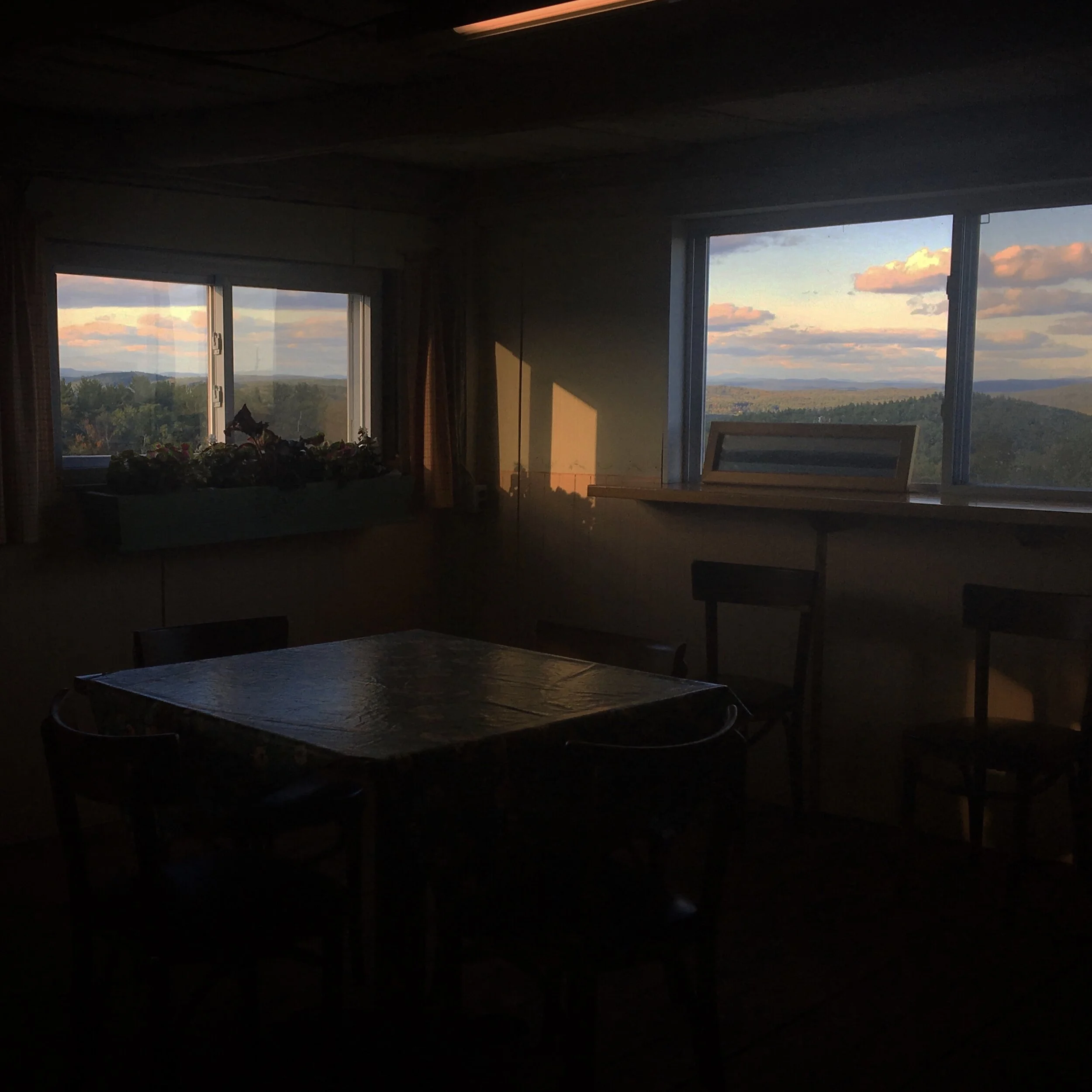

Few places hold more unexpected mysteries beneath the wet, mossy surfaces than the dark and muddy spots we explore for this episode. We call them by a multitude of names: mires, muskegs, moorlands, or bogs. But beneath the shrubs, sedges, rushes and moss of the bog we find something else - peat. It’s a journey that holds smokey hints of pepper, seaweed, and for peat’s sake, a lot of fossil fuels.

The passenger pigeon is one of the world’s most symbolic extinction stories. It’s a cautionary tale of how in just a few short generations, one of the wonders of the world could be completely eradicated.
But when that narrative was questioned in a popular book, 1491 by Charles Mann, what does the response tell us about the conservation movement as a whole?
![Nudge-Off Results! Plus, The Forest for the Treesap [Replay]](https://images.squarespace-cdn.com/content/v1/54f9c2cce4b025c50f0f64de/1582234097559-IN9E1XY88XO4YSKWUD0J/bucket3.jpg)
The winner of our “Battle of Tiny Proportions” is revealed! Plus, one of our favorite episodes about the pace of technology: The Forest for the Treesap.
Mysteries are brewing in the sugar shack. Changes are coming to New England’s sugar bushes. And the very identity of a product that we’ve been crafting in basically the same way for centuries could be on the verge of a radical shift. But a shift towards what?

In New England, the Waterman name is like mountain royalty. But beyond a tight circle of outdoors-people, they're not a household name. Today, we tell the story of one of the most influential voices in American wilderness philosophy, Laura Waterman, and how she has changed following the death of her husband.

A government bureaucrat builds a website that saves a billion gallons in gas. The minuscule Irish invention that enables the industrial revolution. An innovation for doctor’s gloves kicks off women’s liberation. An ill wind leads to America being stuck with the gallon forever.
On this episode, we present a series of small “nudges” (but not actual nudges) that have had profound impacts for the environment… or maybe not the environment, maybe just generally.

Depending on who you ask, astrology is a science, an art, a form of therapy… or, a pseudo-science, fortune-telling, a scam. But astrology is way more than a horoscope, and now, it’s all over your internet.

From the ancient charcoal animals of France's Chauvet Cave, to 17th century Dutch windmill paintings, art history can tell us a lot about our evolving view of the natural world. In this episode, producer Taylor Quimby (a self-described art-world neophyte) searches for individual works and genres through history that reveal something interesting about human society and the outdoors.

As extreme weather wreaks havoc around the globe NPR's Throughline looks at a natural disaster more than 200 hundred years ago that had far-reaching effects. This week, how the eruption of the Icelandic volcano Laki awed, terrified and disrupted millions around the world and changed the course of history.

Before Hurricane Maria hit in September of 2017, Puerto Rico's rickety electric grid was a notorious headache. After the storm, it was a crisis.
This is the story of how a pair of star-crossed lovers came to see nuclear as the unlikely solution to Puerto Rico's energy woes, and how their vision for the island might be changing the way we approach power... even if their plan never comes to pass.

People love fishing for trout. They love it so much that we are willing to go to insane lengths to catch them. But what should we make of the fact that much of that experience of fishing for trout is just a facsimile of what it once was… and may actually be BAD for the very same fish, that we so love to catch?

When most of us heard about the "insect apocalypse" we were worried. When producer Jimmy Gutierrez heard it, he thought "this is great."
Today he takes a journey in which he tries to learn to appreciate our many-legged companions.

It’s time for another edition of Ask Sam, that special segment where scientists cringe as Sam and the team speculate wildly on answers to questions from listeners before calling in the real experts. This time we tackle the sleep habits of mosquitoes, rhubarb replication, the smell of line-dried laundry, and the reinvention of the toilet.
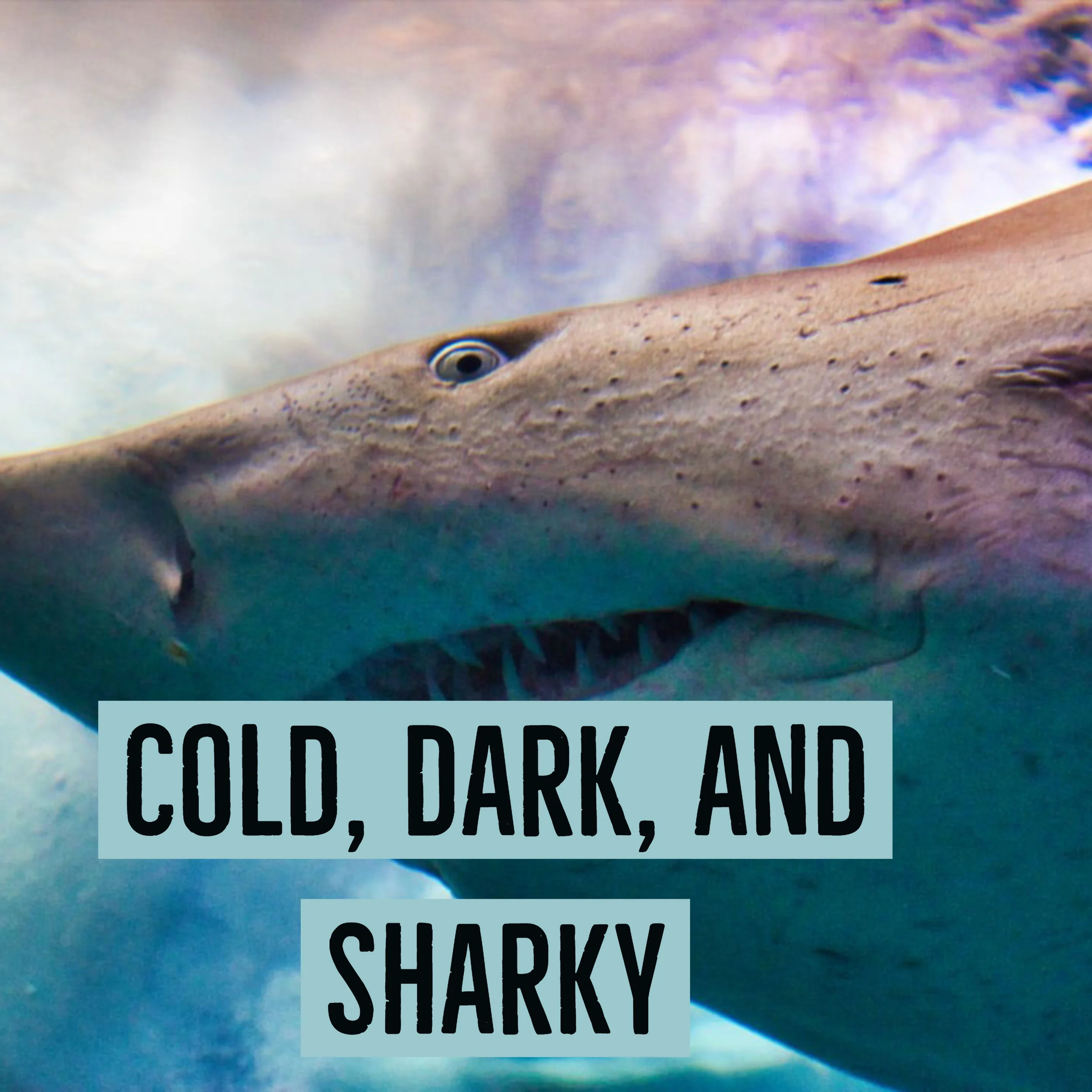
Last year, two people were attacked by sharks on Cape Cod, and one died. The result has been a media frenzy that really you have to see to believe.

Over the past several decades, Lyme Disease has steadily grown to become one of the most pronounced and most confusing epidemics in American history. Here in New Hampshire, infection rates are among the highest in the country. Patient Zero takes you inside “Lymeworld.”

With Disney's reboot of The Lion King hitting theaters, does the original still hold up all these years later? In this episode, the team revisits an epic tale of class, land rights, and destiny... and critiques the landscapes, animals, and themes that so many 90's kids grew up watching. And once again, Jimmy defends the reputation of hyenas.

Ever since the threat of climate change was first made public, scientists have offered the possibility of a get-out-of-jail-free card: geoengineering. While reducing emissions is hard and complicated, why not just engineer the Earth's atmosphere in the meantime?

Swimming is something that is more or less a part of human experience, depending on who you are, where you are, when you are alive in history. More than half of Americans can't perform all of the basic swimming skills.
On this episode, two stories that explore our relationship with the water, and why people do or don’t learn to swim.

Traveling to Antarctica to hang with penguins on the company dime likely seems like the dream assignment for a journalist... or anyone. Ron Naveen has been living that dream, counting penguins by hand for decades. And today you're going to hear about that work and what he’s seen as the climate changes from our friends at the PBS Newshour's podcast "The Last Continent."

This was a story that seemed like a perfect fit Outside/In, but wound up going places that we didn’t expect to go. When workers at the American embassy Cuba claimed to have been attacked by a mysterious weapon that left no trace, it led to a major shift in American diplomacy towards the Caribbean socialist state.

Sam and the team speculate wildly on human body temperature, the benefits of paper towels, cow poop, and how you weight a whale. Then we called the experts.
Textiles are all around us. We live in them, sleep on them, sit on them, walk on them, live in houses filled with them. It’s one of the biggest industries in the world. But it’s also one with a big problem and, at least for consumers in the United States, a largely invisible one - textile waste. Today, we’re tearing the very shirt off your back to explore the old is new approach to textiles that could eliminate millions of tons of garbage a year.

You hike, you fish, you camp… and you’re single. When you’re looking for love, what is the importance of being “outdoorsy”? And how do you communicate your identity — and expectations for potential matches — on an online dating profile?
The fish photo is just the beginning.

In Australia, conventional conservation wisdom has stated that in order to save the small indiginous mammals, it's necessary to kill invasive predators. But is it? Today on the show, we follow environmental writer Emma Marris as she explores the concept, and possible limits, of compassionate conservationism.

The Sununus are one of New Hampshire's grandest families. John H. Sununu was governor and White House Chief of Staff. One of his sons John E. Sununu was a U.S. congressman and senator, and another Chris Sununu is governor today. In their roles of political power, all of these men have faced a different landscape with regards to climate change, and what it means to be a Republican. Today, we track the party's evolution on the subject, through the frame of this one family.

For a long time, the elusive night parrot of the Australian outback was believed to be extinct. Then, an experienced birder with a reputation for dubious finds offered up foolproof evidence that the bird is still alive: photographs, feathers, and birdsong that he promises is the real deal. This week on the podcast, we're featuring our Australian podcast pal Ann Jones, host of ABC's Off-Track, as she heads out into the bush to try and capture sound from a bird few have ever heard.

In our series 10X10, we examine places that might not seem all that interesting... places like your typical frozen pond. Sure, on the surface it's a wind-swept desert of crunchy snow and frigid temperatures, but drill a few inches down though, and you'll discover a world turned upside-down. In this episode, we give the down low on bizarre properties of water, fish that thrive in a capped-off environment, and long beards of algae clinging to the underside of a secret ecosystem few have ever explored.
You know that scene in every disaster movie, where the frantic and panicky science nerd unsuccessfully tries to warn the powers that be that something terrible is about to happen?
In this episode, we explore a historic storm of cosmic proportions, which If it happened today, experts say could turn out to be a disaster the likes of which our modern world has never seen. So…how do you prepare for a disaster that always seems incredibly far away… until it’s not?