Vultures Inherit The Earth

The Bicknell's Thrush is a bird that can only live in a few very very restricted places. It spends its summers in dense alpine forests in the Northeast of the US. In the winter, perhaps as many as 90 percent of the birds fly to the Dominican Republic. It's a bird without many options, and that makes it a poster child for what's to come. 

Featuring Chris Martin, Dave Anderson, Sam’s friend Stu, Chris Rimmer, Katie Fallon, Kirsti Carr, Nate Launer, Yolanda León, and Roman Julliard.

“Our bird”—that’s what conservationists in New England call the Bicknell’s Thrush. Why do they love it so much? It’s not a particularly comely bird. It’s almost entirely indistinguishable from the much more common gray-cheeked thrush. It has a nice song, but it’s about as endearing as any other song bird you might notice in the woods. What gets the Bicknell’s thrush its the moniker is simply that you can’t find it anywhere else.

“They’ve pigeon-holed themselves into a pretty narrow ecological niche,” says Chris Rimmer, director of executive director of the Vermont Center for Ecostudies, a little research and conservation outfit that has taken up the challenge of trying to study and conserve the thrush.
 
That ecological niche is so small it’s almost comical. In the summer, the birds stick to “thick stands of stunted conifers on steep mountain slopes or near tree-line” according to the researcher that successfully argued the bird should be considered its own species, back in 1993. That means we’re talking about a handful of weather-beaten, high mountain peaks in the northeast of the U.S. and Southern Quebec. In the winter, the birds fly south, and nearly all of them head to the same place. Rimmer says that somewhere around 90 percent of Bicknell’s thrushes spend the winter in wet forests in the interior of the Dominican Republic.

In other words, the Bicknell’s thrush is a specialist: on both ends of its range, it lives only in a very narrow band of habitats. They don’t seem to know how to live anywhere else. “If these habitats disappear from our mountain tops,” explains Rimmer, “I don’t think the birds are going to just find a different place to go.”
 
Consider, now, another bird, one nobody seems to call “our bird,” though it has its aficionados: The turkey vulture.
 
“I think turkey vultures are just about a perfect creature,” says Katie Fallon, author of Vulture: The Private Life of an Unloved Bird. “They breed from south central Canada, throughout most of North America, Central America, and all of South America. They’re even on islands... Caribbean Islands... the Falkland Islands. They’re a bird that can be seen by almost everyone in the hemisphere.”
 
Turkey vultures aren’t picky. They will nest in dark crevices, abandoned buildings, the nests of other birds, mammal burrows, and even quiet spots on the forest floor, if nothing else is available. They are also shockingly efficient. When soaring, their heart-rate is nearly the same as when they are sleeping, which has even led some to suggest turkey vultures might actually take quick naps while flying. This is just one of the many delightful facts about these birds—my personal favorite is that their stomachs are acidic enough that it can neutralize cholera, botulism and anthrax.

When you add these various evolutionary talents up, you get an animal that is poised for success in virtually any habitat; basically, you have a generalist on your hands.
 
The world is made up of many species, and any one of them will loosely either fit the profile of a generalist or a specialist. That has always been true. What is newly true is that species are disappearing at an alarming rate, and many scientists believe we’re seeing the beginnings of something that will eventually be recognized as a mass extinction event.

“If these habitats disappear from our mountain tops, I don’t think the birds are going to just find a different place to go.”

And the problem is that these extinctions are not distributed equally. They’re coming for the specialists first.
 
“There’s really a striking common pattern that specialist species are declining everywhere,” explains Romaine Julliard, a researcher with the National Museum for Natural History in Paris, who co-authored a paper on the subject with the striking sub-title: toward a global functional homogenization? He say he found the decline “in coral fish, marsupials in Australia, and bumblebees in the UK, and some plants.”
 
But what’s intriguing about the trend is that the decline of specialists is “almost balanced by the increase in population size of generalist species.” Julliard has studied European birds in particular, and he found that while the abundance of specialist birds has declined 20 percent, numbers of generalists has increased by 20 to 25 percent.
 
We see this in our tale of two birds as well. The Bicknell’s thrush is losing habitat at both ends of its range. The high, coniferous forests are retreating upslope towards oblivion as climate change warms the Northeast, and illegal agriculture has eaten into the national parks that serve as the bird’s refuge in the Dominican Republic. There are estimated to be around 100,000 of the birds in total, and the species is on several lists of birds that the conservation community is concerned about.

a baby turkey vulture in its nest

a baby turkey vulture in its nest

The turkey vulture—in contrast with the Bicknell’s thrush—is thriving. Roadkill on our highways has created what amounts to a massive network of turkey vulture smorgasbords, crisscrossing the nation. Because the black asphalt absorbs and re-radiates heat during the day, these serpentine buffets also act as a ready source of thermal updrafts for the birds to surf along, spreading their ever-growing population to every nook and cranny of the hemisphere. Fallon says that 25 years ago the birds were estimated to number around 5 million, but today that number has risen to nearly 20 million worldwide.
 
This is the current trajectory we are on: The beautiful finely tuned specialists, hyper-efficient little motors built to extract calories from their own very, very specific habitats, are on the way out. As they vanish, the generalists—admittedly, marvels of flexibility and adaptation in their own right—are ascendant, rising to fill the space that’s left behind.

What’s behind this shift? According to Julliard, to date, it’s just regular old habitat loss. “Even though the climate change footprint on pressure on biodiversity is increasing and the evidence for that is increasing, it’s still likely lower than habitat degradation,” he says. In fact, a paper on extinction risk that was published in the most recent Proceedings of the National Academy of the Sciences came to the same conclusion: Large animals are most at risk from us eating them, small animals are at risk because we are destroying the places they live.

We already see the same starlings and house sparrows in almost any city anywhere in the world. Could we get to a future where the skies are full of nothing but turkey vultures, and the oceans are populated entirely by jellyfish?

sam evans-brown thrush-listening, with little luck

Is there anything wrong with this push toward functional homogenization? We already see the same starlings and house sparrows in almost any city anywhere in the world. Could we get to a future where the skies are full of nothing but turkey vultures, and the oceans are populated entirely by jellyfish? To me that feels like a nightmare scenario—something from Margaret Atwood’s Maddaddam trilogy, except minus the genetic engineering.
 
Julliard has a reminder for me: “Evolution is really a force that drives to specialization and to differentiation,” he says. Pointing out that just as soon as we stop doing all the things that make life hard on them, the specialists will start to thrive again, and given enough time, speciation of new specialists will start to pick up again.
 
This reassurance is thanks to one of the tenets of ecological niche theory: In a stable habitat, natural selection favors the specialist. Which means “you need really a very high pressure to maintain this homogenization,” he says.
 
The problem, of course, is that the time-scales involved are deeply out of whack with our human experience. The world can recover from a whole heck of a lot, but that can take millions of years, and the world we’ll inhabit in the meantime will be a deeply impoverished one in comparison. And more to the point, who knows if we’ll even be around to watch the birds that repopulate that sky, to call them our own.


Outside/In was produced this week by:

Outside/In was produced this week by Sam Evans-Brown with help from: Maureen McMurray, Taylor Quimby, Hannah McCarthy,  and Jimmy Gutierrez.

Music from this week’s episode came from Blue Dot Sessions, Poddington Bear, David Szesztay, Jason Leonard and Ikimashoo Aoi.

Our theme music is by Breakmaster Cylinder.

If you’ve got a question for our Ask Sam hotline, give us a call! We’re always looking for rabbit holes to dive down into. Leave us a voicemail at: 1-844-GO-OTTER (844-466-8837). Don’t forget to leave a number so we can call you back.


Download transcript

Audio Transcript: Vultures inherit the earth

Note: Episodes of Outside/In are made as pieces of audio, and some context and nuance may be lost on the page. Transcripts are generated using a combination of speech recognition software and human transcribers, and may contain errors.

Sam Evans-Brown: [00:00:04] Do you hear any birds now?

Sam Evans-Brown: [00:00:15] Recently I went on two expeditions looking for birds. The first was with a friend of mine, Stu, on the side of New Hampshire's biggest, most famous rock pile, Mount Washington.

Sam Evans-Brown: [00:00:27] It's almost like snipe hunting.

Stu: [00:00:28] Yeah.

Sam Evans-Brown: [00:00:29] We're [00:00:30] going snipe hunting.

Stu: [00:00:32] We're looking for Little Foot, cousin of Bigfoot.

Sam Evans-Brown: [00:00:36] Spot number two, a much smaller hill with two friends of the show, Dave Anderson and Chris Martin, hosts of NHPR's long running nature facts podcast, Something Wild.

Dave Anderson: [00:00:47] These birds live in a stone fortress of granite.

Chris Martin: [00:00:50] Or big hollow logs. That's another place they might know.

Dave Anderson: [00:00:53] Abandoned buildings.

Chris Martin: [00:00:54] Old abandoned buildings in the woods.

Dave Anderson: [00:00:56] And rocky den sites like this.

Sam Evans-Brown: [00:00:58] In the first case on [00:01:00] Mount Washington with Stu.

Stu: [00:01:01] This is great.

Sam Evans-Brown: [00:01:02] We're looking for the Bicknell's thrush.

Stu: [00:01:03] Love the sound of birds in the night.

Sam Evans-Brown: [00:01:05] Yeah. A small, unremarkable songbird. Brown on top, gray with little spots on the belly. In the summer, it's only found in high elevation forests in the northeastern US and southeastern Canada, and there's only about 100,000 of them total. In the second expedition on the little rocky hill with Dave and Chris. We're looking for one of the Western hemisphere's most ubiquitous birds, the turkey vulture.

Dave Anderson: [00:01:29] If they feel trapped, [00:01:30] they will regurgitate on you.

Chris Martin: [00:01:32] Cool.

Dave Anderson: [00:01:33] They hiss. They have a naked head.

Chris Martin: [00:01:35] Do they hiss first?

Dave Anderson: [00:01:36] We'll find out.

Chris Martin: [00:01:37] Okay.

Sam Evans-Brown: [00:01:38] That's why I brought my sunglasses.

Sam Evans-Brown: [00:01:40] Supposedly, Dave knows where one of these majestic scavengers is nesting up on Mount Washington with Stu, as you heard --

Stu: [00:01:48] No.

Sam Evans-Brown: [00:01:48] We struck out, but down lower with Chris and Dave looking for the turkey vulture.

Dave Anderson: [00:01:55] There he is. Whoa! So right now [00:02:00] my adrenaline is redlined. That just scared the crap out of me.

Sam Evans-Brown: [00:02:04] After scrambling up the rocky slope, we spooked a fully grown turkey vulture. Six feet of silent black wings, a wrinkly, bald pink head out of its nest, a she or he spent the next 15 minutes flying in high, lazy circles above us.

Chris Martin: [00:02:22] The other one is probably out gathering food right now. I wouldn't expect it to be in here guarding the young. If there are young, which [00:02:30] I should be.

Sam Evans-Brown: [00:02:31] Would they be eggs or chicks?

Chris Martin: [00:02:32] There could be eggs. But at this time of year, June, they're probably chicks. But it's hard to say until somebody takes a look.

Dave Anderson: [00:02:38] 1 or 2.

Chris Martin: [00:02:39] Can we go closer?

Dave Anderson: [00:02:41] Oh, we're going in.

Chris Martin: [00:02:41] I'm going closer.

Dave Anderson: [00:02:43] I'll follow.

Sam Evans-Brown: [00:02:44] The nest is not really a nest. It's just a crevice in a field of boulders. And actually, what Chris and Dave did was send in the guy with the microphone first.

Sam Evans-Brown: [00:02:56] The entrance was too small to stand or to crouch, so I had to sort [00:03:00] of slither in on my belly.

Sam Evans-Brown: [00:03:02] Oh my gosh.

Sam Evans-Brown: [00:03:03] By the way, we cleared this with Chris, who is a biologist with the Audubon Society.

Sam Evans-Brown: [00:03:07] So how Chris, how close can I get before I'm being problematic?

Sam Evans-Brown: [00:03:11] And right there, just a few feet from the entrance, two fluffy little turkey vulture chicks.

Sam Evans-Brown: [00:03:19] Oh my gosh, they're tiny.

Sam Evans-Brown: [00:03:28] So two [00:03:30] bird chasing excursions, one for the rare and difficult to spot Bicknell's thrush, which ended in failure. The second, poking around in craggy corners for turkey vultures: a success. These two birds, the turkey vultures that we found, and the Bicknell's thrush that we didn't, they're representative of a trend that's underway right under your nose.

Katie Fallon: [00:03:55] Oh, I think turkey vultures are just about a perfect creature. They are a bird [00:04:00] that can be seen by almost everyone in the hemisphere.

Chris Rimmer: [00:04:04] The Bicknell's pigeonhole themselves into a pretty narrow ecological niche. And if these habitats disappear from our mountaintops, I don't think the birds are going to just find a different place to go.

Sam Evans-Brown: [00:04:28] This is Outside/In, a show [00:04:30] about the natural world and how we use it. I'm Sam Evans-Brown. Today, it's the tale of two birds, one the turkey vulture, almost universally reviled, but they're also pretty amazing in their own way. The other, the Bicknell's thrush, is a local celebrity, the target of research dollars and enthusiastic birdwatchers. But it's in a tight spot, literally and figuratively. And the story of these two birds actually tells us the story about our world [00:05:00] as a whole. It tells us where we're headed toward a world of songbirds and high alpine gardens, or toward a world in which turkey vultures inherit the Earth.

Sam Evans-Brown: [00:05:25] Okay. Right here at the top, I want to introduce you to an idea. You know how natural selection works. [00:05:30] Random mutations make individuals that are slightly different, slightly more able to succeed. All that. Now, one thing this does is the longer a species hangs out in a specific place, the better and better it gets at living in that place. They become really incredibly good at finding food and surviving much better than species that range more widely and live in many different places. This is called specialization, and as long as habitats are not [00:06:00] changing very much, it's the logical conclusion of natural selection. So now that you know that natural selection drives toward specialization, let's take a look at the Bicknell's thrush, starting with the guy who discovered it.

Chris Rimmer: [00:06:17] On June 15th, 1881. Believe it or not, I know the exact date.

Sam Evans-Brown: [00:06:22] That's wildlife biologist Chris Rimmer. He's basically the world's expert on these birds.

Chris Rimmer: [00:06:27] An amateur ornithologist named Eugene [00:06:30] P. Bicknell was hiking around on Slide Mountain in the Catskills of New York.

Sam Evans-Brown: [00:06:37] Hiking around and sees a bird that he doesn't recognize. It's a thrush that he doesn't recognize, and that was unusual for him.

Chris Rimmer: [00:06:44] So, as ornithologists did in those days, he pulled out his shotgun.

Sam Evans-Brown: [00:06:49] And he collected the bird. Just in case you didn't know this Audubon, like James Audubon that the bird society was named for, also [00:07:00] shot a ton of birds. Bicknell shot two of them and picked them up.

Chris Rimmer: [00:07:05] Examined them in his hand, still didn't recognize him, and thereupon sent them down to the Smithsonian, where they were identified as a new subspecies, or race of the gray cheeked thrush, which is a much more northern and widely distributed bird.

Sam Evans-Brown: [00:07:22] Case closed. Right? Well, fast forward 100 years. In [00:07:30] the 1990s, along comes this Canadian biologist.

Chris Rimmer: [00:07:33] A taxonomist zoogeographer named Henri Ouelett. He worked for the National Museum of Canada in Ottawa.

Sam Evans-Brown: [00:07:39] Something about the Bicknell's gray cheeked thrush thing didn't quite sit right with him, so he gets to work.

Chris Rimmer: [00:07:46] So he examined specimens in museums, finds.

Sam Evans-Brown: [00:07:50] Very slight differences in the feathers and body sizes. He then listens to them singing.

Chris Rimmer: [00:07:56] The songs of the two species, which are slightly different.

Sam Evans-Brown: [00:07:59] And if you played the song [00:08:00] of the one species. So that the other could hear it, they just didn't react. Which is weird.

Chris Rimmer: [00:08:11] Because if you play the song of a, let's say, a song sparrow or a robin to another robin, usually they're going to react because they think there's an intruder on their territory. They got to drive it out, right?

Sam Evans-Brown: [00:08:22] And then comes the most important bit of evidence.

Chris Rimmer: [00:08:25] The final nail in the coffin.

Sam Evans-Brown: [00:08:27] He tested their DNA and found that they were different enough [00:08:30] that probably the two species stopped breeding together around a million years ago. So he writes all this up in a paper, brings it to the authorities.

Chris Rimmer: [00:08:39] The sort of god squad of ornithological taxonomy, the American Ornithologists Union Checklist Committee, and they accepted it. And so in 1995 the switch was made. Bicknell's went from being a subspecies of gray cheek to being [00:09:00] its own distinct species.

Sam Evans-Brown: [00:09:06] Let me just be clear about what this is. This is a small population of birds that a million years ago, started living further south than its former compatriots because they've now become separated. The two populations stop breeding with each other. But this happened relatively recently in evolutionary terms, so there haven't been enough random mutations [00:09:30] to make them actually look different.

Chris Rimmer: [00:09:32] You can't tell them apart. People say they can. I don't believe it.

Sam Evans-Brown: [00:09:35] But science tells us they're different enough to be a new species, though. A new species that is almost indistinguishable from the old one. And there is nothing that birders love more than a new species.

Nate Launer: [00:09:46] So we're doing a 20 minute surveys at each point.

Sam Evans-Brown: [00:09:50] This means people care enough about them to design a study to keep track of them, called Mountain Birdwatch.

Nate Launer: [00:09:57] And I can still hear that Winter Wren. He's really far away.

Sam Evans-Brown: [00:09:59] And [00:10:00] that's why we're on the side of Mount Washington at the beginning of the story. Every year, a bunch of volunteers and a few college students paid by Chris Rimmer's organization, the Vermont Center for Ecostudies, go up and very carefully, very scientifically count birds. That first one you heard was Nate Launer. And here's another Kirsti Carr.

Kirsti Carr: [00:10:20] What I think is so cool is that it's endemic to the northeast and...

Sam Evans-Brown: [00:10:26] It's like, it's our bird.

Kirsti Carr: [00:10:28] It's our bird, and it's, you [00:10:30] know, it's globally rare and it travels all the way down to the Caribbean area, you know, to like the island of Hispaniola, I guess, is a place where it overwinters the most.

Sam Evans-Brown: [00:10:48] So, you see, in the summer when they're breeding, Bicknell's thrush only lives in high altitude forests in the northeast of the US and the southeast of Canada. And then in the winter, they fly south. And some [00:11:00] crazy number, maybe as much as 90% of them spend the winter on Hispaniola. Mostly in the Dominican Republic. Just think how crazy that is. There are lots of big islands down there Cuba, Puerto Rico, Jamaica. But the thrushes are picky and the vast majority of them go to this one 30,000 square mile island. This bird is a specialist. It can survive in just one kind of habitat. [00:11:30] There are lots of specialists out there. Koalas, for example, can only eat eucalyptus leaves. Piping plovers can only nest on sparsely vegetated beaches. The monarch butterfly caterpillar can only feed on milkweed leaves. The Bicknell's thrush is like those more famous specialists. The Cornell Lab of Ornithology says it has one of the most restricted breeding and wintering ranges of any North American bird. If anything goes wrong in the places it lives, it's got [00:12:00] nowhere else to go. Now, in contrast, allow me to reintroduce you to:

Katie Fallon: [00:12:14] Turkey vultures are just amazing in that they can eat disease and neutralize it.

Sam Evans-Brown: [00:12:21] The turkey vulture.

Katie Fallon: [00:12:25] Turkey vultures can eat things like an animal that has died from anthrax. [00:12:30] They can also eat an animal that's died of botulism toxin or cholera. The turkey vulture can eat it, and it doesn't affect the turkey vulture in any negative way.

Sam Evans-Brown: [00:12:41] Our turkey vulture enthusiasts, by the by, is Katie Fallon, who wrote Vulture: The Private Life of an Unloved Bird.

Katie Fallon: [00:12:48] I actually went, had a few other possible subtitles for the book. One was Vulture: Eat Your Heart Out and another one was Vulture: Happy Entrails to you.

Sam Evans-Brown: [00:12:59] Oh man. [00:13:00]

Sam Evans-Brown: [00:13:01] The crux of Katie's book is that turkey vultures deserve some cred here for cleaning up after us.

Katie Fallon: [00:13:07] We unfortunately aren't as fond of these birds as I think we should be because of the great service they provide.

Sam Evans-Brown: [00:13:13] Most of what makes turkey vultures so amazing is how incredibly well adapted to eating dead things they are. But since that's gross, I'm going to intersperse gross but cool turkey vulture facts with some straight up cool turkey vulture facts here. So [00:13:30] turkey vulture stomach acid is roughly ten times more acidic than human stomach acid, which means by the time it gets to the other end, their waste is both clean and very acidic. So as a strategy, they deposit it all over their legs.

Katie Fallon: [00:13:47] That helps cool them off if it's hot. But we also think that that liquid waste acts as a sanitizer and it kills bacteria that might be on their feet from standing on a carcass. So it's sort of like they carry [00:14:00] their hand sanitizer with them, right?

Sam Evans-Brown: [00:14:03] Gross. But cool. Straight up cool. You know how you see them soaring all the time, lazily tipping their wings back and forth in the hot air?

Katie Fallon: [00:14:14] Yeah, they can soar for a long period of time. They've done some studies where they've put implants in Turkey vultures to monitor their heart rate and their respiration rates, and they found that when a turkey vulture is soaring, it's it's [00:14:30] a heart rate is about the same as when it's asleep.

Sam Evans-Brown: [00:14:35] That's amazing!.

Katie Fallon: [00:14:36] Pretty amazing!

Sam Evans-Brown: [00:14:37] Yeah! My heart rate goes up if if I'm sitting in a chair versus lying in a bed.

Sam Evans-Brown: [00:14:41] Okay, okay, okay. Just a couple more. Gross/Cool: Turkey vulture heads are bald so they won't get rotting meat chunks stuck to feathers when they're jamming them into carcasses. Regular old cool: Even though most birds can't really smell at all. Turkey vultures noses are so good that in one case study, a bunch of farmers were shooting and burying ground hogs, only [00:15:00] to find them dug up and eaten the next day.

Katie Fallon: [00:15:02] They have documented them being able to smell something like a dead rat underneath leaves in a forest, and they've also documented turkey vultures actually digging up carcasses that have been intentionally buried.

Sam Evans-Brown: [00:15:15] And all of these various evolutionary talents add up to an extremely successful bird.

Katie Fallon: [00:15:22] They breed from south-central Canada throughout most of North America, Central America, and all [00:15:30] of South America. They're even on islands. Caribbean islands. The Falkland Islands has turkey vultures. They are a bird that can be seen by almost everyone in the hemisphere. Oh, I think turkey vultures are just about a perfect creature.

Sam Evans-Brown: [00:15:54] So, they're like an amazing generalist.

Katie Fallon: [00:15:56] Yes they are, they are an amazing generalist. Exactly.

Sam Evans-Brown: [00:16:02] A [00:16:00] generalist. They're thriving everywhere. They can nest in a rocky talus slope or in an abandoned warehouse. They don't need a very specific set of ecological conditions in order to survive. They take what they've got and they work with it. There are lots of these cockroaches, rats, ravens, raccoons and jellyfish. Quite often, generalists do a good job living alongside humans. [00:16:30] I mean, if you think about it, we're really the most obvious example of a generalist. So we've got one very rare bird that needs a very specific habitat to survive, and another that can live almost everywhere. Now, you've probably heard this part of the story already. Species are disappearing. Many scientists believe we're in the midst of something that will eventually be recognized [00:17:00] as a mass extinction event. And those extinctions, they're coming for the specialists first.

Roman Julliard: [00:17:07] Yeah. So I'm Roman Julliard. I'm working at the National Museum for Natural History in Paris.

Sam Evans-Brown: [00:17:14] This is Roman Julliard, who came up with a way to mathematically define what a specialist species is.

Roman Julliard: [00:17:20] Since the beginning of our survey, which is now 25 years old, that's on average special species population size [00:17:30] have decreased by 20%.

Sam Evans-Brown: [00:17:32] But this is the story you've heard already. The other half of the story is that specialists are being replaced by generalists.

Roman Julliard: [00:17:41] And it's almost balanced by the increase in population size of generalist species.

Sam Evans-Brown: [00:17:47] Almost balanced. So while specialists are declining, generalist species are growing. Now, Roman studies birds. And we have been talking about birds. But this is not just a bird [00:18:00] thing.

Roman Julliard: [00:18:00] There's really a striking common pattern that specialist species are declining in everywhere.

Sam Evans-Brown: [00:18:06] So all around the world.

Roman Julliard: [00:18:08] And it was true in coral fish, marsupials in Australia...

Sam Evans-Brown: [00:18:15] The Bicknell's thrushes and species like them...

Roman Julliard: [00:18:17] And bumblebees in, in the UK and...

Sam Evans-Brown: [00:18:20] ...are struggling.

Roman Julliard: [00:18:21] Yeah and some plants also.

Sam Evans-Brown: [00:18:23] And the turkey vultures, the generalists, are doing better. They're actually getting more numerous. [00:18:30] Just one particularly terrifying example. A few years ago, the first study ever to try to estimate global jellyfish populations came out, and it found that in 60% of the world's oceans, jellies are on the rise. The headlines that followed jellyfish are taking over the oceans. We're headed toward a jellyfish world. What's [00:19:00] the deal? Well, it's really not a surprise.

Roman Julliard: [00:19:04] Well, it's most likely a habitat degradation. I mean, it's the most parsimonious explanation.

Sam Evans-Brown: [00:19:13] The most parsimonious explanation. If you only know how to live in one place, and that place is changing because of logging or invasive plants or increased forest fires, or not enough forest fires or whatever the problem is locally, you're in a tough spot. And that's the story with our bird, too. [00:19:30]

Yolanda León: [00:19:30] No matter how much it's done in North America, if in the wintering range and there there are no, no changes, it's it's it's a bottleneck.

Sam Evans-Brown: [00:19:42] This is Yolanda León, executive director of Grupo Jaragua, a conservation organization down in the Dominican Republic. While we snooty New Englanders think of the Bicknell's thrush as our bird, it spends half the year in the Caribbean, too. Nearly all of the population spends the winter [00:20:00] on a single island, and a lot of them are in a single place right now.

Yolanda León: [00:20:05] Most of the habitat for many of these mountain birds and other species is in Sierra de Bahoruco.

Sam Evans-Brown: [00:20:13] The Sierra de Bahoruco is a mountain range on the border with Haiti. It's also a national park, the biggest in the Dominican Republic.

Yolanda León: [00:20:20] And you would think because it's a national park, it's it's protected and the birds are safe there. However, [00:20:30] what we found out was that there was a lot of agriculture going on inside the park. This is all illegal agriculture.

Sam Evans-Brown: [00:20:39] This is what's called a paper park. The government declared it off limits, but its borders aren't marked or enforced. So over time, people have started to cut down trees and grow crops. In particular, wealthy farmers have started to grow avocados.

Yolanda León: [00:20:54] And these are export avocados.

Sam Evans-Brown: [00:20:56] So this is like this is like Chipotle, you know, [00:21:00] all the, all the guacamole that we love.

Yolanda León: [00:21:03] Yes, yes. And you know I love avocados, ad people say, it's like: you're opposed to avocado! I love avocado, but avocados don't have to be produced in a national park.

Sam Evans-Brown: [00:21:14] A quick aside: apparently most of the Dominican Republic's avocados go to Europe, not to Chipotle. And let me just put a big old disclaimer here. National parks in developing economies is a complicated, fraught topic. Some subsistence farmers actually work in this park and [00:21:30] had it declared right on top of them. And others are folks who genuinely didn't know the park was here because, you know, it's just on paper.

Yolanda León: [00:21:37] Like, with the avocado and the farming, there are big players and small players, and I think chasing after the small players, the poorest people is not the best solution. And it's not it's not very fair.

Sam Evans-Brown: [00:21:50] But after all caveats about the problems with how Western-style conservation is executed in the developing world, it's pretty easy to recognize that this isn't a good situation [00:22:00] for our bird.

Yolanda León: [00:22:01] On the north side of Bahoruco, we do have a good area that seems to be off limits because of of road access, and I think that area is pretty safe. But on the south side of Bahoruco, if nothing is done in the next 2 to 5 years and we, we are not going to have any more of the the birds or any of its fauna.

Sam Evans-Brown: [00:22:33] Habitat [00:22:30] degradation a specialist's worst nightmare. And it's happening up on the north end of their range, too.

Chris Rimmer: [00:22:40] Yeah, it's absolutely it's one of the most vulnerable habitat types in the northeast.

Sam Evans-Brown: [00:22:46] Here's Chris Rimmer again. Remember, in the summer, Bicknell's thrush live in a specific type of forest up on the sides and tops of mountains.

Chris Rimmer: [00:22:56] These forests are predicted to begin getting [00:23:00] pushed up slope by warming temperatures. And if these habitats disappear from our mountain tops, I don't think the birds are going to just find a different place to go. They've pigeonholed themselves into a pretty narrow ecological niche.

Sam Evans-Brown: [00:23:13] Meanwhile, turkey vultures, they're thriving.

Katie Fallon: [00:23:16] 25 years ago, we thought there were about 5 million turkey vultures.

Sam Evans-Brown: [00:23:21] Since then, we've made more roads which mean more roadkill and also more hot air updrafts to surf along. There's also less shooting [00:23:30] and poisoning of vultures going on, and warmer winters probably are better for them, too. Less frozen meat. So today -

Katie Fallon: [00:23:38] And the most recent estimates that I've read are, you know, we might have as many as 20 million turkey vultures worldwide.

Sam Evans-Brown: [00:23:51] This is the trajectory we're on. The beautiful, finely tuned specialists. Hyper efficient little motors built to extract [00:24:00] calories from their own very, very specific habitats are on their way out. And as they vanish, the perhaps equally beautiful in their own way, generalists are rising to fill the space that's left behind. You can already see the same starlings and house sparrows and pigeons, and almost any city anywhere in the world. In my mind, there's this nightmare scenario where the skies [00:24:30] are full of nothing but turkey vultures. The forests and the cities are full of skunks and raccoons, and the oceans are populated entirely by jellyfish. It's the stuff of dystopian novels. It's the jellyfish world.

Roman Julliard: [00:24:54] So I don't think we'll I mean, we really need to work hard [00:25:00] to have the nightmare scenario.

Sam Evans-Brown: [00:25:03] Ah. A reminder from Roman Julliard. Remember where specialization comes from. In stable environments, specialists actually do better than generalists.

Roman Julliard: [00:25:13] You need really a very high pressure to maintain these homogenization.

Sam Evans-Brown: [00:25:17] Specialists are just better than generalists at getting food in their very special niche.

Roman Julliard: [00:25:22] If you relax a bit, evolution is really a force that drives to specialization in a differentiation. [00:25:30]

Sam Evans-Brown: [00:25:30] So if we stop doing all the things that we're doing that make life hard on them and the habitats stabilize, the specialists will start to thrive again. And given enough time, we'll even get new specialist species. The problem today is environments are changing faster than evolution can change the animals. Really, if you set your frame of reference long enough, thousands of years, even millions of years, there's very little that the earth can't [00:26:00] recover from.

Roman Julliard: [00:26:01] So I think we I mean, we should still be optimistic, and, uh...

Sam Evans-Brown: [00:26:05] So, so are you. Are you optimistic then?

Roman Julliard: [00:26:11] There's no objective reason to be optimistic because the the pattern is still the decrease wherever you look at. But it's still reversible. That's the, the point.

Sam Evans-Brown: [00:26:24] That was a very scientific answer.

Roman Julliard: [00:26:25] Yeah.

Sam Evans-Brown: [00:26:39] No [00:26:30] objective reason to be optimistic, but maybe we should try anyway. Pretty much my motto going through life. Outside/I [00:27:00]n was produced this week by me, Sam Evans-Brown, with help from Hannah McCarthy, Taylor Quimby, Jimmy Gutierrez, Ben Henry, and Maureen McMurray. Music from this week's episode came to us from oaddington Bear, Blue Dot Sessions, David Zest, Jason Leonard, and Ikimasoo Aoi. If you've got a second, head online to check out our website [00:27:30] outsideinradio.org. We've got photos of the tiny turkey vulture chicks and the crevice that I had to crawl into in order to see them. We'll be posting them on social media too @Outsideinradio. Our theme music is by Breakmaster Cylinder. Outside/In is a production of New Hampshire Public Radio.
In Too Deep

This week, we're bringing you an adventure from our friends at the Outside Podcast. Trapped in a shipwreck on the ocean floor, running out of oxygen, body temperature falling, how long could you survive? Intrepid producers Robbie Carver and Peter Frick-Wright take a deep dive on this one.

In 1991, a man named Michael Proudfoot was SCUBA diving off the coast of Baja, Mexico. The details of his story are everywhere. And, more or less, the same. Exploring a shipwreck, Proudfoot breaks his regulator and surfaces in an air pocket deep in the belly of the ship. He finds a tea-kettle full of fresh water, and eats sea urchins to survive. But as producers of the Outside Podcast— Robbie Carver and Peter Frick-Wright — dig deeper and deeper into the tale, it becomes harder and harder to tell what's real and what isn't.

This is a story about deep-sea fact checking. Fact checking to the point of no return. What happens when you can't prove a story -- a really great, big fish of a story -- right or wrong?


Outside/In was produced this week by:

Outside/In was produced this week by Sam Evans-Brown with help from: Taylor Quimby, Hannah McCarthy,  and Jimmy Gutierrez.

Special thanks to Robbie Carver and Peter Frick-Wright for sharing their reporting and story from the Outside Podcast. You can hear more here.

Our theme music is by Breakmaster Cylinder.

If you’ve got a question for our Ask Sam hotline, give us a call! We’re always looking for rabbit holes to dive down into. Leave us a voicemail at: 1-844-GO-OTTER (844-466-8837). Don’t forget to leave a number so we can call you back.

Pick Your Poison

In our long, evolutionary history, modernity is just a blip. The wiring of our brains took place over hundreds of thousands of years of hunting and gathering food out in the wilderness, and nothing proves that more vividly than the practice of mushroom hunting. It’s incredibly addictive, even to those who know all too well the associated dangers.

Photo © 2012 J. Ronald Lee

Photo © 2012 J. Ronald Lee

***DISCLAIMER*** Don't pick and eat wild mushrooms based on photos you find in this post, or really anywhere on the internet. Please consult professionals. ***DISCLAIMER***

|This story comes to us from Barbara Paulsen, the host and producer of Midway: A Podcast about Midlife Transitions.

To tell that story, we’ll start with a woman named Donna Camille Davis. On a November day a few years back, Donna and her boyfriend got in their car and drove north for a weekend getaway from their home in San Francisco.

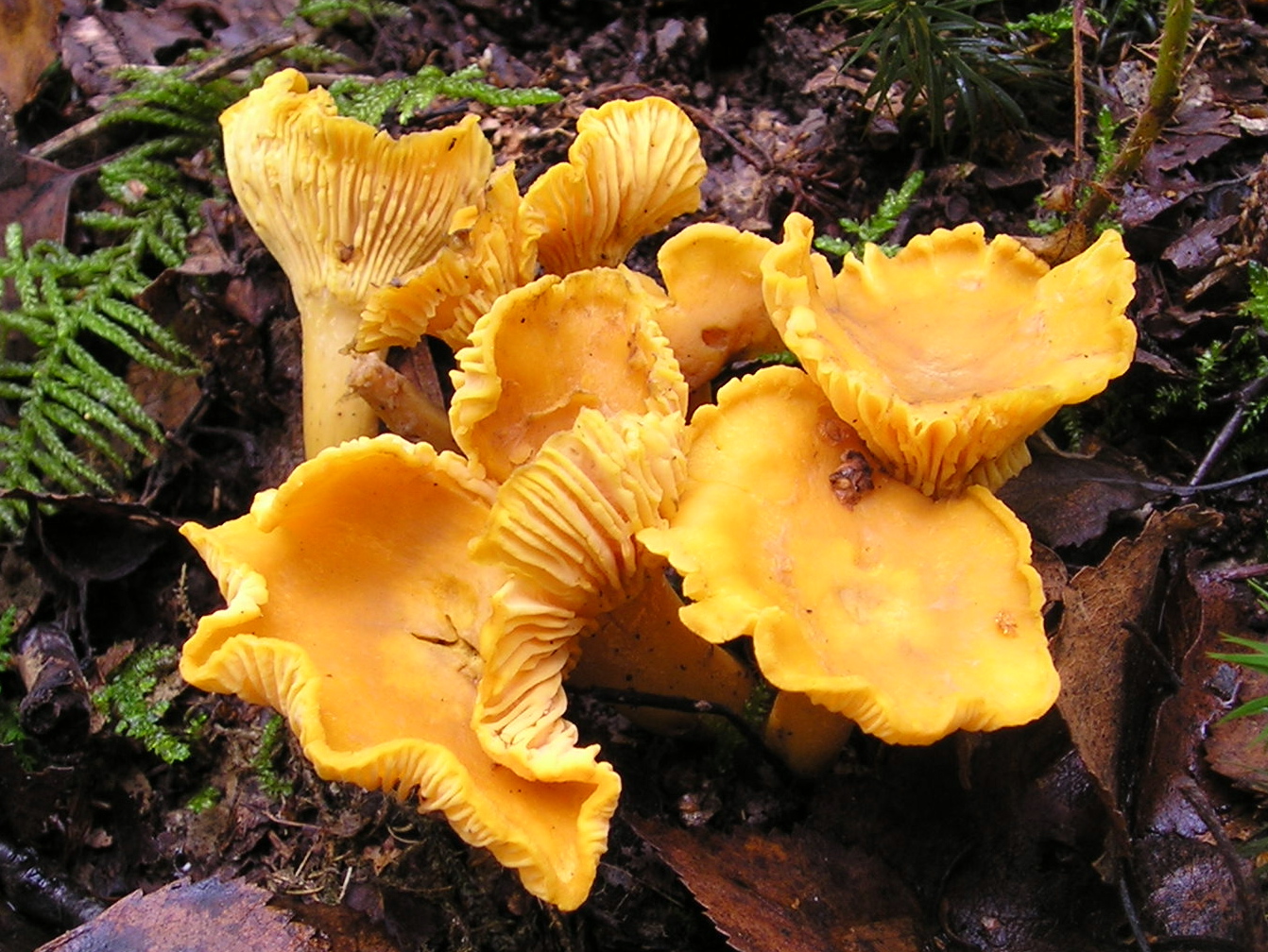
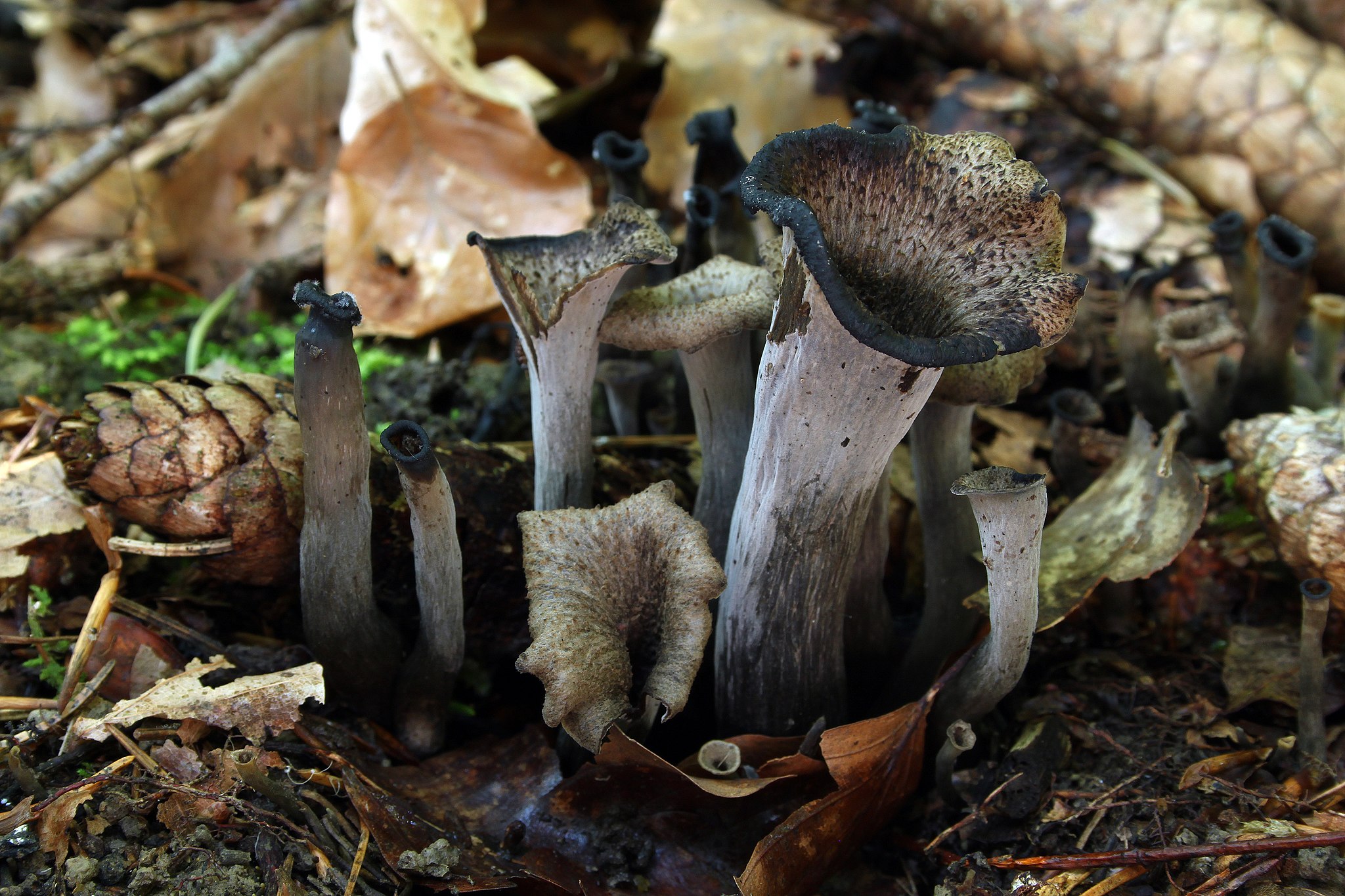
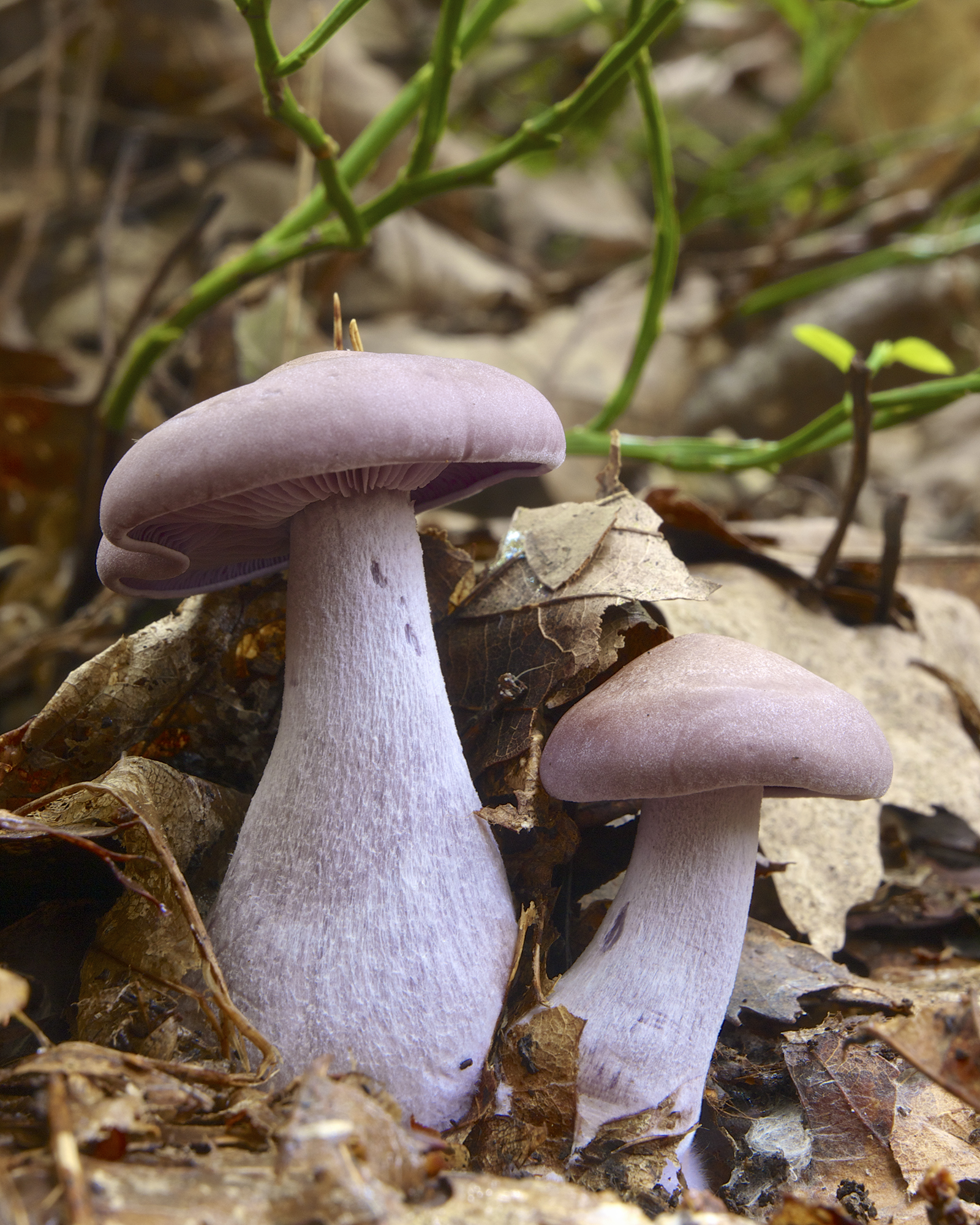
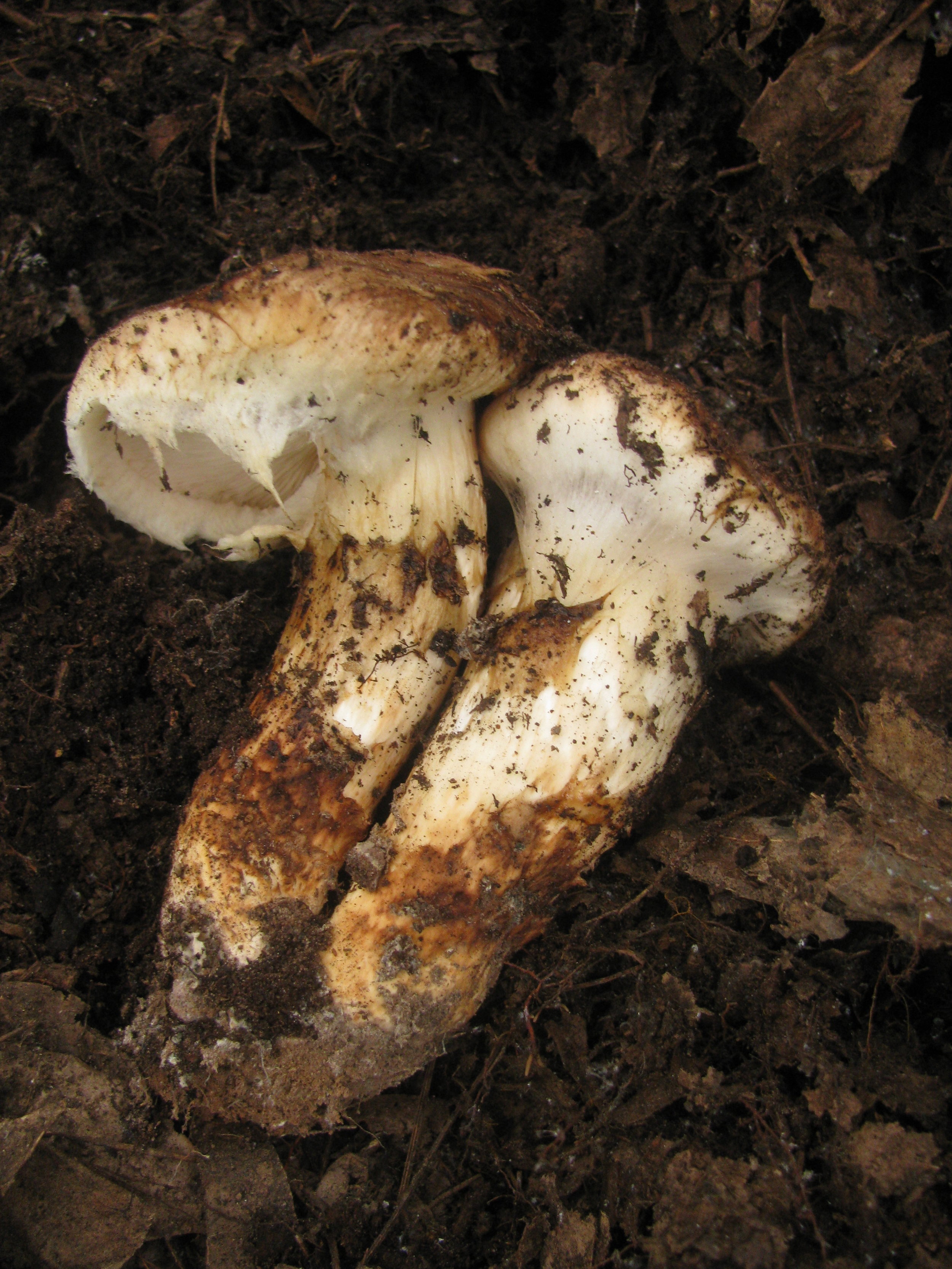
“We were finding the most amazing mushrooms,” she says, “I think we counted seven different types of edible mushroom, from hedgehogs, to chanterelles, to black trumpets, to blewits, and matsutakes.”

The difference between those mushrooms and the ones you find in your grocery stores (besides not tasting like styrofoam) is that wild mushrooms can’t be cultivated. So if you want to eat wild mushrooms—and lots of people do because they’ve got way more interesting mushroomy flavors—you have to go into the forest and find them yourself.

And when it came to foraging, Donna knew what she was doing. She’d been mushroom hunting for years. She’d found porcinis the size of her head. She had no trouble telling a black trumpet from a chanterelle.

They took one look at me and wheeled me right upstairs immediately, because they knew that this was not good.
— Donna Camille Davis

But, as it turned out, on that particular day in November, Donna made a mistake. Within days, she was living every mushroom hunter’s worst nightmare.

On the way home from her trip up north, the first symptom appeared: drop dead fatigue. She slept for three whole days. When she got up, she looked at herself in the mirror and saw that her skin was jaundiced, and she rushed to the hospital.

“They took one look at me and wheeled me right upstairs immediately,” she says, “because they knew that this was not good.”

When the doctors told her, “We think this is mushroom poisoning,” all she could think was this is going to be interesting... this is going to be interesting.

Scratching a Primal Itch

Salt Point Park in Sonoma Valley California is an oak and pine forest perched on the Pacific Coast. It’s a mecca for mushroom hunters—and one of the few parks that permit foraging in California. | Photo by Barbara Paulsen

To understand why mushroom hunters would take the risk of getting poisoned, you’ve got to go hunt mushrooms. So last Spring, I went to the very place where Donna Davis got herself into trouble: Salt Point State Park in California’s Sonoma Valley. I drove there with a self-taught mushroom expert, Patrick Hamilton. He’s got a ponytail and a soul patch and he became fascinated with mushrooms back in the 80s, after smoking some really strong Maui Wowie. These days, he teaches groups of beginners how to identify edible mushrooms.   

There was a steady drizzle as about a dozen of us gathered in the parking lot. First, Patrick sent us off to pick any mushrooms we could find, declaring, “If you see something fun, bring it!” After 15 minutes we met up to share what we’d picked, and Patrick had us lay all the mushrooms out  on a log. Most of them, he told us, were inedible, and one was a particularly poisonous specimen called a Deadly Galerina.

He proceeded to tell us how to identify the three or four mushrooms we wanted to find that day: black trumpets, hedgehogs, candy caps, and chanterelles. And then he sent us off again. Only this time, we knew what we were looking for.

But it was really hard!  I came across a British couple who also couldn’t find anything. We told Patrickour plight, but he wasn’t having it. He knew that our eyes just hadn’t adjusted yet—we were looking, but our eyes didn’t know what to see. He told us to get on our hands and knees  (“For Chrissakes!”) and look underneath things.

Take a peek into the bag of a novice mushroom hunter who’s delighted to have found chanterelles, black trumpets, and other edible mushrooms. | Photo: Barbara Paulsen

Fungi hunting is a muddy business. Mushrooms pop up a week and a half after a rainstorm and thrive in moist environments, like the sides of streams. | Photo: Barbara Paulsen

It’s extremely important to keep the entire mushroom intact for correct identification, as Donna Davis learned when a bit of poisonous mushroom contaminated an entire bag of edible mushrooms. | Photo: Barbara Paulsen

After I found this yellowfoot chanterelle, I finally got my “mushroom eyes.” Yellowfoots are a chef’s favorite for their delicate, mushroomy flavor. | Photo: Barbara Paulsen

And then something weird happened. He pointed to some black trumpets right there, hidden under leaves, and once Id seen them, they began to snap into focus everywhere I looked. It was like one of those Magic Eye books from the ‘90s, the ones with the meaningless pattern that hides a 3-D image. You stare and stare and stare, and then all of a sudden…Pop! There’s the picture.

I was drenched by the rain. My pants were smeared with mud. But I was crazed with the hunt. And right then is when Patrick said it was time for us to head back.

As it turns out there’s a term for what happened to me in the woods of California: Scientists call it the “pop-out effect.” Mushroom hunters call this “getting your eyes on.” I used to work for National Geographic, and for years I sent reporters all over the world to hang out with hunter-gatherer tribes. When they got back, their feet would be cut up and they’d be covered with insect bites, but they’d all tell me the same thing: Even though it’s really hard living off the land, there’s something deeply satisfying about finding your own food.

Veteran mushroom hunter Patrick Hamilton sorts the mushrooms our group has collected on a log in the forest. He’s taught thousands of people in the San Francisco Bay area how to safely identify edible mushrooms. | Photo: Barbara Paulsen

And that makes sense, right? I mean, our eyes are built to do this, to scour the ground for food. And every time we find something tasty, our brains give us this little chemical jolt. That’s what foragers call mushroom fever.

Invasion of the Death Cap

And that’s exactly what happened on that day in November 2014, when Donna and her boyfriend went mushroom hunting. They stuffed bags full of mushrooms, and they brought them back home to sort through.

“We didn't see anything unusual,” she says, “There were some pieces there that didn't have the caps so we tossed them out just to be safe.”

The next day, Donna invited friends over for wild mushroom soup. It was so delicious that she had a second bowl—and you know the rest.

Three days later, Donna was in the hospital, where they told her about an earlier patient who’d gotten poisoned and died. Before she was told it was the mushrooms that were making her sick, the thought of having picked the wrong mushroom never crossed her mind.

The reason Donna didn’t realize she’d been poisoned is that it took so long for her symptoms to appear. That delay was actually a clue, since it suggested that Donna had probably eaten a mushroom called Amanita phalloides, or the “death cap.” Other mushrooms can poison you—make you so sick you might wish you were dead—but it’s the death cap that’s most likely to kill you. Its toxins work slowly, and by the time you begin to feel really sick, it’s got a head start on digesting your liver from the inside out.

“There are people that accidentally poison themselves with death caps just about every year,” says Cat Adams, who studies mycology at the University of California at Berkeley. She says the death cap is responsible for 90 percent of fatal mushroom poisonings worldwide.

Despite its deadly reputation, Cat is enchanted by it. “I think it’s a really beautiful mushroom. It starts as a cute little button,” and grows up to be an elegant, mostly white mushroom that has  gills underneath and a greenish tinge to its cap.

It’s so common, it smells good, it tastes good, apparently. I’ve read a lot of reports of people who’ve been poisoned and unanimously people report that it was a very delicious mushroom, even as they’re dying.
— Cat Adams

But (and this perhaps is no terrible surprise) it’s actually not even supposed to be in North America. The death cap arrived here around 1930, when American botanists imported certain oak trees from Europe and the native soil around the trees’ roots were laced with death cap spores.

The deadly mushroom has been spreading across North America ever since. It’s been spotted in forests from Maryland, north into New Hampshire and Maine, and on the West Coast from Los Angeles all the way up to British Columbia. It’s especially plentiful in northern California, where Donna got herself into trouble. When you combine this with so many amateurs now cooking up wild mushrooms in their risotto, the number of poisonings is going up.

“It’s so common, it smells good, it tastes good, apparently,” says Cat Adams, “I’ve read a lot of reports of people who’ve been poisoned and unanimously people report that it was a very delicious mushroom, even as they’re dying.”

Last winter 14 people were poisoned in northern California in the month of December alone. Four were trying to get high on magic mushrooms, but most of the victims were just cooking up mushrooms for dinner. One meal poisoned five people, including an 18-month-old girl who now has permanent brain damage. In every case, a death cap was somehow mistaken for an edible  mushroom.

Adams says the death cap can grow intermixed with other edibles mushrooms, so if you’re not paying really close attention one may wind up in your basket. And since only a few milligrams of its toxins can be fatal, minor mistakes can become deadly.

Heart of a mushroom | Stanley Zimny by CC BY-NC 2.0 via flickr

Heart of a mushroom | Stanley Zimny by CC BY-NC 2.0 via flickr

Donna’s Path

“The whole episode of being in the hospital is like an Alice in Wonderland story in and of itself,” Donna says. Once doctors realized she had likely been poisoned by a death cap, they asked her more questions. Terrifying questions.

Do you have a will? …You need one, now.

Do you understand what it's like to have a liver transplant?  

Donna was in bad shape. She was throwing up the charcoal doctors had given her to extract the poison. Enzyme levels showed her liver was failing. “I was just in this kind of like dazed world of not really knowing what was going on,” she says.

And then she started to hallucinate. On the wall of her room in the intensive care unit, she saw a path.

“I could look down and the ground is like pebbles, clear, clear pebbles, and a canopy of trees and I could see the leaves and the veins and the bark,” she remembers, “and I'm beginning to walk down this path because it's like, ‘Wow, this is such a beautiful path!’”

But then, in her vision, things began to change. “As I walk down the path it was completely pitch black, and I thought … I'm not going there.”

Donna decided something remarkable, something that might have seemed—in that moment—nonsensical. Even though doctors were telling her to write a will, and that her liver was failing, Donna began to think otherwise. She didn’t believe she was going to die. Because of how badly she was doing, her doctor told her she was at the top of the liver transplant list, which has more than 14,000 people waiting on it. But when a liver became available, she turned it down.

She remembers the doctor looking at her and saying, “You don't want the liver?” and she replied, “If I don’t need it, I don’t want it.” She says they must have thought she was insane, or high (maybe a side effect of the mushrooms?).

But Donna was right. Her enzyme levels stayed dangerously high for several days, but on her fifth day in ICU, her levels came way down, and her liver started to regenerate. She says it was—inexplicably, unbelievably—a full recovery.

By Quinn Dombrowski from Berkeley, USA - Hedgehog mushroom, CC BY-SA 2.0,

By Quinn Dombrowski from Berkeley, USA - Hedgehog mushroom, CC BY-SA 2.0,

Backlash from the Mycophiliacs

This past summer, citing the rise of mushroom poisonings, the CDC issued a warning. They called the spread of death cap mushrooms a serious public health concern and issued a caution against eating foraged mushrooms.

Patrick Hamilton, the guy who took me mushroom hunting, wasn’t impressed.  

“Mushrooms have a notoriety, right? It’s like “Ow! Wow! Wild mushroom poisoning!” he told me, over the phone, “I think people fall off ladders a lot more, right? It’s a much greater public health concern!”

That’s true, but of course a lot more people climb ladders every day than go foraging for mushrooms. Regardless, Patrick is right that there are very few mushroom-related deaths, only 10 or so annually. And If you’re a mushroom hunter, this all fits into a maddening pattern: Even though very few wild mushrooms are poisonous, most Americans are afraid of them, because they don’t know which ones are safe to eat. That’s called mycophobia. But then when they do learn about mushroom foraging and try it out, a few get themselves poisoned. That triggers sensational press, warnings from the CDC, both of which feed Americans’ fear of mushrooms. A classic vicious circle.

So when people get poisoned by mushrooms, there’s often this backlash against the victims by the mushroom hunting community. Patrick says whenever he hears about these poisonings, he just thinks it’s “people doing stupid things.”

“Really why would you put something in your mouth and eat it when you don’t know what it is?” he asks.

He must have used the word stupid a half dozen times when I asked him about this.

Really why would you put something in your mouth and eat it when you don’t know what it is?
— Patrick Hamilton

“How many red lights do you have to go through?” he sputtered, “Stupid, stupid, stupid, stupider, stupidest!”

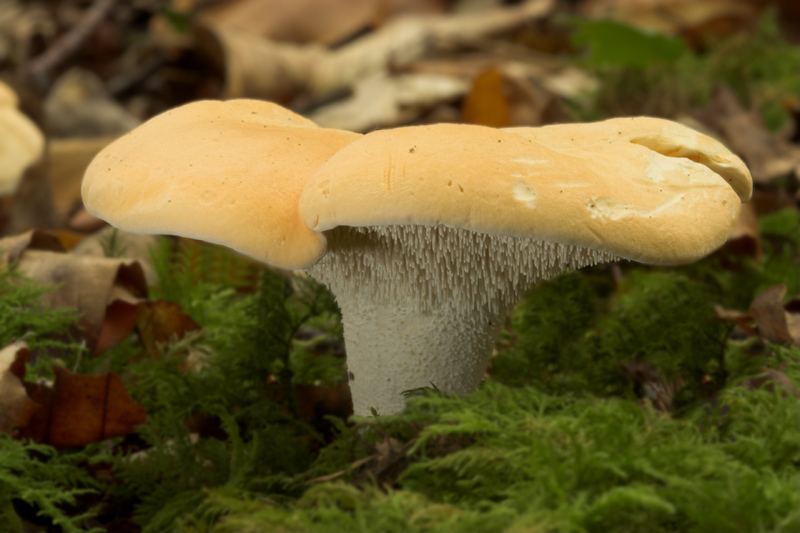
Given the mushroom hunting community’s sensitivity to this issue, it’s no surprise that when Donna Davis’ poisoning became public, they weren’t exactly sympathetic. They seized on a detail from a news report that said Donna had confused a hedgehog mushroom, which has pretty distinctive toothy spikes under its head, with a death cap mushroom, which has gills underneath.

The backlash to Donna’s story on the internet was just as dismissive. Mushroom hunters were like, this lady doesn’t know her ass from her elbow. She hasn’t bothered to learn to identify the number one deadly mushroom! If you know what you’re doing, you could never make that mistake.

Patrick cites this old adage: “There are old mushroom hunters and there are bold mushroom hunters, but there are no old, bold mushroom hunters.” In other words, experienced mushroom hunters don’t accidentally eat deadly mushrooms.

But Cat Adams disagrees. “I’ve read like every paper there is about the death cap,” and she says even super-experienced mushroom hunters can make mistakes. She says she’s read cases of people who have been hunting mushroom for decades and —who accidentally poisoned themselves by eating  death caps.

“I really...I think sometimes a lot of people that do mushroom hunting are scornful toward those who get poisoned as a way to sort of make themselves feel better, but I think that really this could happen to anyone,” says Cat, “I think that really we should see them as examples of the fact that what we do is inherently a little dangerous and that we have to stay vigilant, always.”

But She Can’t Put Down the Basket

True mushroom hunters collect their bounty in baskets, to prevent the fungi from getting squashed. Plastic bags are a no-no: By day’s end, mushrooms turn to mush. | Photo: Barbara Paulsen

I asked Donna where she thinks she went wrong that day she got poisoned, and she told me it’s hard to say. Her best guess is that she accidentally slipped a death cap into her bag of hedgehog mushrooms, and that must have been one of the capless stems she’d discarded when she and her boyfriend sorted through the mushrooms after the hunt.

While it’s remarkable that Donna survived, it’s maybe more remarkable that she was the only one at the dinner party who got sick. She thinks this is because she actually made two batches of soup, one with chanterelles, the other with only hedgehogs. “Lo and behold, I was the [only] one who ate the soup that had the poisonous mushroom,” she says. “Thank God, they didn’t eat the poisonous soup.”

In retrospect, Donna says her real mistake was that she got overconfident, and that made her careless. Given the minute amount of toxin needed to kill you, the safest thing would have been to throw out all of the mushrooms from the contaminated hedgehog batch…no matter how delicious they were.

But Donna doesn’t beat herself up over her mistake. She never thought, how could I be so stupid? “It was,” she says, “just something that happened.” Since her recovery, she’s slowed things down in her life. But she still forages for mushrooms.

“You know you make your decisions. How you want to live your life. Do you want to live your life in fear?” She says, “Yes there are things that I did learn from that. Absolutely. But is it going to stop me from ever eating mushrooms again? No. I don't choose to live my life that way.”


Outside/In was produced this week by:

Barbara Paulsen with help from Sam Evans-Brown, Taylor Quimby, Molly Donahue, Jimmy Gutierrez, Ben Henry, Hannah McCarthy, and Logan Shannon.

***DISCLAIMER*** Don't pick and eat wild mushrooms based on photos you find in this post, or really anywhere on the internet. Please consult professionals. ***DISCLAIMER***

Music from this week’s episode came from Podington Bear, Blue Dot Sessions, and Antony Raijekov.

Our theme music is by Breakmaster Cylinder.

If you’ve got a question for our Ask Sam hotline, give us a call! We’re always looking for rabbit holes to dive down into. Leave us a voicemail at: 1-844-GO-OTTER (844-466-8837). Don’t forget to leave a number so we can call you back.