
A climate activist and a gas executive walk into a bar
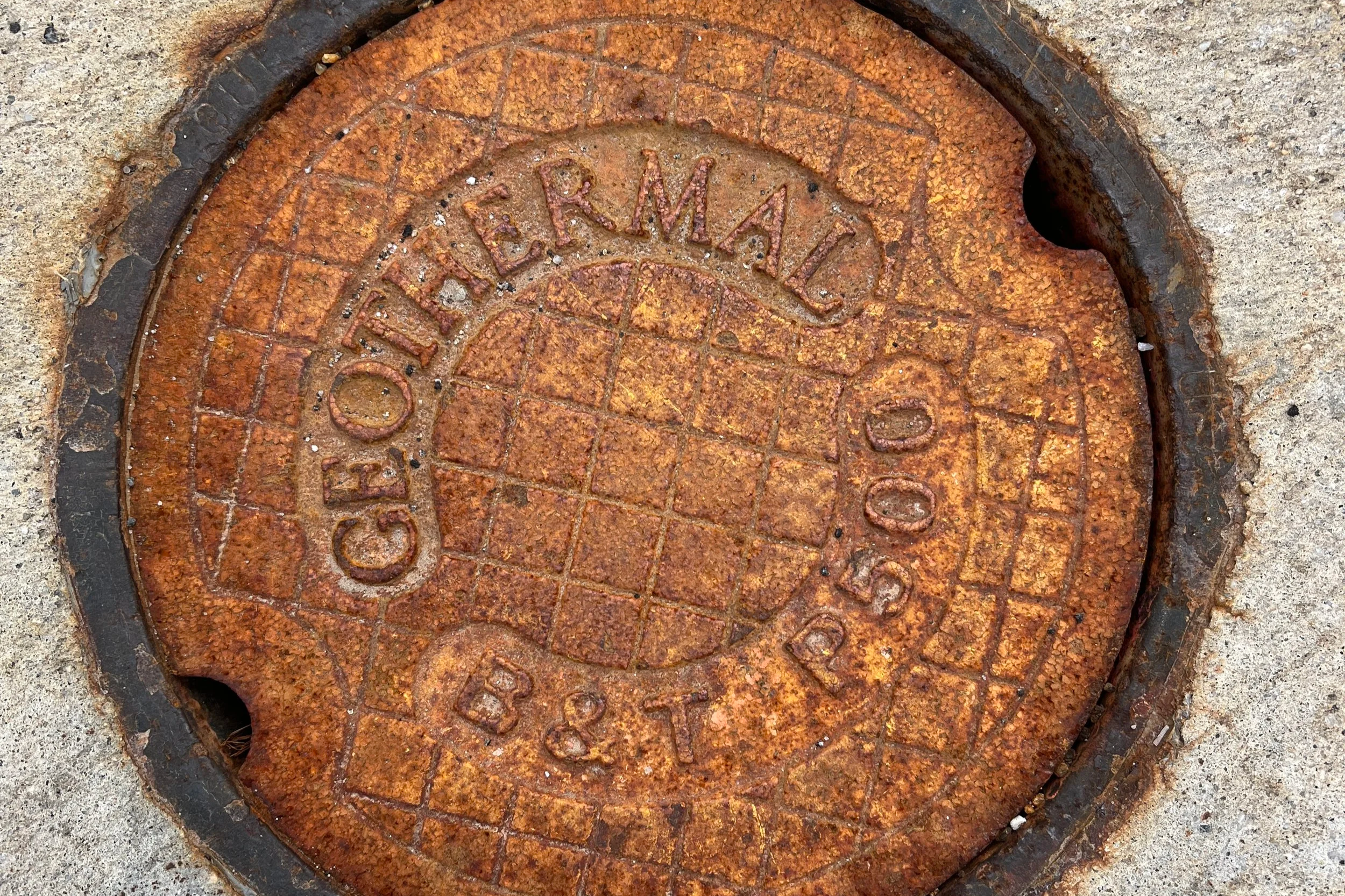
Photo by Felix Poon
Zeyneb Magavi is a bona fide climate nerd; she drives an electric car, has solar panels on her roof, and worries about natural gas leaks because they’re a major source of planet-warming emissions.
Bill Akley is a lifelong natural gas guy; he grew up smelling heating oil in his kitchen, spent decades in the energy industry, and eventually became head of New England’s largest gas utility.
So what brought this improbable duo together? The answer is under your feet. In this episode, how a geothermal pilot project in Massachusetts is bringing together unlikely alliances that might be key to our clean energy future.
Featuring Zeyneb Magavi, Bill Akley, and Kevin Kircher.
(April 1, 2026: A previous version of this web story misspelled the last name of Bill Akley as Bill Ackley.)


ADDITIONAL MATERIALS
Learn more about the networked geothermal pilot in Framingham, MA, and how it works.
Learn more about the “gas-to-geo transition” that HEET advocates for.
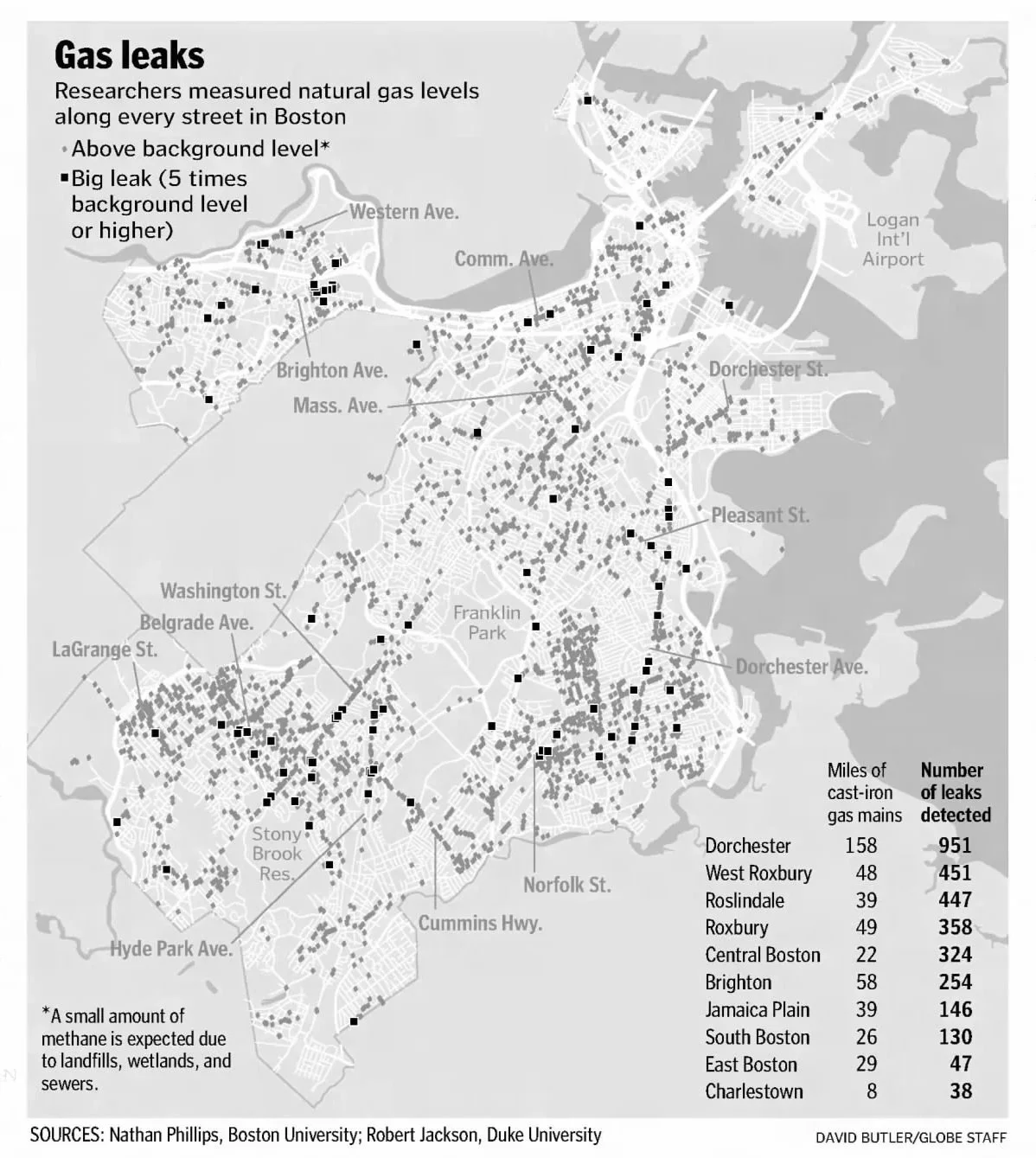
A map from the November 20, 2012 issue of the Boston Globe. The paper featured the findings of a Boston University research project that mapped more than 3,300 gas leaks in the city of Boston.
SUPPORT
To share your questions and feedback with Outside/In, call the show’s hotline and leave us a voicemail. The number is 1-844-GO-OTTER. No question is too serious or too silly.
Outside/In is made possible with listener support. Click here to become a sustaining member of Outside/In.
Follow Outside/In on Instagram or join our private discussion group on Facebook.
CREDITS
Host: Nate Hegyi
Reported, produced, and mixed by Felix Poon
Editing by Taylor Quimby.
Our staff includes Justine Paradis, Marina Henke, and Jessica Hunt.
Executive producer: Taylor Quimby
Rebecca Lavoie is NHPR’s Director of On-Demand Audio
Special thanks to Jamie Beard, Mike Barnard, and Dan Stein who spoke to us about enhanced geothermal systems which we didn’t include in this episode.
Music by Walt Adams, Arthur Benson, and Blue Dot Sessions.
Outside/In is a production of New Hampshire Public Radio.
Audio Transcript
Note: Episodes of Outside/In are made as pieces of audio, and some context and nuance may be lost on the page. Transcripts are generated using a combination of speech recognition software and human transcribers, and may contain errors.
Nate Hegyi: In 2007, Zeyneb Magavi and her husband bought a fixer upper, in Cambridge, MA
Zeyneb Magavi: Um, it was clearly a home that was loved. Uh, but it had a very ancient furnace that even had a little door to put your garbage in and burn it.
Nate Hegyi: Our Producer Felix Poon talked to her about it.
Felix Poon: Did you use it?
Zeyneb Magavi: No. [laughter] No, no.
[MUX IN: The Cornice, Blue Dot Sessions]
Nate Hegyi: Zeyneb had two kids. And she knew there was a link between natural gas and kids getting asthma.
Zeyneb Magavi: I didn't want to burn anything inside the house. So no combustion inside the building envelope because it creates particulate matters and it's bad for your health.
Nate Hegyi: So she looked into her best options to replace the old gas furnace, and she wanted it to be climate friendly.
So what she landed on…was geo – thermal.
Zeyneb Magavi: and it seemed really obvious that geothermal heating and cooling was basically blowing everything else out of the water.
[MUX UNDER AND OUT]
Nate Hegyi: Now, when you hear “geothermal”, you might be thinking about places like Iceland.
They have the kind of industrial plants that tap into super hot water and steam underground that’s been heated up by hot rocks and magma.
But those plants NEED to be in volcanic regions to work. And they need to have these massive “bore holes” that go a mile or two below the surface.
But there’s another kind of geothermal that doesn’t need volcanoes, or very, very deep bore holes.
This type of geothermal relies on the fact that, just about 10 to 20 feet underground, the temperature stays at a constant 50-60 degrees. That’s year-round, and in most places around the world.
Tap into that? And you’ve got geothermal powered heating and cooling for your home.
For Zeyneb, it was a no-brainer. So she reached out to a contractor, and —
Zeyneb Magavi: it kind of broke our budget.
Nate Hegyi: Turns out, geothermal energy is cheap. But installation… whole ‘nother story.
Zeyneb Magavi: So it's kind of like buying your fuel for the next 50 years. On day one
Nate Hegyi: Zeyneb is persistent though. So she asked the contractor, like, “is there aaaaany way this could be cheaper…?”
Zeyneb Magavi: and he said, well, you know what? I can I can give you a discount, if you can, if you can get some of your neighbors to also get a geothermal borehole, because a lot of the cost from me is bringing the rig out and setting it up.
I said, oh, that's interesting. So that's how I met some of my neighbors as I knocked on their door and I was like, hi, I'm your new neighbor. And and and also, can we talk about geothermal energy?
And, and, uh, none of my neighbors said yes, which isn't particularly surprising.
Felix Poon: What were their reasons?
Zeyneb Magavi: a couple of them said, oh well, that sounds really interesting when I, when my furnace dies, right. Like uh, and, and others were just totally uninterested, didn't care at all about their heating system or even know what it was.
Nate Hegyi: Now, for most people, that would have been the end of the story.
[MUX IN: Awake Until Noon, Walt Adams]
But, fast forward to today, about two decades later, and Zeyneb has finally made her dream a reality…She spearheaded a first-in-the-country geothermal project… not for her own home, but for a whole neighborhood.
So how'd she do it? By pairing with a very unlikely ally.
Bill Akley: My name is Bill Akley, I am president, the evil president, of the gas business.
<<NUTGRAPH>>
Nate Hegyi: I’m Nate Hegyi, and this is Outside/In, a show where curiosity and the natural world collide.
Today, how a climate activist and a gas executive put their differences aside to find a win-win proposition.
Bill Akley: it was just science, right, for a little money, you can make a big impact.
Nate Hegyi: But is that actually a good idea? Can utilities invested in the status quo really be trusted to drive change?
Kevin Kircher: if there are competing goals between making as much money as possible for shareholders and reducing emissions from heating buildings. I think we know, like what direction the gas utilities are going to go in.
Nate Hegyi: Producer Felix Poon has the story.
<<FIRST HALF>>
Felix Poon: This is Outside/In, a show where curiosity and the natural world collide, I’m Felix Poon.
So there are two main characters in this story, and I want to start with the one you’ve already met: Zeyneb Magavi.
Zeyneb Magavi: I have a bad history of gravitating towards the largest problems I can find. [laughter]
Felix Poon: She’s easy to talk to, with a big laugh, short stature, kind of student council president vibes.
And in the 2010s, Zeyneb was taking in the news about worsening climate change.
Clip: Hurricane Harvey. State of Emergency
Felix Poon: There were hurricanes in the South and East Coast. Wildfires in the west.
Clip: Erratic and dynamic, that’s how firefighters are describing the infernos that have now killed more than 30 people
Felix Poon: Things were looking pretty bleak.
Zeyneb Magavi: And so I felt like I had to do something. And, uh, I also had absolutely no clue what to do because I'd already done a lot. And it wasn't it wasn't even close to the scale of what needed to happen.
Felix Poon: And then one day, on a walk outside in her neighborhood, she ran into some neighbors, and they started talking.
Zeyneb Magavi: and they invited me to an event for this group called Mothers Out Front.
Felix Poon: Mothers Out Front. It was a grassroots group of moms and caregivers fighting climate change.
Zeyneb Magavi: so I joined the group, and the first thing we were looking at was methane emissions.
[MUX IN: Sneaking into the kitchen, Arthur Benson]
Felix Poon: Methane is a greenhouse gas. You may know it as the stuff that cows burp out. But when we’re referring to it as a fuel, we use a different name: natural gas.
Not only does it release CO2 when you burn it, It leaks out of faulty storage tanks, valves stuck on open, corroded pipes.
And when methane is in the atmosphere it’s 80X stronger than CO2 at trapping heat. Eighty…times!
That’s a big deal – especially because in 2012 – around the time Zeyneb joined Mothers Out Front – a new study came out of Boston University.
It mapped more than 3 thousand methane leaks in the city of Boston alone, a lot of them from realllly old pipes.
Zeyneb Magavi: Like some of these pipes. They went in the ground in the 1800s. There was literally a pipe from Lincoln's presidency that was still running.
Felix Poon: The study got front page coverage on the Boston Globe. And while media coverage brought more awareness to the issue, Mothers Out Front took it a step further.
[MUX UNDER AND OUT]
Beth Adams: So we have one right here. Can you hold this please?
Kids: Where can I put the flag?
Beth Adams: You can put it either there’s a place in the ground… right here…
Felix Poon: This tape is from the Living On Earth podcast, by the way.
Mothers Out Front activists fanned out into their neighborhoods and started sticking yellow flags into the soil where there were documented methane leaks.
The flags had flyers that said in all caps:
Beth Adams: We have over 20,000 gas leaks statewide — Leaks speed up climate change, kills trees, and waste energy.
Felix Poon: They were taking an invisible problem – and making it visible. And members of the public? They started seeing these flyers and calling 911. It caused a real stir. The gas companies definitely took notice.
Beth Adams: Find your local leak, and take action, for our children’ s future.
[MUX SWELL IN AND OUT: Sneaking into the kitchen, Arthur Benson]
Felix Poon: We’re gonna come back to Zeyneb, and Mothers Out Front. But for now I want to introduce you to character number two: Bill Akley.
Felix Poon: Where did you grow up, and do you remember how your parents heated your home?
Bill Akley: Yes, very much so. Um, grew up in New York
Felix Poon: This was in New York City?
Bill Akley: This was on Long Island, outside of New York City. And, uh, my parents definitely heated their home with oil because I remember my father, uh, he used to do delivery for an oil company. And once in a while, he would take me out with him. So I knew very much about oil, oil deliveries. And I knew our house was on oil and that came with it.
Felix Poon: his family’s burner was literally right next to their kitchen.
[MUX IN: Happenchance]
Felix Poon: this is inside the house?
Bill Akley: Yeah. Oh, yeah. Absolutely.
Bill Akley: but you could hear it humming along when it was on
So. Absolutely. So it's, it's funny that I end up in this space a little bit, but that's, that's my memories from my childhood.
[MUX SWELL]
Felix Poon: The “space” Bill ended up in is the energy utility industry.
Bill Akley: went to work for Brooklyn Union Gas. Loved the industry.
Felix Poon: He studied engineering in college, which turned out to be a good fit for this work.
Bill Akley: National Grid was my first big company. But, uh, in 2014, I, um, took a job, a position with Eversource. Being president of their gas business
Felix Poon: Eversource is a utility, the largest in all of New England. (And, they’re an NHPR underwriter, by the way, but we report on them as we do any other organization; they had no influence over this story and our editorial decisions.)
So, Eversource doesn’t frack gas or run power plants. What they do is maintain the vast network of pipes and transmission lines that deliver electricity and fuel to 4.4 million homes and buildings across multiple states.
[MUX UNDER AND OUT]
Felix Poon: What was your understanding of climate change, and based on that understanding, how did you feel working for these companies?
Bill Akley: Well, when I started, you know, natural gas was seen as a solution, um, not only for affordability but also reliability. And it was displacing fuel oil. Uh, in fact, in New York City, there was a big mandate to shift commercial buildings away from fuel oil to natural gas.
Felix Poon: Bill’s right – there was a time when natural gas was seen as a climate solution.
People sometimes called it “a bridge fuel.”
Heating oil was more expensive, and worse for the environment - so, policymakers figured switching to gas was a climate win.
But at the end of the day, natural gas is still a fossil fuel.
And in the 2010s news of how widespread methane leaks are was coming to light.
Clip: It was the worst methane gas leak in US history, about a 109 thousand tons of methane leaked from the Aliso Canyon natural gas storage facility
Felix Poon: The public was seeing these leaks for the first time because of things like infrared photos published in the NY Times and street-mapping projects showing huge spikes of methane readings throughout cities like Boston.
Nathan Philips: That’s a spike right there.
We’re coming up to Packard’s Corner, 2.3, so we’re getting a leak here…
[MUX IN: Gossip Talk, Arthur Benson]
Felix Poon: As Al Gore’s climate non-profit put it in 2019 – “If natural gas is a bridge… it’s a bridge to nowhere.”
With all the negative press from the Boston Globe, and rising pressure from groups like MOF, Bill couldn’t stay silent. He was the president of Eversource’s gas division. And these moms kept writing in, repeatedly, asking for a meeting.
And eventually… he said yes.
Bill Akley: Would it end up to be, you know, a highlight, uh, portraying the company, a very negative light. You know it was a lot of contention in the air.
Felix Poon: That meeting…after a break.
<<SECOND HALF>>
Felix Poon: Welcome back to Outside/In, a show where curiosity and the natural world collide. I’m Felix Poon.
When natural gas executive Bill Akley agreed to meet with a group of climate activists, his company, Eversource wanted to take some precautions.
Felix Poon: what is this about? I heard that they asked you if you wanted guards and a lawyer.
Bill Akley: Well, I think there was concern. Um, again, because things get mis understood. we may need time to formulate what's the best way to respond to what may be a very aggressive kind of contentious meeting.
Felix Poon: The MA-based group, Mothers Out Front wanted to talk about methane leaks, which an increasing body of research showed was a major driver of climate change.
Bill declined the security detail and the lawyer, by the way.
And that’s when he met Zeyneb Magavi.
[MUX IN: Happenchance, Bluedot Sessions]
Zeyneb Magavi: It was an office building.
Bill Akley: Well it was a small group.
Zeyneb Magavi: and there was a big rectangular table.
Bill Akley: it was three
Zeyneb Magavi: three of us
Bill Akley: from the advocate side.
Zeyneb Magavi: incidentally, all women, um. Sit down.
Felix Poon: Is the other side. All men?
Zeyneb Magavi: Totally.
Bill Akley: So we’re evened up a little bit. Three of us and three of them.
Zeyneb Magavi: So we’re on different sides. But we weren’t like opposing each other no. Gently kiddy corner.
[MUX SWELL]
Felix Poon: So they shake hands, they sit down. And Zeyneb talks first.
[MUX UNDER AND OUT]
Zeyneb Magavi: I started by saying, look, I am here because I have three kids and I, you know, am increasingly worried about the data I see. And I want to do something. And I think there’s something practical we can do.
Zeyneb Magavi: we're interested in working together and finding if there's a win win we can do.
And there was this pause after after this.
…
And and Bill, he kind of looked at us
and he said, well, I, I have three kids too.
[MUX IN: Etude 3 Chessanta, Blue Dot Sessions]
Felix Poon: Turns out, Bill was worried about his kid’s future too.
Bill Akley: it immediately just made me feel like we were in a really good spot.
Felix Poon: They talked. And they listened to each others perspectives. Apparently not all big gas leaks are safety hazards. Like, if it’s not in a contained space or near the foundation of a building, leaked gas just dissipates into the atmosphere. So companies like Eversource tend to ignore them.
from a climate perspective, new research found that these big, so-called “super-leakers” make up just 7 percent of leaks in the state of MA, but they account for half of all leaked methane emissions.
Fixing those leaks could go a long way towards curbing emissions.
Bill Akley: So this was just a change in kind of perspective
Bill Akley: And to me it was just science, right. Yelling at you to say, boy, this is a pretty economical case to say for a little money, you can make a big impact.
Felix Poon: But also, fixing leaks could save money.
Estimates vary but according to a Harvard paper, Boston’s pipes were leaking about $90 million dollars worth of natural gas every year…and that cost is likely passed on to ratepayers.
[MUX SWELL AND OUT]
Felix Poon: From that first meeting, Bill and Zeyneb agreed to work together. Zeyneb actually went out with gas workers testing out new methods for identifying the biggest leaks.
Zeyneb Magavi: I ended up with a hard hat and steel toed boots and going out with gas trucks
Felix Poon: And you're sitting in the passenger seat with these.
Zeyneb Magavi: No, I'm like, I pull up either on my bike or in my car, depending on where it is.
Felix Poon: You're following them on your bike, you're not following them on your bike.
Zeyneb Magavi: I did, yeah.
Felix Poon: Oh.
Zeyneb Magavi: just when they were local, like, who wants to park in Cambridge? Not me.
Felix Poon: Good point.
Felix Poon: This was an eye-opening experience for Zeyneb. It gave her a new appreciation for the people who do this work.
Zeyneb Magavi: the time with the trucks made me care and realize all these people have jobs and they work hard, and we need to continue to keep the system safe, realized the extent of it.
Felix Poon: The climate advocates and the gas utilities came up with a new regulation that required the gas companies to identify all the “super-leakers” and fix them within a certain time.
Bill Akley: the state regulator was like, wait a second.
Bill Akley: I have advocates and local distribution companies agreeing on a new approach to leaks. The chair at the time said it was the easiest, one of the easiest days he's had in the job.
[MUX IN: Less Jaunty, Blue Dot Sessions]
Bill Akley: something that would have never happened if we stayed in the media kind of taking shots at each other.
[MUX SWELL]
Felix Poon: And it was around this time, that an idea started to form in Zeyneb’s head: geothermal.
Zeyneb Magavi: over the course of one weekend I start sketching out how I could put together the geothermal heat pump that I'd been so excited about.
Felix Poon: Not just for one home – but for a bunch of them.
Zeyneb Magavi: basically interconnect boreholes and pipes filled with water and deliver a thermal supply to geothermal heating and cooling equipment in buildings. And in fact, you could do large buildings, small buildings, all kinds of buildings.
Felix Poon: In other words, instead of replacing old or leaky gas pipes with more gas pipes, could she convince the utilities to replace them with geothermal pipes?
Zeyneb Magavi: Could we build a geothermal utility.
[MUX SWELL AND OUT]
Zeyneb Magavi: by the time we get to the point where I've got this geothermal proposal and we've sketched out some slide decks, uh, we had enough trust that we simply asked for meetings with the presidents of the three gas utilities, and we got them.
Felix Poon: This was her pitch to the gas companies.
State law in MA says fossil fuels have to be pretty much phased out by 2050.
That means the clock is ticking on every gas pipe that’s in the ground now.
So if you don’t want to lose customers, if you want your workers to keep their jobs… replace your gas pipes with geothermal pipes. Become a geothermal utility.
That was more or less the pitch.
Felix Poon: what was your reaction to that.
Bill Akley: it was kind of, you know, a little bit of, whoa, you know, it was a very major change to what we do and how we do it.
Bill Akley: But at the end of the day it was intriguing.
Felix Poon: The more they talked about it, the more Bill was convinced, not only could they do it, but that gas companies were actually the perfect ones to do it.
[MUX IN: Etude 8 Dimitri by Blue Dot Sessions]
Bill Akley: they build, they operate, they maintain underground infrastructure all day long. Um, so they have the customer relationships, they have the billing, they have 24 seven resource available to respond to any emergency.
[MUX SWELL]
Felix Poon: so the gas companies agreed to try it – as a pilot project.
Bill Akley: so I don't think it was blind. Like, this is definitely going to be the solution. It has the potential but we don't know for sure.
[MUX SWELL AND OUT]
[applause in]
Bill Akley: My name is Bill Akley, I am president, the evil president, of the gas business.
Felix Poon: In 2023, seven years after Zeyneb and Bill first met in that board room, Eversource held a groundbreaking ceremony for the very first utility-owned geothermal network in the country, just outside of Boston.
[MUX IN: The Bus at Dawn, Blue Dot Sessions]
Zeyneb was there too. And today, she’s the executive director of an organization called HEET – H-E-E-T – that’s leading the charge to expand this sort of thing to greater Massachusetts and beyond.
Bill retired from Eversource, not long after the pilot project was built. He now serves on the board of Zeyneb’s organization.
Zeyneb Magavi: I think the thing more than even the technology that we are celebrating today? Is that we’re coming together across boundaries that we typically didn’t in the past. And so, instead of just breaking ground on this project, what’s happened by all of us working together across so many different groups, is that we’re breaking ground on a new clean energy industry.
Felix Poon: But… can for-profit gas companies really be trusted to lead the decarbonization of homes and buildings?
Kevin Kircher: I think that's the billion dollar question.
Felix Poon: This is Kevin Kircher, he’s an assistant professor of mechanical engineering at Purdue University. And Kevin agrees, gas companies do have the skills we need to build geothermal networks. But, Kevin says they’re not the only ones.
Kevin Kircher: so I think the main candidate would be city governments
Kevin Kircher: you know, uh, municipal water systems involve pipes. You know, typically buried 5 to 10 feet underground, something like that.
And, and cities are fine at digging holes and laying pipe.
Felix Poon: There’d be a few benefits to having cities install geothermal networks instead of gas companies, according to Kevin. He says since cities aren’t for profit, it could end up being cheaper. Could being the operative word.
Plus cities can have progressive tax brackets, meaning wealthy folks in theory pay more to fund the upgrades.
Compare that to a private utility, which could pay for geothermal projects with rate hikes for everyone – forcing poor people into making tough choices between putting food on the table vs heating their home.
But Kevin’s real concern here boils down to an even more basic question: Will we actually achieve our goal of phasing out gas if gas utilities are the ones leading the way?
To understand Kevin’s skepticism, it’s worth just a bit of background on how gas companies make money since they’re kind of public, kind of private entities.
[MUX IN: Kovd, Blue Dot Sessions]
Kevin Kircher: so they're regulated monopolies. They're guaranteed by the state to have protection from competition. Um, and as a weird part of that regulatory arrangement. They basically are not allowed to profit from the sale of gas.
But the way that they make money is basically by building and maintaining infrastructure. So if, um, Eversource runs new gas pipelines out to a new subdivision that's being built in a Boston suburb, um, they get to take essentially the value of that infrastructure and take a profit around 10% of it roughly every year for, for a while.
Felix Poon: Did you know this was a thing? I didn’t.
What it means though, Kevin says, is that this incentivizes gas companies to build and maintain two different sets of infrastructure: one for gas, one for geothermal, for as long as possible.
Now you might think: that’s fine. Gas for cooking. Geothermal for heating. That’s still a big reduction in emissions, right? Turns out…probably not when it comes to methane leaks, which, remember, are 80X more potent than CO2.
Kevin says if you’re not cutting off the gas supply, if you’re just papering over it with geothermal pipes, then we haven’t really touched the methane leaks problem.
And if utilities get to run two parallel systems, Kevin says that might not save consumers money. It could wind up costing them more.
Kevin Kircher: And that's beautiful for for gas shareholder profits. Right. Because now you have twice the infrastructure and twice the profit. That's that's music to their ears.
But for ratepayers I mean ultimately the money comes from the bills that we pay to these companies. So then we're looking at potentially probably not double but maybe 1.5 x the bills that we're paying today. And I think that would be a bad situation for energy affordability.
[MUX SWELL]
Kevin Kircher: fundamentally, a gas utility has a legal obligation to maximize shareholder profit. So that is their overriding directive, right? And, um, if there are competing goals between making as much money as possible for shareholders and, for example, reducing emissions from heating buildings. And in Massachusetts, uh, I think we know, like what direction the gas utilities are going to go in.
Felix Poon: So then… is networked utility-scale geothermal just a greenwashing stunt? A solution that sounds a lot better than it really is?
Kevin thinks there’s only one way to find out: pass new regulations requiring Eversource and others to take out as much gas infrastructure as they put in geothermal. Gradually of course.
Kevin Kircher: in a pilot phase, I don't think you want to risk making people uncomfortable if the technology doesn't work out. I think, you know, keep people safe and warm in the winter for, for the first couple of pilots makes sense.
Kevin Kircher: But as we progress beyond kind of the initial let's try it out phase. I would love to see a state say, yeah, you know, you can run geothermal to this neighborhood, but if you do, you need to shut down gas and then see what the gas utility does.
[MUX SWELL AND OUT]
[MUX SWELL AND OUT]
[DRIVING AMBI IN FRAMINGHAM]
Felix Poon: So it looks like we're in Framingham now, right?
Zeyneb Magavi: We are.
[00:37:53-00:38:01] Zeyneb Magavi: And we're going to pull right into this parking lot at the school, which incidentally has an awful lot of bore holes under it.
Felix Poon: Eversource finished building the pilot project in 2024, which now heats and cools dozens of single-family homes, a public housing complex, the fire department, a school.
Zeyneb took me out for a tour of the system.
[DOORS CLOSING]
Zeyneb Magavi: Welcome to Framingham, Felix. And and now we get the the scintillating tour of things you cannot see.
Felix Poon: Zeyneb told me that underneath our feet, were several clusters of thin pipes.
Zeyneb Magavi: Kind of like garden hoses going in and out of these boreholes, right? And, uh, they carry the water down and up to exchange temperature.
Felix Poon: This was just the first pilot project. It seems to be going well. And there are plans to expand the network, potentially doubling its size.
Felix Poon: As for the gas pipes? They’re still there. But that makes sense, for now. Kevin Kirchner did say you have to be sure the new technology works before you go ripping out the old stuff.
I ask Zeyneb when she thinks we’ll have reached that point.
Zeyneb Magavi: I can't answer that. there's been a, a really live debate between our legislature and our agencies and utility regulators. Um. About how we're going to meet the mandates of the state
Felix Poon: She’s referring to the MA mandate to eliminate greenhouse gas emissions by 2050.
Zeyneb Magavi: and how to do it in a way that is really fair and very affordable for the people.
Felix Poon: Critics have called natural gas a bridge to nowhere. Maybe, it’s a bridge to this: networked geothermal.
But if it is… how long will it take to get to the other side?
I reached out to Eversource by the way… and they said they’re open to decommissioning gas pipes for customers who want to disconnect from gas, but they can’t force anyone. People have to want to transition to geothermal. And there needs to be pressure – from the public and from lawmakers, to move the needle. So in a way, it’s not entirely up to them.
And Zeyneb recognizes this too.
Zeyneb Magavi: it's not an easy problem, like I mentioned before. Um, I'm certainly not going to be the one deciding.
All I can do is offer a really good path forward.
[MUX IN: The Consulate, Blue Dot Sessions]
Felix Poon: So, you know, you first started this whole journey basically from your own home initially wanting to do your own home. But your house is still running on gas currently, right? Yep. Do you feel like you've achieved what you've set out to achieve so far?
Zeyneb Magavi: Yes.
We went through my story. But there are so many people who are part of this.
Like I didn't take out a shovel and build this.
Zeyneb Magavi: they're a gas utility. They built it, they like actually built this geothermal utility
And so I think the way forward is when we really spend the time to build relationships to hear each other out to work together. And it is people that will lead to the future.
Zeyneb Magavi: yeah, it was it was never like even from the first day, even without knowing any of this was going to happen, it wasn't about me or my house. It was about the future. Yeah.
[MUX SWELL]
Nate Hegyi: That’s it for today’s episode.
This episode was reported, produced, and mixed by Felix Poon. It was edited by Taylor Quimby.
I’m your host, Nate Hegyi.
Our staff includes Justine Paradis, Marina Henke, and Jessica Hunt.
Our Executive producer is Taylor Quimby. Rebecca Lavoie is NHPR’s Director of On-Demand Audio.
Felix Poon: Special thanks to Jamie Beard, Mike Barnard, and Dan Stein for speaking to me about enhanced geothermal systems. Really fascinating stuff, but ultimately we didn’t get to include in the episode.
Nate Hegyi: Music in this episode by Walt Adams, Arthur Benson, and Blue Dot Sessions.
Outside/In is a production of New Hampshire Public Radio.