The Microplastics Cleanse
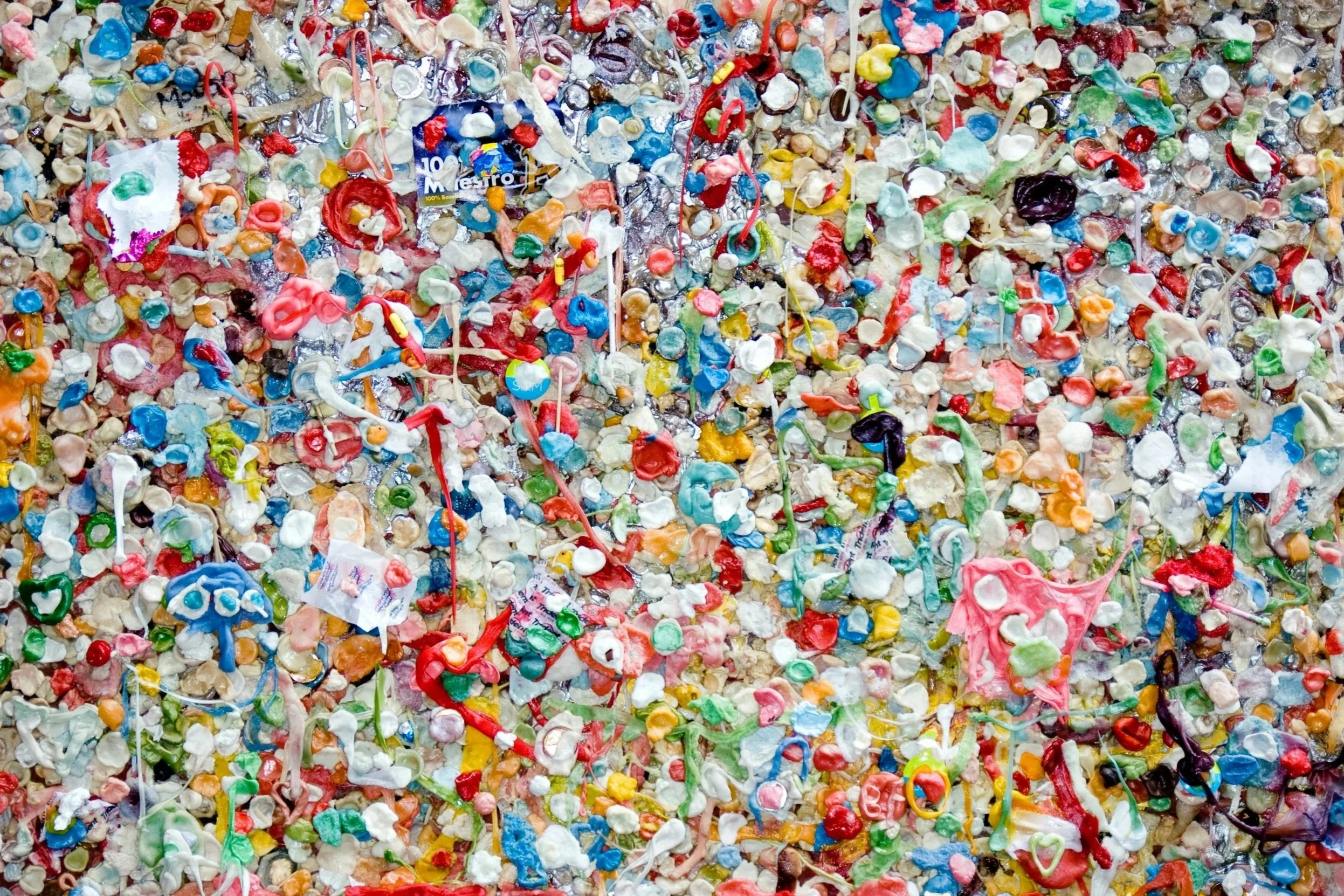
With the ubiquity of plastic products, it’s maybe no surprise that a growing body of research shows tiny pieces of plastic are getting inside of us.
But what is all this plastic doing to our bodies? And once it’s there… is there any way to get it out?
Producer Haleema Shah looks at what the research says (and doesn’t say) about plastic and health, and explores a new trend in wellness: the microplastics cleanse.
Featuring Charmaine Dahlenburg, Marcus Garcia, Yael Cohen, and Sarah Morath.


ADDITIONAL MATERIALS
How Much Would You Pay to Rid Your Blood of Microplastics?
‘A bombshell’: doubt cast on discovery of microplastics throughout human body
SUPPORT
To share your questions and feedback with Outside/In, call the show’s hotline and leave us a voicemail. The number is 1-844-GO-OTTER. No question is too serious or too silly.
Outside/In is made possible with listener support. Click here to become a sustaining member of Outside/In.
Follow Outside/In on Instagram or join our private discussion group on Facebook.
CREDITS
Host: Nate Hegyi
Reported and produced by Haleema Shah
Mixed by Felix Poon
Editing by Taylor Quimby, with help from Felix Poon
Our staff includes Marina Henke, Jessica Hunt, and Justine Paradis.
Executive producer: Taylor Quimby
Rebecca Lavoie is NHPR’s Director of On-Demand Audio
Music in by Jules Gaia, Lennon Hutton, Arthur Benson, Jharee, and Blue Dot Sessions.
Outside/In is a production of New Hampshire Public Radio.
Audio Transcript
Note: Episodes of Outside/In are made as pieces of audio, and some context and nuance may be lost on the page. Transcripts are generated using a combination of speech recognition software and human transcribers, and may contain errors.
Nate Hegyi: This is Outside/In, a show where curiosity and the natural world collide. I’m Nate Hegyi – here with Haleema Shah.
Haleema Shah: Hi Nate, I want to start with a question. What’s your relationship with plastic like?
Nate Hegyi: Well it is a part of my everyday life. I get my produce in plastic containers. Everything I get off Amazon is wrapped in plastic.
Haleema Shah: Ubiquitous. I'm a reluctantly plastic conscious person. My husband is always on my case about not leaving hot food in plastic take out boxes, or throwing out plastic cutting boards.
Nate Hegyi: I will just say, my wife, very similar, like we’ve got plastic cutting boards that we’re trying not to use as much. And Teflon – we’re trying to stay away from that.
Haleema Shah: Yeah that’s a big one. And I think, you’re wife and my husband are reasonable people to be concerned about this. Because studies do show that tiny pieces of these plastics, that we use all the time, are getting inside our bodies. We can’t see them, but you can kind of assume they’re there.
Nate Hegyi: Yeah, absolutely. It’s something I should probably be thinking about more.
Haleema Shah: Well if you want to raise your anxiety more, you can get a home testing kit to test how much plastic is in your blood.
Nate Hegyi: I don’t know if I want to do that.
Haleema Shah: Well I did.
Nate Hegyi: Did you really?
Haleema Shah: I did. I got a $360 mail-in blood testing kit from Blueprint, which is a company founded by Silicon Valley’s own self-proclaimed longevity athlete Bryan Johnson. Do you know who I’m talking about?
Nate Hegyi: I do know Bryan Johnson, you know everytime I’m scrolling through Instagram, or YouTube his very shiny face pops up. He looks like he.
Haleema Shah: He does have a really shiny face.
Nate Hegyi: He definitely looks like he’s made of wax.
Haleema Shah: He does. It’s because he sleeps under laser lights. He does that because his goal in life is literally to not die.
Bryan Johnson: I measure my temperature every single day. I’ll work out for an hour, I’ll do red light therapy, then do hyperbaric oxygen therapy, then some sauna, then I’ll rinse off, and I’m ready for work.
Nate Hegyi: He never seems like he’s having very much fun. Like, everything is so regimented.
Haleema Shah: Oh yeah, no one said living forever is going to be fun.
But what his test requires is that you prick your finger and drop your blood onto a card.
Haleema Shah: Pressing down firmly. It's not puncturing. It's not [00:01:00] piercing my skin.
Haleema Shah: Yeah, I found this very difficult.
Nate Hegyi: Yeah I would do. I wouldn’t push hard either, I wound’t want to poke myself.
Haleema Shah: And now it says to massage, to encourage blood flow. oh shit. The blood fell on my desk, but not my, not my test. That was like a perfect drop of blood too.
Nate Hegyi: Oh no, did you have to do it again?
Haleema Shah: I did. I had to prick a second finger and then I got it right. Then I put the bloodied card in an envelope and dropped it in the USPS dropbox.
[MUX IN: Urban Conspiracy by Jules Gaia]
Nate Hegyi: Wow
Haleema Shah: The results were going to arrive in 4-6 weeks. But before I got them, I had this big question I had to answer, which is, if I find out I have a lot of microplastics in my body… what can I actually do about it? Like… can I get it out?
Nate Hegyi: Right, exactly-like how do you like, cleanse yourself of microplastics.
[mux post]
Nate Hegyi: This is Outside/In – and today, producer Haleema Shah is digging into a new trend: the “microplastics cleanse.”
Is this the future of healthcare in a plasticized world? Or is it just a very expensive form of wishful thinking?
Yael Cohen: When the soft flexible tube is being inserted, you don’t feel it.
[ALTERNATIVELY]
Yael Cohen: We do one thing and one thing only, and it is an apheresis procedure.
Stick around.
<<PREROLL>>
Haleema Shah: This is Outside/In. I’m Haleema Shah.
[bring up field ambi]
I’m at the National Aquarium in Baltimore, Maryland. It’s 9 am, which means absolutely no one but the city’s trash pick up and Aquarium staff is here. And the staff is letting me wade through an urban marshland with them. [00:02:00] The water is knee deep at most, but I’m wearing a life jacket and thigh-high rubber boots. They’re not sexy but I can’t help saying it anyway…
Haleema Shah: I feel like Janet Jackson.
Haleema Shah: The marshland here often catches plastics the tide brings in: like wrappers from cigars and snacks. Or messages in plastic bottles.
Haleema Shah: Yeah, I see a little plastic, plastic bottle right there.
But it also traps microplastics. These are bits of debris about 5 millimeters -- the size of a grain of rice or smaller. And here, the microplastics look like confetti lining the edge of the marsh's grasses.
Charmaine Dahlenburg: They're colorful. Um, they float. Um, it's just a mass that collects in certain areas where the water is stagnant.
Haleema Shah: This is Charmaine Dahlenberg, she’s the director of field conservation at the Aquarium. And every morning, she and her team grab their fishnets (not that kind) and clean [00:03:00] up plastics, big and small.
Charmaine Dahlenburg: I found a really nice cutting board from a boat that I kept.
[MUX IN: Window Weepin’ by Lennon Hutton]
We've had coolers wash up that we kind of. Clean out and reuse. Oh, I mean, just like weird things.
Haleema Shah: It's like because of all the yachts and cruise ships that pass by?
Charmaine Dahlenburg: Yeah. Cushions that maybe blow off.
Haleema Shah: I'm not here to shame people for littering. I just want to see microplastics out in the wild.
And I also want to know how Charmaine manages to do something so redundant -- she cleans up plastic one morning, and the next, there's more.
Charmaine Dahlenburg: It is repetitive. We do the same thing every day and it can start to wear down on you. Um, there are a few studies out there, first of all, that if people see trash on the ground, they're likely to add to it. Um, and that really impacts our communities.
[mux post]
Haleema Shah: Collective action against plastic pollution, I get that. The environmental and aesthetic case seem obvious.
But now there's something else to consider. Human health. In the past year, there's been an explosion of studies on Microplastics and their miniscule cousins, nanoplastics, which are between 1 and 1,000 nanometers in size.
And the impact of these plastic particles on our bodies is a budding area of research, but early results are alarming.
[MUX OUT]
Marcus Garcia: This was actually one of the first studies to show that there was, uh, an accumulation of these microplastics in the human brain.
Haleema Shah: This is Dr. Marcus Garcia. He’s an assistant professor at the University of New Mexico’s College of Pharmacy. And he also co-authored a blockbuster study on micro and nano plastics, or MNPs.
Newsreel: A new study is raising concern about microplastics after researchers found an entire spoon’s-worth inside samples taken from human brains.
[MUX IN: Sneaking Into the Kitchen by Arthur Benson]
Haleema Shah: The study looked at brain, kidney, and liver tissue from over 50 cadavers...and it found that brain tissue had the highest concentration of MNPs.
And there was another concerning finding too.
Marcus Garcia: Within this study, dementia cases actually had 10 times the, the a mount of plastic accumulation as compared to the [00:05:00] remaining normal tissue cohort that we, we looked at.
Haleema Shah: In other words, plastic accumulation was TEN TIMES higher in tissue from people who had dementia.
Now, I want to be clear here - the science is not strong enough to say that plastics will give you dementia. But this is what the study authors ARE saying.
Marcus Garcia: We're saying that there's more of a correlation at this point, not a causation.
[MUX POST AND OUT]
Haleema Shah: Even with that caveat, the study is controversial. A few months after Dr. Garcia's study was published in Nature Medicine, nine other scientists published their doubts in the same journal.
To be clear, the scientists agree that microplastics can get inside of us.
MNPs can enter our bodies through drinking water and seafood. Through the wrapping our produce comes in, or Teflon-coated pans. Or the boxes we get our take-out in.
But how much of that plastic is piling up inside our organs – that’s what’s up for debate.
One of the scientists who published their doubts in Nature Medicine worked at one of Germany’s top environmental research institutions.
He told the Guardian that the brain is about 60% fat. And fat can often trigger false positives for polyethylene – the most common synthetic plastic. He also went further…
Haleema Shah: One bioanalytical scientist. used some pretty scathing language [00:06:00] calling the study a joke. Uh, what do you say to those criticisms?
Marcus Garcia: I mean, everybody's gonna have their own opinion of, of the research. Like, we understood that there is potential interference, especially with, with polyethylene. We wrote that extensively. I mean, in the summary statement we have all of these things listed.
[MUX IN: She is Whimsical by Arthur Benson]
Haleema Shah: That being said… The brain study isn't alone in tying micro and nanoplastics to human health.
A study from Italy suggested that people who had plaque AND microplastics in a key artery were more likely to suffer from a stroke or heart attack. That study was also challenged for its methodology, though.
Another looked at mice that were genetically predisposed to Alzheimer's. One group of mice was exposed to the same type of plastic used in Styrofoam. Those ones showed early signs of memory problems. But the problem with that study was that it was on mice...not humans.
[MUX POST AND OUT]
Haleema Shah: Do you have any concern about raising the alarm too much in the race to publish results?
Marcus Garcia: Yeah, yeah. Absolutely. And that's why a lot of times, like with anything that we do, I mean even, even the, the study that we published, I mean, that was two years worth of work and it was a lot of like looking, trying again, um, double checking all of our, all of our data.
But it's still in the early stages where there's some correlations, but we haven't gotten down to definitive mechanisms or giving like the 100% like, yes, these microplastics are causing X and X disease. And I think that, as long as the science is getting out there
[MUX IN: Odd Behaviour by Arthur Benson]
and it's the best science possible, that data is only helping the community.
[MUX SWELL]
Haleema Shah: But it’s not just the scientific community catching wind of these studies. Everyday people are hearing about them too; People who might be looking for an explanation for mysterious fertility issues… or wondering about a loved one’s cancer diagnosis.
Even if there’s no scientific smoking gun linking microplastics to these health problems, that doesn’t mean people aren’t worried.
And it’s into this research gap – before we fully understand the threat, but after the alarm bells have been raised – that unproven treatments can bubble up.
Which brings us to a new trend in the world of detox: The microplastics cleanse.
That’s after the break.
PART II
Haleema Shah: I’m Haleema Shah, and you’re listening to Outside/In: a show where curiosity and the natural world collide.
Search microplastics on TikTok, and you'll get a barrage of wellness advice on "detoxing" them from your body.
[MUX IN: Capering by Blue Dot Sessions]
We’re talking about ingredients in things like yogurt, or apples.
[ALTERNATIVE MONTAGE]
@antiplasticlady: Apple pectin
@vv_talks: Lactobacillus Plantarum
@antiplasticlady: That has been proven to detox microplastics.
Haleema Shah: We’re talking about health foods, supplements…
@broqforlife: Sulforaphane, which comes from broccoli.
@vv_talks: is great for removing and binding to microplastics so you can move them out. When you go to the bathroom…
Haleema Shah: Something called psyllium husk fiber…
@antiplasticlady: Cilium husk fiber. This is basically Metamucil.
Haleema Shah: And a classic wellness favorite:
@vv_talks: And make sure you go to your sauna three to four times a week, 20 minutes, sweat it all out
Haleema Shah: I ran these ideas by Marcus Garcia, who co-authored the study on micro and nano plastics, or MNPs, in the human brain.
[MUX OUT]
Haleema Shah: What do you make of that idea that you can poop or sweat this stuff out?
Marcus Garcia: In terms of like the saunas, I haven’t seen too much data on that. Like there’s a lot more data on…
Haleema Shah: Sweating in a sauna is great for cardiovascular health, he told me...but probably not for ridding yourself of microplastics. But getting rid of them via the bathroom?
There might be something to that.
Marcus Garcia: Some of these bigger or what we would consider microplastics. Might actually be excreted through the body and through, uh, through fecal matter as well. I mean, I've seen data around like, of course, increasing fiber in your [00:10:00] diet may help just because it's allowing you to pass things more frequently. Now, how much of the nano material it's capturing, I think that that is still to be determined.
Haleema Shah: So, microplastics.. Maybe. Nanoplastics…they could be so small they’re getting absorbed by the body, rather than just passing through.
Dr. Garcia isn't the only person I spoke to about this. I asked a Stanford scientist who studies plastics and human health about the saunas and supplements, too.
And she was skeptical. She said that, when the research isn’t quite there… wellness solutions are a way for people to make money off of our fears.
Because here's the thing with the supplements -- they're not FDA regulated. These companies don’t have to prove that their products work – and they don’t even have to prove they’re safe.
But they are cheap. Or at least cheaper than the buzziest treatment of them all.
Haleema Shah: Let's just start with your full name and what you do
Yael Cohen: My name is Yael Cohen, and I'm the CEO of Clarify Clinics.
Haleema Shah: And where are you based?
Yael Cohen: I'm in Los Angeles.
Haleema Shah: And Clarify Clinic is well known for one procedure in particular. Can you tell me what that is?
Yael Cohen: So we do one thing and one thing only, and it is an apheresis procedure.
[MUX IN: She is Whimsical by Arthur Benson]
Haleema Shah: Apheresis is a word that comes from Greek, which means “to take away.”
And literally, it’s a procedure that removes your blood through a tube, puts it through a centrifuge, and [00:11:00] separates it into different elements.
The harmful components are removed, and the remaining blood cells, platelets, and plasma are all pumped back into the body.
Apheresis isn't anything new. It's been used as a medical treatment for blood cancer for decades.
But what is new is using it to remove microplastics.
Not to treat any particular symptoms – but to get these microplastics OUT before they might cause any.
[MUX OUT]
Haleema Shah: You know when I learned about this procedure, it was, Uh, through a story in the cut and you are in the cover image smiling with, um, some tubes hooked up to both of your arms. It kind of looks like you're getting your blood drawn and you're smiling. What does this feel like?
Yael Cohen: So it's funny that you say that because I am, we built our patient protocols around me. 'cause I am. Such a, a chicken when it comes to needles. I'm terrified of them. I don't like them. And so we make it as comfortable as possible. And during the procedure it's quite relaxing. Interestingly, a lot of our patients end up sleeping.[00:12:00]
Haleema Shah: It probably doesn’t hurt that the procedure takes up to four hours.
Regardless, Yael said her sleep and anxiety has improved thanks to Clari. The name of this particular apheresis procedure… And it’s gotten a lot of press. Thanks to a celebrity endorsement…from Orlando Bloom.
<CLIP> (0:18-0:20) This is either madness or brilliance.
It’s remarkable how often those two traits coincide.
But what this procedure doesn’t have… is peer-reviewed evidence showing that it works.
A couple of scientists who study dialysis – a very similar procedure – have cautiously written that apheresis could actually introduce microplastics into the blood. After all, the blood that’s pumping back into you is moving through… plastic tubes.
And if microplastics are piling up in organs, like the brain, liver, or kidneys. Removing them from the blood may not have the highest impact.
Either way, Yael can’t offer Clari to her clients in L.A. where she’s based…because it’s not approved in the U.S.
Haleema Shah: You have clinics in London, Dubai, and Johannesburg. So why hasn't this procedure been approved by the FDA yet?
Yael Cohen: It takes time. And the US is obviously a market of interest. Uh, and that's something we're, we're currently working on.
Haleema Shah: But even if this procedure comes to the U.S., it’s going to cost about $13,000. And insurance is not going to cover it.
Not yet, anyway.
Haleema Shah: That's a lot of money for a lot of people. Um, and I wonder how viable of a solution this can be to our microplastics problem if it's not available to, for example, populations who are the most affected by pollutants, which tend to be low-income populations.
Yael Cohen: So you're entirely correct. That is not a highly accessible price. Uh, but it's hospital grade medical procedure that's delivered by physicians and nurses in a supervised clinical setting. And so the price is reflecting that infrastructure, the technology, the medical site oversight involved.
[MUX IN: It’s Not That Serious by Arthur Benson]
But also this is new, right? And so when we had cell phones or computers or air travel at first, they were really expensive. And it's absolutely on our radar to bring this price point down to where it's accessible to the people who need it most.
But let’s say that one day, the FDA does approve this procedure… AND that the cost does come down. Can the treatment keep up with the amount of plastic we interact with on the daily?
Haleema Shah: Is it possible to maintain these results when we're living and moving through a world where plastic is everywhere?
Yael Cohen: So I think that's something we need a lot more research on. Is it possible to entirely avoid microplastic exposure or forever chemical exposure in our modern world? No. I think what we can do is limit exposure, you know, make meaningful changes in the ways that we can, and then reduce circulating toxic burden, which is what we're doing with Clari.
Haleema Shah: Even though Yael wants Clari to be widely accessible one day, a lot will have to happen before it becomes a go-to treatment. Namely, strong data to back it up. Right now, the experts who think microplastics ARE a problem are skeptical of the microplastics cleanse.
We still don't know the relationship between microplastics and disease, so it's hard to say how beneficial this procedure actually is.
On top of that, treatments like this are very individualized ways of dealing with a collective problem.
[MUX OUT]
The world produces almost 60 million tons of plastic pollution each year. That’s hardly a problem any one person can face.
Sarah Morath: Yeah, I mean, this is something that I do think the government should take the lead on.
Haleema Shah: This is Sarah Morath, law professor at Wake Forest University and author of a book called Our Plastic Problem and How to Solve It.
Sarah Morath: It's a global problem and our government has not made it any easier to [00:15:00] avoid these kinds of products, and companies aren't either.
Haleema Shah: It's not like the U.S. has never regulated a once-ubiquitous substance before. As I’ve been working on this story, I keep thinking about something I learned about in grade school. DDT, the popular insecticide that was the subject of the 1960s book Silent Spring.
DDT killed birds, and it was linked to cancer in humans. It was effectively banned soon after the book came out. Could the same happen with microplastics?
Sarah Morath: DDT is a specific chemical and I think it was easier to go say, we're no longer gonna offer this specific chemical. Um, whereas there's so many different kinds of plastics. It's hard to, um, sort of target microplastics writ large, um, in a way where we could target a specific isolated chemical.
Haleema Shah: So plastics aren’t likely to be banned like DDT in one fell swoop. And that might not be a good thing, anyway.
Single-use plastics make it easy to dispose of biohazardous material in the medical sector. And it’s sturdy, and it's affordable, and it's light. So shipping things in plastic has a lower cost and carbon footprint than shipping it in glass.
But finding a balance between convenience and regulation isn’t easy. Especially when the petroleum industry, which produces plastics, has so much power on Capitol Hill.
Sarah Morath: It's sort of like a chicken and an egg kind of conversation where, um, it's an interplay I think between the legislation and our court system that sort of moves the ball forward.
The tobacco and lead industries had lobbyists and influence, too, but they faced something that began to chip away at their power: lawsuits, and lots of them.
Sarah Morath: I think we've seen it in the tobacco space, and we saw it certainly in the opioid space, where lawsuits really, um, got the attention of legislatures at the federal level to, to enact some sort of whole-scale regulation addressing these harms that the public was facing.
Haleema Shah: But again, the analogy isn’t perfect.
Unlike tobacco or opioids or lead, there isn't robust research proving that microplastics cause disease.
So when microplastics are regulated, it's usually for showing up in places where they aren't supposed to be.
Sarah Morath: There is no federal regulations apart from the microbead Free Waters Act, which targeted microbeads in wash-off cosmetics only.
Haleema Shah: Remember those colorful little beads you’d find in face and body washes? Those weren’t just little exfoliating balls. They were microplastics.
And after state and local governments noticed them showing up in drinking water supplies, they started passing their own bans. And in 2015, a federal ban followed suit.
Sarah Morath: So what I do think happens is sometimes the federal government will say, we don't want this patchwork. We don't want some states doing something and other states not doing something. So sometimes the patchwork can spur a federal government to [00:18:00] work, and that's actually what we saw happening with the Microbead Free Water Act.
But it’s one thing to ban microbeads in a specific product – especially when they can be replaced by another exfoliant, like sugar or salt.
It’s another thing to tackle ALL of the plastics we use in modern society.
[MUX IN: Missed Calls by Jharee]
Plastic lawn chairs. Plastic laundry baskets, sleds, planters.
They all have different functions, but they have similar endings. Over time, they will break down. Slowly. They’ll shed pieces, break apart…and get smaller and smaller.
CONCLUSION
Haleema Shah: I called up Nate when I got my microplastic test results back.
Haleema Shah: I got an email the other day saying that my microplastics test results are ready in the Don't Die app by Brian Johnson. So.
Nate Hegyi: <laughs>
Haleema Shah: I'm opening up the app, and I'm gonna go to my health. And then I have my biomarkers. I have four biomarkers, and it says all four are out of range. So let's see.
Nate Hegyi: Oh, okay.
Haleema Shah: The first three biomarkers supposedly represent microplastics of different sizes in my blood. I have some of each.
The fourth biomarker is my total number of microplastics particles. The Don't Die app says I have 18 particles in a single drop of my blood. So…is that a lot? I can’t say, but the app tells me it's more than 65% of users who took the same test.
Nate Hegyi: How, how does that make you feel?
Haleema Shah: Surprised. Honestly, I really didn't think that I would. I mean, like I said, I'm a reluctantly microplastic-conscious person, but also I'm not a person who would use any of Brian Johnson's services otherwise. Right. These 2.4 K users are all people who are probably very conscious about this, already measuring everything. It's a very self-selecting group.
Nate Hegyi: Yeah.
Haleema Shah: It’s pretty hard to tell who I’m being compared to when I look at the app. And there's no scientifically accepted standard for what a good or bad or normal amount of microplastics in the blood is…
Nate Hegyi: Yeah, I can see how it would panic. Some people, it would panic me, I think. And then I would tell myself not to take too much stock. 'Cause again, it's a self-selecting group. And you know, it's one thing to be sending it off to Brian Johnson's live forever company. It's another thing if you're like at a doctor.
Haleema Shah: And Dr. Garcia, the scientist behind the controversial microplastics-in-the-brain study, was skeptical, too. When I mentioned that I was doing this, he said you need at least a vial of blood for a decent test.
[MUX IN: Open Road by Lennon Hutton]
So can we really expect a single drop of blood on a card to be accurate?
[MUX SWELL]
Nate Hegyi: Well, hey, uh, have a good rest of your day, hopefully, and don't think too much about this microplastic stuff.
Haleema Shah: I probably won't, I'm gonna forget this happened in like five minutes.
Tracking: I have mostly forgotten about my results.
And if I'm being honest, it's not just because of my conversations with the experts... It's because I'm not sure I can keep living if I obsess over what the Don't Die app tells me.
But I have gone from reluctantly plastic-conscious to actually plastic-conscious. I even got my mom to ditch a plastic cutting board the other day.
Because the research may be incomplete, but common sense tells me eating plastic isn’t great.
And whether it’s about my health… or the health of the people I love… I don’t want to wait to find out.
[MUX SWELL]
<<CREDITS>>
NH: This episode was reported and produced by Haleema Shah.
It was mixed by Felix Poon, and edited by Taylor Quimby.
NH: I’m your host, Nate Hegyi. Our executive producer is Taylor Quimby. Rebecca Lavoie is NHPR’s Director of On-Demand Audio.
Our staff also included Justine Paradis, Marina Henke, and Jessica Hunt.
Music in this episode was by Jules Gaia, Lennon Hutton, Arthur Benson, Jharee, and Blue Dot Sessions.
And a special thanks to Amelia Meyer, who co-leads the Plastics and Health Working Group at Stanford University.
Outside/In is a production of New Hampshire Public Radio.