Bill McKibben has changed (but not that much)
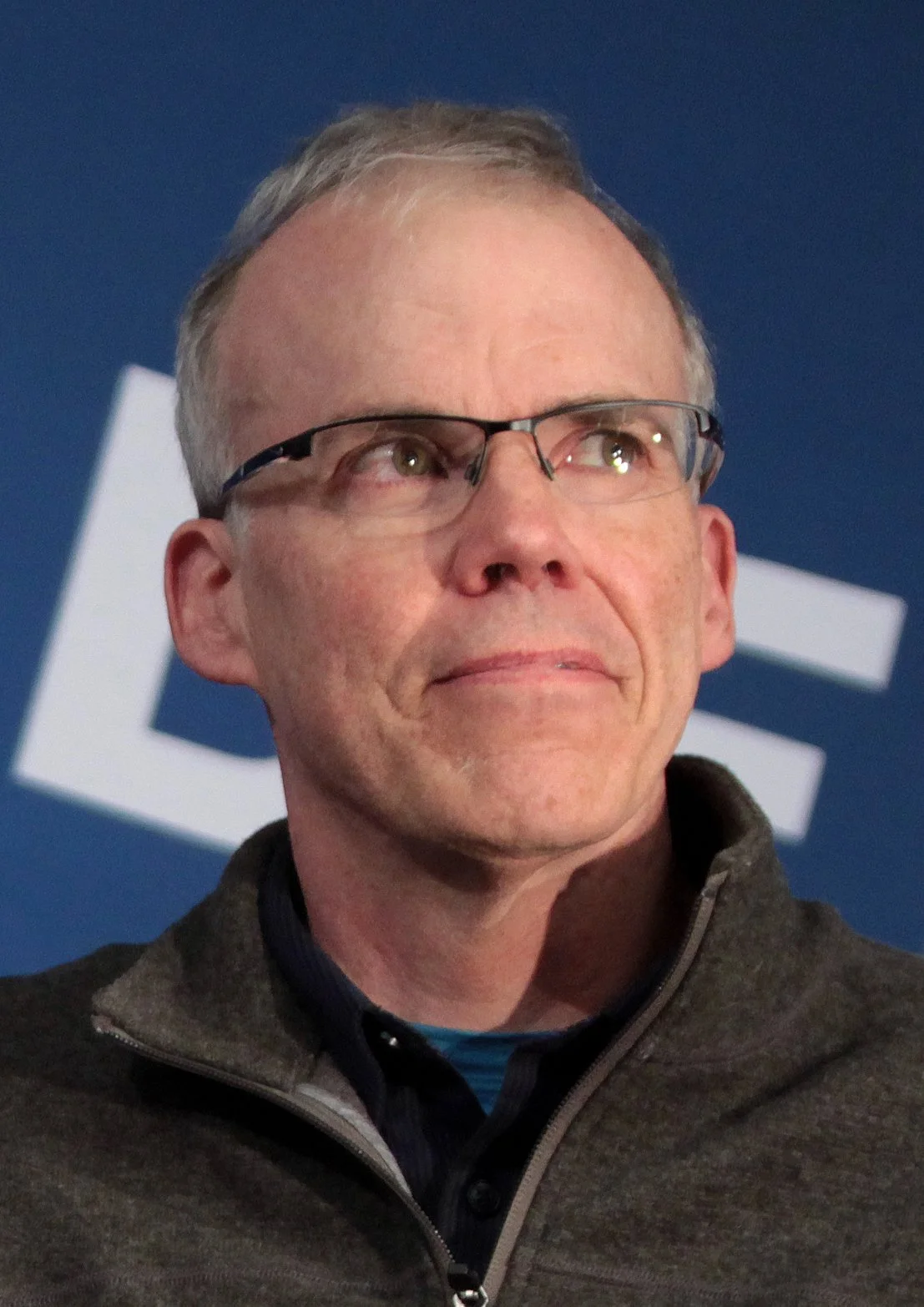
Photo by Gage Skidmore (CC BY-SA 2.0)
One of the very first books for the general public about climate change was written and published by Bill McKibben in 1989. In The End of Nature, Bill wrote that continuing to burn fossil fuels would “lead us, if not straight to hell, then straight to a place with a similar temperature.”
Bill was right. The planet is hotter. Climate disasters are everywhere. You’d think he’d be more upset now than ever. But in his latest book, Here Comes the Sun, Bill sounds optimistic. In it he writes “For the first time, I can see a path forward. A path lit by the sun.”
Host Nate Hegyi talks to journalist and activist Bill McKibben, about how he’s changed, how he’s stayed the same, and what his story tells us about the state of the climate crisis.
Featuring Bill McKibben.


ADDITIONAL MATERIALS
Listen to Studs Terkel’s 1989 interview with Bill about his first book, The End of Nature.
Read Bill’s latest book, Here Comes the Sun.
SUPPORT
To share your questions and feedback with Outside/In, call the show’s hotline and leave us a voicemail. The number is 1-844-GO-OTTER. No question is too serious or too silly.
Outside/In is made possible with listener support. Click here to become a sustaining member of Outside/In.
Follow Outside/In on Instagram or join our private discussion group on Facebook.
CREDITS
Host: Nate Hegyi
Reported, produced, and mixed by Felix Poon
Editing by Taylor Quimby.
Our staff includes Justine Paradis, Marina Henke, and Jessica Hunt.
Executive producer: Taylor Quimby
Rebecca Lavoie is NHPR’s Director of On-Demand Audio.
Music by Blue Dot Sessions, Walt Adams, and Roy Edwin Williams.
Outside/In is a production of New Hampshire Public Radio
Submit a question to the “Outside/Inbox.” We answer queries about the natural world, climate change, sustainability, and human evolution. You can send a voice memo to outsidein@nhpr.org or leave a message on our hotline, 1-844-GO-OTTER (844-466-8837).
Audio Transcript
Note: Episodes of Outside/In are made as pieces of audio, and some context and nuance may be lost on the page. Transcripts are generated using a combination of speech recognition software and human transcribers, and may contain errors.
Nate Hegyi: This is Outside/In, a show where curiosity and the natural world collide. I’m Nate Hegyi.
It was 1989, and a young writer named Bill McKibben had walked into the studios of WBEZ in Chicago.
He was there to promote his first book - which had a pretty heavy and ominous title.
Studs Terkel: The End of Nature, the title itself evokes all sorts of commentary and thought. Random House Publishers. And Bill McKibben is talking about the imperiled planet.
Nate Hegyi: That’s Studs Terkel. He’s a legendary broadcaster, and the guy interviewing Bill about “The End of Nature.”
Young Bill McKibben: The book is in part a scientific book, it’s about the greenhouse effect and the erosion of the ozone layer…but in a way, it's also
Nate Hegyi: This interview…. it’s a time capsule… Back then, climate change wasn’t on the public’s radar. Bill was schooling Studs about things that today, would seem a little obvious.
Studs Terkel: fossil fuels. Okay. Well, that's what coal gas.
Young Bill McKibben: Coal gas and oil.
Studs Terkel: And oil.
Nate Hegyi: At one point they even talked about a gas powered machine that was just getting popular in the U.S.
Young Bill McKibben: More and more, I notice people instead of using rakes to clean up their leaves or using these leaf blowers. Leaf blowers.
[MUX IN: Rosehip Tango, Blue Dot Sessions]
Nate Hegyi: For the most part, the tone of this interview is friendly… but dark.
Bill warned in his book that if we didn’t stop burning oil and coal, then it would, quote, “lead us, if not straight to hell, then straight to a place with a similar temperature.”
Young Bill McKibben: Every time you turn the ignition on your car, every time you turn up the thermostat in your house, you add more carbon dioxide to the atmosphere. But there needs to be some public expression of. Rage and of and of sadness and other deep emotions at what's happening.
[MUX SWELL AND OUT]
Nate Hegyi: But, let’s fast forward to today, nearly four decades after The End of Nature.
Bill… was right. The planet IS hotter. Climate disasters are everywhere you look. And so, you might expect him to sound even more upset than ever before.
But, his latest book? It sounds… almost optimistic.
In it he writes “For the first time, I can see a path forward. A path lit by the sun.”
So I asked him to chat with me.
Nate Hegyi: would your family describe you as a glass half full kind of guy or a glass half empty kind of guy?
Bill McKibben: I've been, um, a glass half empty kind of guy because the Science around what we're doing to the planet is so dark and dire. And in many ways, still am.
Uh, on the other hand, um. Now I have a, uh, glass with something in it too
[MUX IN: Pembroke Pines, Walt Adams]
<<NUTGRAPH>>
Nate Hegyi: In the climate movement, there might not be anyone as prolific as Bill McKibben. He’s published a lot of books, written countless articles, and founded two climate activism organizations that are both still going strong.
But how optimistic is he…really, that we can avert a catastrophe?
Bill McKibben: I've been, um, perkier than usual, which is weird because in many ways, the both the planet in our own country, it seems to me, are in the most dire shape they've ever been in.
Nate Hegyi: Today on Outside/In, journalist and activist Bill McKibben. How he’s changed. How he’s stayed the same. And what his story tells us about the state of the climate crisis.
Stay tuned.
[MUX SWELL AND OUT]
<<FIRST HALF>>
Nate Hegyi: This is Outside/In, a show where curiosity and the natural world collide. I’m Nate Hegyi.
When I was going to grad school for environmental journalism, we were encouraged to read a lot of books, many of them were written by Bill McKibben. He was like the godfather of climate writing. And I remember thinking there is no way I could ever be as prolific as he is.
Part of Bill's success, I think, is that he got started young.
Nate Hegyi: If I met 28 year old Bill McKibben. Like, what did he look like? What kind of guy was he? Where was he living?
Bill McKibben: Uh, so I was in my 20s. I spent most of my 20s in New York City. I'd gone to work a week out of college at The New Yorker magazine, where I wrote the talk of the town column.
Nate Hegyi: You got that job a week out of college.
Bill McKibben: In the front of the magazine.
Nate Hegyi: When I was 27 years old, Bill, I was working at a burrito shop and playing in a band. how are you so motivated as a young person? Like, where did that come from to be? Like living on the streets, writing for The New Yorker, doing all this big stuff at that young of an age.
Bill McKibben: Well, you know, journalism was the thing I knew how to do.
[MUX IN: Lo Margin, Blue Dot Sessions]
Nate Hegyi: Journalism runs in Bill’s blood. His dad was a newspaper man. Bill’s high school job was writing for his local paper in a town just outside of Boston. Making 25 cents per column inch.
He went to Harvard… where he became the president of the student paper, and covered some pretty big news stories. He even interviewed then-candidate Ronald Reagan. As a college student.
Bill McKibben: Suffice it to say, by the time I got out of college, I didn't know how to do anything else. This was the one skill that I had in the world, and it's a skill that I loved because journalism is just as you know, is a kind of strange license to just ask people things. Yeah. And often they answer.
[MUX SWELL]
Nate Hegyi: Bill’s first big feature writing for the New Yorker was about where everything in his apartment came from. Literally. For a year, the magazine flew him to all corners of the world. To Brazil to see where New York’s oil came from, the Canadian arctic to see the kind of hydropower dams that kept his lights on.
Bill McKibben: And I think that's what set me up to be taking more seriously than I might otherwise. The first emerging science around climate change.
[MUX SWELL AND FADE]
Nate Hegyi: “Climate change” wasn’t even really a term yet in the mid-1980s. It was still being called “the greenhouse effect.” Which… scientists had known about since the 19th century.
But they weren’t able to prove that the CO2 coming out of all the world’s smoke stacks and tail pipes were enough to warm the planet.
At least, not until the 1980s, when scientists finally gathered enough evidence to be really sure of it.
[https://www.abcnewsvsource.com/search (search DCPA31291F)]
Dr. Michael Oppenheimer: The global mean temperature has risen over the last hundred years. Four of the last seven years have been the hottest on record, and this year appears headed to be the hottest on record.
This is from a now-famous senate hearing in 1988 where a panel of scientists presented their most recent climate research.
Dr. Michael Oppenheimer: So it’s reasonable to assume that the greenhouse effect is here. It’s happening. The warming has begun. It’s started.
Nate Hegyi: This latest climate science came out when Bill was in his 20s. He cites a lot of it in his book, The End of Nature, published a year after that senate hearing.
Here’s the young Bill getting interviewed by Studs Terkel again.
Studs Terkel: Somewhere in the book, you point out the beauty of nature and the awesomeness of it too, something beyond control of man. But man deals with and lives with it. You're saying now, man, we arrogant. We, the human species will almost control nature and thus destroy it.
Young Bill McKibben: the idea that that there are forces like the weather, in particular, that operate outside our control or untouched by us seems to me to be eroding away.
Nate Hegyi: The central idea in his book was that nature was no longer independent from human activity. His argument was that we’d entered a period of Earth’s history in which human-driven…. global warming has now changed everything about the planet.
Basically he was talking about the anthropocene, way before the term “anthropocene” was even popularized.
Over the next two decades, he pumped out more climate-tinged books about living light, having just one kid, buying less at Christmas.
But Bill wasn’t seeing the sort of big societal change he thought was needed.
[MUX IN: Capocollo Theme, Blue Dot Sessions]
Bill McKibben: you know, my theory of change was people will read my book and then they will change. In fact, lots of people read it. It came out in 24 languages I think. But it turns out that's not really how the world works.
It just started becoming clear to me that we had won the argument. We were just losing the fight, because the fight, turns out, wasn't really about data and reason and evidence.
It was about money and power, which is what most fights are about.
And the fossil fuel industry had so much money and hence so much political power that they could lose the argument, but their business model chugged merrily on ahead.
[MUX SWELL AND FADE OUT]
Nate Hegyi: Bill’s work had always straddled the line between journalism and activism. His stories in the New York Times, for instance, were often in the opinion section. He wasn’t keeping his fears and anxieties about climate change close to his vest.
But at some point, something bigger shifted inside him.
Nate Hegyi: what was the moment for you when you realized that journalism documenting, just documenting what was happening wasn't enough for you?
Bill McKibben: one of the events, I think, that brought this home in stark relief for me was taking a trip to Bangladesh.
Nate Hegyi: Bill was in Bangladesh for a reporting trip in the 2000s, when there was an outbreak of dengue (DEN-gay) fever, a deadly disease spread by mosquitoes that’s become way more common in the warmer, wetter world created by climate change.
Bill got bit when he was there, and he got really sick.
Bill McKibben: And I remember being in the big central clinic, sort of converted armory, Thousands and thousands of people on cots, just shivering, and in between shivering. I remember thinking mostly, how unfair is this?
[MUX IN: Etude 3 Chessanta, Blue Dot Sessions]
Bill McKibben: I mean, there are 180 million people in Bangladesh, but they're a rounding error, literally in the total carbon emissions of planet Earth.
Whereas the 4% of us who live in the US… We've produced about 25% of all the carbon that's up in the atmosphere heating the planet. The fundamental unfairness of it struck me in a profound way.
So combined with that insight about argument versus fight, I think I sort of knew at some level that it was time to start figuring out, despite my own personality, which is introverted, um, how to start building power of our own.
[MUX SWELL]
Nate Hegyi: After a quick break, the introverted Bill McKibben fights back. Plus, why he’s got a spring in his step now. And whether he thinks the worst of the climate crisis can still be averted…or not.
We’ll be right back.
[MUX SWELL AND FADE OUT]
<<MIDROLL>>
Nate Hegyi: This is Outside/In, a show where curiosity and the natural world collide. I’m Nate Hegyi. And today, we’ve been talking to the prolific writer and thinker, Bill McKibben.
Now, if Bill’s first act was as a climate journalist. His second act, was as a climate activist.
Amy Goodman: Bill welcome to Democracy Now. Explain why you were arrested.
Bill McKibben: Well, we really felt like this was the issue Amy…
Nate Hegyi: Back in 2008, Bill founded 350.org. It’s a grassroots campaign against fossil fuels. And he wasn’t on the sidelines writing op-eds. He was arrested for protesting the Keystone pipeline. He was arrested for protesting Exxon. And he talked about it on shows like Democracy Now.
Bill McKibben: We’ve got to get off oil. And so there are people flooding into DC from all 50 states and Puerto Rico lining up to get arrested. Over the next couple weeks. It’s pretty powerful…
Nate Hegyi: These kinds of actions and words – they’re the kind of thing that could get a newspaper reporter or *aside* even a public radio podcast host* fired.
As journalists, we’re taught to be objective, to check our biases.
SO I wanted to know if those two sides of Bill ever come into conflict.
Nate Hegyi: What is the line between activism and journalism for you? And do you worry that your activism ever compromises your journalism?
Bill McKibben: um, well, I was a sportswriter, as I say, in my youth. And the code of sportswriters is you're not supposed to root for the team that you're covering, you know, no cheering in the press box, as they say. Um, and, uh, I do root for the team that's trying to save the earth, not the team that's trying to wreck it.
My biases are clear. I do not want the planet to overheat. And if that makes me, you know, not a journalist, then then so be it.
[MUX IN: Happenchance, Blue Dot Sessions]
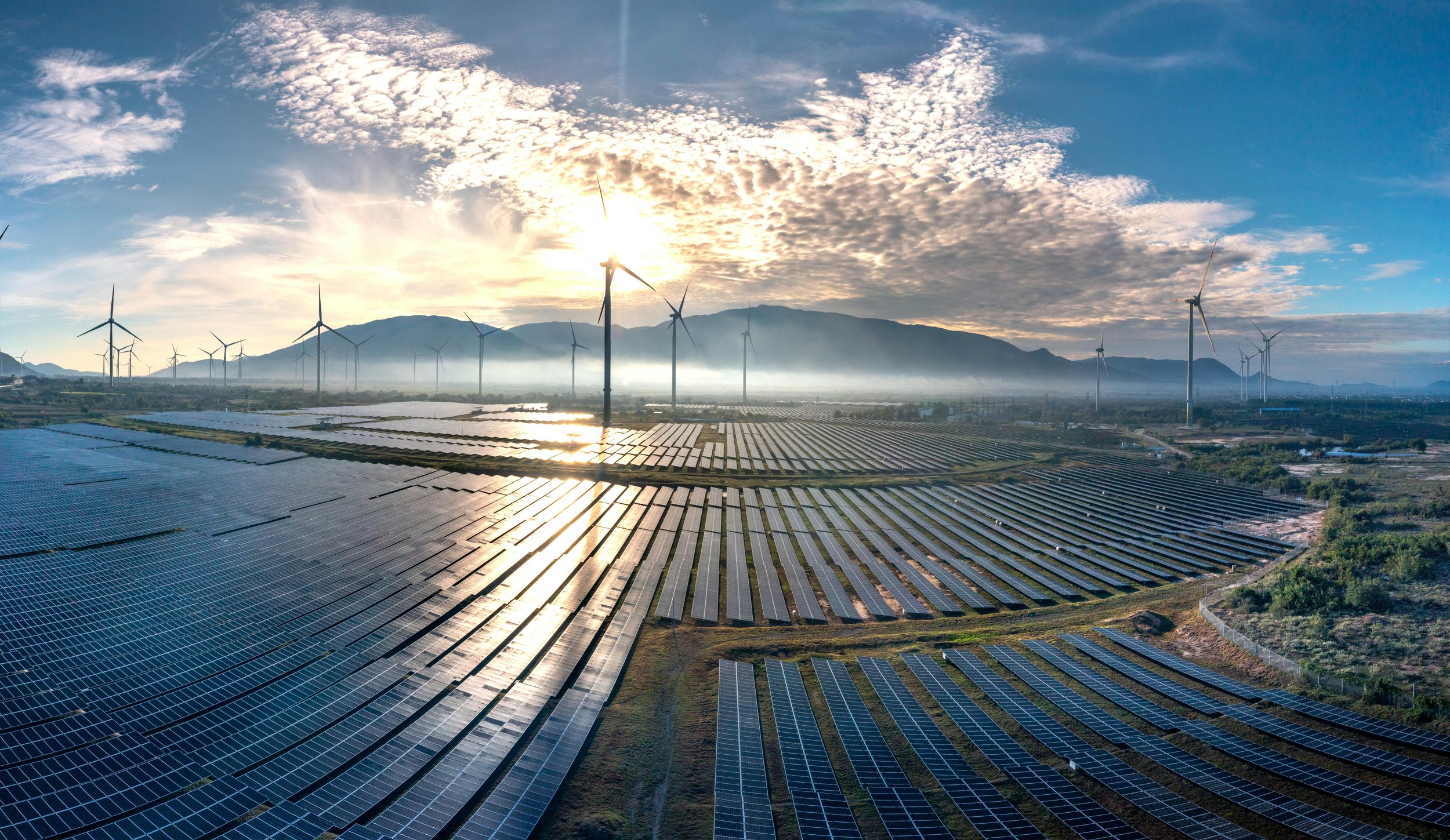
Nate Hegyi: These days, Bill is enthusiastically cheering for team solar. Because lately they’ve been having some BIG wins.
This is the subject of his latest book: “Here Comes the Sun.”
Bill points out that, In just the past decade, the cost of building solar panels, has fallen… 90 PERCENT.
And the song he’s been singing since the ‘80s… it’s changing a little bit. Fewer dour minor chords, more happy major chords.
Bill McKibben: Now we live in a world where the economic force of gravity works in favor of clean energy.
We live on a planet where the cheapest way to make power is to point a sheet of glass at the sun.
Nate Hegyi: The book is full of surprisingly upbeat anecdotes.
Bill McKibben: Australia built a loooooot of renewable energy, going on 40% of houses have solar panels on the roof.
Nate Hegyi: Here’s another one, in Pakistan, people have been watching TikTok explainer videos to build solar panels on their roofs, in their fields…
[MONTAGE]
https://www.tiktok.com/t/ZP8y8PjfQ/
https://www.tiktok.com/t/ZP8y8XjQA/
https://www.tiktok.com/t/ZP8y8Q2PX/
Nate Hegyi: And they’ve built enough solar to completely offset demand on the electric grid for parts of the day.
And in China, they’re installing nearly a GIGAWATT of solar every day. That’s the equivalent of an entire coal fired power plant. Every day.
And in Europe, people are buying plug-in solar panels from their local stores and setting them up on their balconies… And that’s just becoming a thing in the US, where in Utah, they just passed a law allowing it.
Bill McKibben: the state senator who introduced it, Republican, said, why should the people of Provo be denied something that the people of Stuttgart enjoy, and no one had an answer. So now they're not. And you can go on YouTube and watch lots of, you know, earnest Utahns hanging up their balcony. Solar system.
JerryRigEverything: There you have it, the easiest solar installation I have ever done. I for one am a huge fan of Utah’s new law…
[MUX SWELL AND OUT]
Nate Hegyi: And that’s all in the present.
Bill’s vision of the future is also pretty danged hopeful. He sees a world powered entirely by renewables.
And if that happened… Not only would the global temperature stabilize, but he thinks it would solve other big problems too.
For instance, he says we’d stop losing the roughly 8 million people a year who die from breathing in polluted air.
Global geopolitics would change.
Bill McKibben: Right now, we depend on a fuel that's only available in a few places. So the people who control those places, uh, have extraordinary wealth and power, which they. Routinely misuse.
The president of Russia, Vladimir Putin, biggest oil baron in Europe, has used his winnings to launch a land war on that continent in the 21st century.
Uh, it's really nice to imagine a planet where people are able to control this most important of resources themselves, where they rely on sun and wind that are available everywhere to everyone.
Think about how the geopolitics of our planet would have been different over the last century, if oil had been of relatively trivial value in that period.
Nate Hegyi: Bill doesn’t think that solar-powered world is far off. Even without activism or government incentives, but by sheer economic forces alone, he thinks it’s inevitable that the world will eventually run completely on renewables.
[MUX IN: Base Camp, Blue Dot Sessions]
Sounds pretty glass half full, right?
Nate Hegyi: your new book, Here Comes the Sun, arguably a lot more hopeful than your earlier work. You write that for the first time, I can see a path forward, a path lit by the sun. What changed for you?
Bill McKibben: So, I mean, let's be clear. The optimism is very tempered by the fact that we're now very late in this game, that the predictions that I made almost 40 years ago have now come true.
Nate Hegyi: I don’t want to make Bill out like he’s totally turned the climate corner. The truth is - despite his optimism on Solar - Bill does have a tendency to steer the conversation towards all the bad things he sees around him.
Bill McKibben: glaciers… are melting
The Trump administration is trying to stamp out sun and wind.
Literally five feet of rain fell in 24 hours.
We're in extraordinary trouble.
[MUX SWELL AND FADE]
Nate Hegyi: It made me wonder if this shift towards an optimistic future isn’t actually a Bill shift… but more, a writing trick - giving his readers something to grab onto.
After all, people respond to doom-and-gloom stories, yeah… but they also want some hope.
Regardless, there is one big talking point that Bill is definitely handling differently than he used to.
Nate Hegyi: So in the 90s, you wrote a lot about restraining ourselves, right? Buying less Christmas gifts, maybe only have one kid. And… I actually want to play you a clip from a 1989 interview you did with Studs Terkel where you talk about restraining ourselves.
Bill: I guess what I’m talking about when I say humility, is learning to restrain ourselves. It would mean holding ourselves back a little bit from constant progress.
Nate Hegyi: And this new book, though, you make an argument that we should focus less on lifestyle choices and more on swapping oil fossil fuels for wind and solar. You write, quote, emergency room doctors don't waste a lot of time worrying about their patients poor lifestyle choices. They do what they must to save their lives. What's changed for you?
Bill McKibben: Well, I mean, what changed is that we didn't. I mean, a we didn't win that argument
[MUX IN: Pull Beyond Pull, Blue Dot Sessions]
we didn't, uh, hold ourselves back, uh, at all. And so now the temperature is hotter than it was when I was talking with studs. And so, you know, I wish we had, but we didn't.
So now we're in a new reality I continue to think that the basic human job is to figure out how to make ourselves a little smaller.
I think 100 years from now, humans will have figured out, more interesting ways to live our lives. My guess is that we'll concentrate more on human connection and on connection with whatever is left of the natural world, because I think that's really what we were designed for.
But I don't think that's going to happen in the next five years in time to meet the deadlines that physics is now imposing on us for dealing with climate change.
So I think we better figure out the way to make ourselves smaller by using technologies that don't produce as much damage as the ones we're using now.
[MUX SWELL AND FADE OUT]
Nate Hegyi: how did you feel hearing your voice in that Studs Terkel interview.
Bill McKibben: Brought back such good memories for me because Studs Terkel
He'd been a great hero of mine. I felt so honored as does a 28 year old to be in his company. And and I was struck by the fact that very little has changed.
Uh, for me, I've spent my whole life on this same project. Some days I resent that.
Nate Hegyi: Why do you resent that?
Bill McKibben: I mean, I had lots and lots and lots of other things I would have liked to have written about in my life, you know, and I could have I, you know, I was a New Yorker staff writer. I could have spent my life writing about fascinating stuff.
Um, this has been fascinating, and I don't really resent it. It's been a way to think about the world in deep ways.
Um, but I also just makes me sad at my own failure to figure out how to. Uh, you know, how to prevent the change that I was early to see coming.
[MUX IN: Louver, Blue Dot Sessions]
There was a long period in there when I felt like. You feel when you have a nightmare and you can see a big monster coming at you, but you can't get anybody else to see it.
[MUX SWELL]
So I wish I'd been better at, you know, what I was doing.
And I certainly could have figured out sooner that it was going to take more than writing that I should have been organizing from the start
[MUX SWELL]
Nate Hegyi: Bill is getting older. His voice is a little lower than it used to be. But whereas you could imagine someone else becoming jaded… or I guess more jaded… Bill is picking up steam.
A few years ago he founded the environmental organization… Third Act. It’s all about motivating his fellow boomers to take action on climate change.
Nate Hegyi: So you've, you know, been battling this monster for 30 plus years. You know, you're in your 60s now. What is your third act look like?
Bill McKibben: Well, My third act at the moment looks largely like organizing third act. This organization that we started three years ago for people over the age of 60. We’ve now got about a hundred thousand people nationwide. Um, it turns out that, uh, was one of the better ideas of my life. Uh, older people are, um. There's a lot of us. We're politically powerful because we all vote. There's no known way to stop old people from voting.
We have lots of connections and skills acquired over a lifetime and a lot of time. And so it's been some of the most rewarding organizing I've ever done.
Um, but I'm proud of the work we've done.
[MUX SWELL AND FADE]
Nate Hegyi: My interview with Bill McKibben was recorded late last year. A few months earlier, President Trump had deployed members of the National Guard to Washington D.C. One of his advisors, Stephen Miller, was giving a sort of pep talk to the troops.
Bill McKibben: but he said the one problem we're having is all these elderly hippies who keep coming out and screaming at us, and they should just go home and take a nap.
And, uh, we took that. We almost had a holiday at Third Act. We were so pleased to hear his, uh, you know, because that's us, man.
[MUX IN: The Spirit of the West, Walt Adams]
And we're not going to go home and take a nap. Um, we're going to do what we can to defend the planet that we were born onto and to defend the democracy that we were born into. And it God knows if we'll succeed or not, but we're going to try.
Nate Hegyi: What advice would you give that end of nature version of yourself, that 28 year old version of yourself.
Bill McKibben: Only to figure out more quickly that, uh, it's not just an argument, it's a fight.
Nate Hegyi: That’s it for today’s episode. We’d love to hear from you, our listeners. Are you feeling glass half full? Or glass half empty about the climate? How have those feelings changed over the years?
Send us an email at Outsidein@NHPR.org, hit us up on social media. We’re @ outsideinradio. Or give us a call and leave a voicemail. Our number is 1-844-GO-OTTER.
<<CREDITS>>
Nate Hegyi: This episode was reported, produced, and mixed by Felix Poon. It was edited by our executive producer, Taylor Quimby.
I’m your host, Nate Hegyi. Our team also includes Justine Paradis, Marina Henke, and Jessica Hunt.
Rebecca Lavoie is director of On Demand Audio.
Music in this episode was by Blue Dot Sessions, Roy Edwin Williams, and Walt Adams.
Outside/In is a production of New Hampshire Public Radio.
Studs Terkel: You get your blower to rake. The leaves mean nothing.
Young Bill McKibben: That's right.
Studs Terkel: Whereas the man and the rake and the leaf were in a sort of communion, for want of a better word, whereas now it's nothing.
Young Bill McKibben: That's right.