Never add sodium to your pasta water
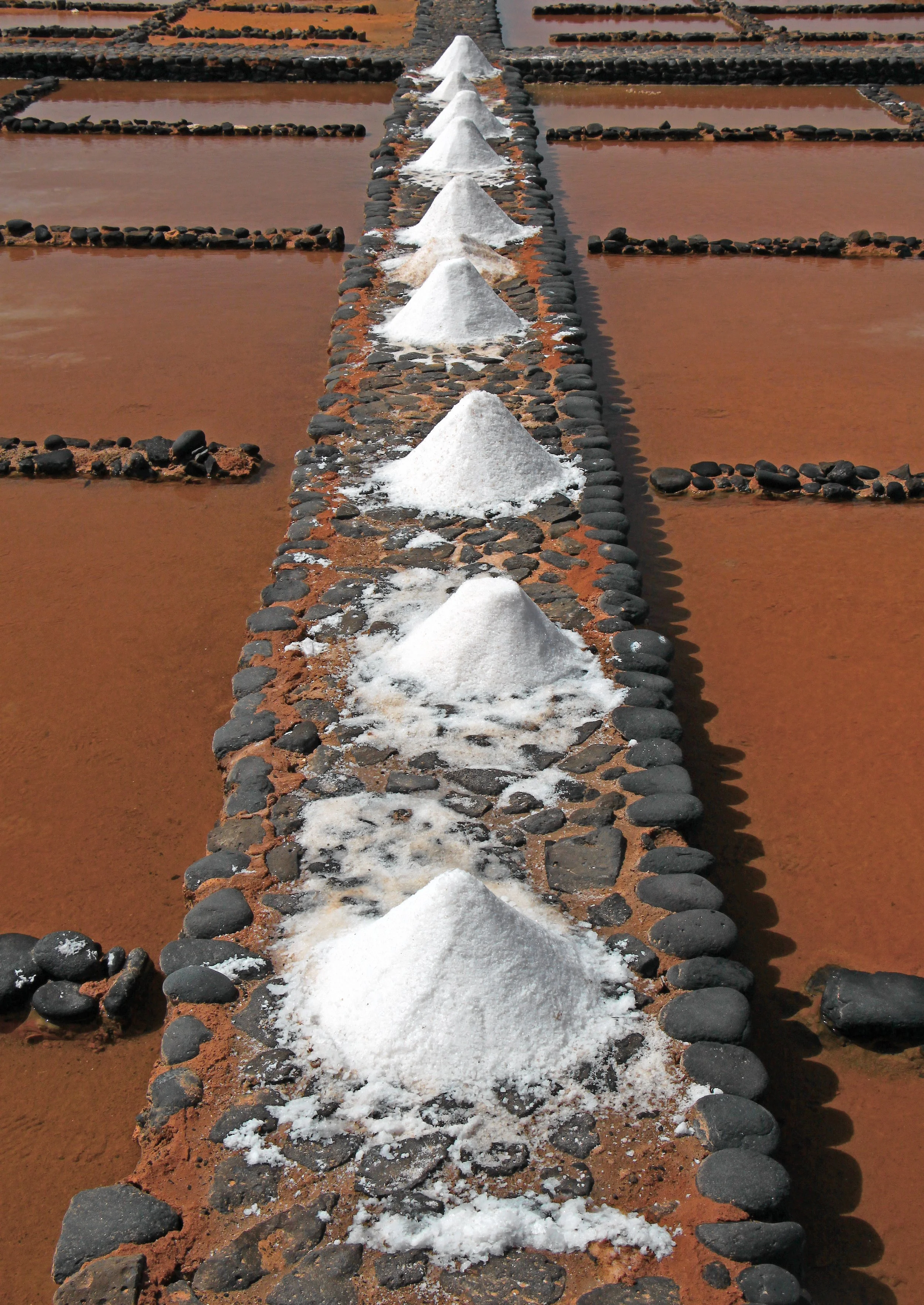
Salt evaporation ponds in Salinas del Carmen, Fuerteventura, Canary Islands (Photo by H. Zell via Wikimedia Commons CC BY-SA 3.0)
Put salt (aka sodium chloride) in your pasta water and you’ll end up with delicious spaghetti. Put pure sodium in it instead… and it will explode.
It’s the latest edition of “The Element of Surprise,” our occasional series about the hidden stories behind the periodic table’s most unassuming atoms, isotopes, and molecules. This time we’re talking all about sodium.
It’s the periodic table’s saltiest element. It powers your body like a battery and you need it to survive. So why is too much of it bad for you? Plus, how did salt help the North win the Civil War?
Featuring Raychelle Burks, Trisha Pasricha, Ashley Dumas.


ADDITIONAL MATERIALS
See images of the Slanic Salt Mine in Romania and the Wieliczka Salt Mine in Poland, now major tourist sites.
Check out Theodore Gray’s “Sodium Party” YouTube video series where he drops sodium chunks of various sizes into water to observe how they explode. Here’s the first video in the series.
Want to learn more about the role of salt throughout human history? Read Mark Kurlansky’s Salt: A World History.
SUPPORT
To share your questions and feedback with Outside/In, call the show’s hotline and leave us a voicemail. The number is 1-844-GO-OTTER. No question is too serious or too silly.
Outside/In is made possible with listener support. Click here to become a sustaining member of Outside/In.
Follow Outside/In on Instagram or join our private discussion group on Facebook.
CREDITS
Host: Nate Hegyi
Reported, produced, and mixed by Felix Poon
Editing by Taylor Quimby
Our staff includes Justine Paradis, Marina Henke, and Jessica Hunt.
Executive producer: Taylor Quimby
Rebecca Lavoie is NHPR’s Director of On-Demand Audio.
Music by Ryan James Carr, Blue Dot sessions, Lennon Hutton, and Hampus Naeselius.
Outside/In is a production of New Hampshire Public Radio
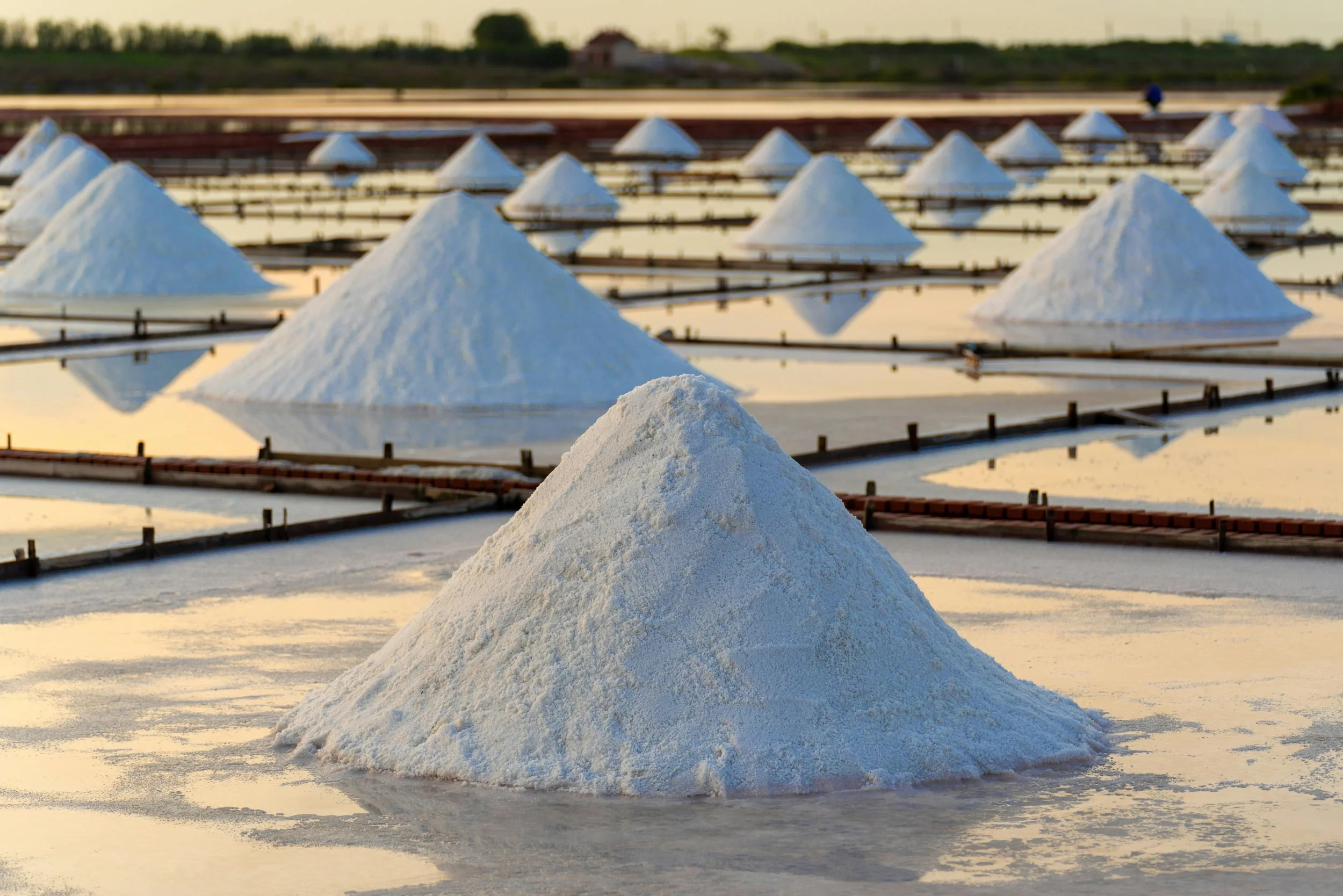
Salt evaporation ponds in Tainan City, Taiwan (Photo by Timo Volz via Pexels)
Audio Transcript
Note: Episodes of Outside/In are made as pieces of audio, and some context and nuance may be lost on the page. Transcripts are generated using a combination of speech recognition software and human transcribers, and may contain errors.
Nate Hegyi: From NHPR this is Outside/In, a show where curiosity and the natural world collide.
I’m Nate Hegyi, here with producer Felix Poon.
Felix Poon: Hello Nate.
Nate Hegyi: Hello hello.
Felix Poon: I am here with you because I want to talk to you about sodium. What do you know about sodium?
Nate Hegyi: Um, I know that I probably eat too much of it. I love soy sauce. I love salty things. Do you like sodium? Are you a salty guy?
Felix Poon: Um, sometimes I wonder if I get enough sodium.
[MUX IN: Dusting by Blue Dot Sessions]
Nate Hegyi: Really?
Felix Poon: Like when I get snacks, like pistachios, for example. Like any nuts, I always look for the unsalted.
Nate Hegyi: Really? I mean, that's good.
Felix Poon: But, you know, the other controversial thing I do when I cook pasta, people put salt in the pasta water.
Nate Hegyi: Really?
Felix Poon: Yeah. But let’s take a step back, because we’ve kind of been conflating salt and sodium. Obviously, people put salt on all sorts of things.
[MUX OUT]
But do you know what would happen if you put pure sodium into your pasta water instead?
Nate Hegyi: No what would happen?
Felix Poon: Well, I've got a video to give you an idea.
Clip: a 35 hundred pound container of sodium hurdles into the lake and crashes through a foot of ice. As the water seeps in, smoke rises through a series of muffled explosions.
Nate Hegyi: Woah.
Felix Poon: Yeah, this is no cooking video – if you put pure sodium in your pasta water, it would explode.
Nate Hegyi: Your kitchen would be screwed.
Felix Poon: Yeah, this was a 1947 recording of the US government disposing surplus sodium into a lake after World War II.
Clip: the containers go up with spectacular results as water and sodium meet…
[explosions]
Felix Poon: sounds like cannons, doesn't it?
Nate Hegyi: Yeah, exactly. It sounds like a battlefield.
[MUX IN: Can’t Stop by Ryan James Carr]
Felix Poon: I mean that was thousands of pounds of sodium, but even just a small grape-sized piece of it will explode like a fire cracker when it hits water.
Clip: [Audio explosion]
Felix Poon: Can you imagine if this happened every time I put salt in my soup?
Nate Hegyi: That's an ultimate kitchen renovation. Just drop some sodium into a pot. Boom.
[MUX SWELL]
<<NUTGRAPH>>
Felix Poon: For this episode of Outside/In, it’s another edition of The Element of Surprise.
Nate Hegyi: That’s right, in case you’re not familiar, this is our occasional series about the hidden stories behind the periodic tables, most unassuming atoms, isotopes and molecules.
Felix Poon: So in today’s episode, we are talking about the saltiest element. You need it to survive. But why is too much of it bad for you? And plus… it explodes?
That’s right, we are gettin’ jiggy with sodium, na-na-na-na-na-na-na, gettin’ jiggy with it, do you get it Nate? Do you get it.
Nate Hegyi: I bet you feel so clever. N-A right, that’s the periodic table?
Felix Poon: Yes, exactly. On the periodic table, sodium is abbreviated N-A.
Nate Hegyi: All that and more, na na na na na na na next… after a break.
<<PRE-ROLL BREAK>>
Nate Hegyi: From NHPR. This is Outside/In, a show where curiosity and the natural world collide. I am Nate Hegyi here with Felix Poon.
Felix Poon: Yes. And I'm here to talk about sodium.
[MUX IN: Trusty by Blue Dot Sessions]
Sodium is the sixth most abundant element on planet earth. But did you know that it even exists in space?
Nate Hegyi: You know what, Felix? I did because we're in space. Earth is in space. It exists in space.
Felix Poon: Okay, but like, more impressively, the planet Mercury, for example, has a tail that's made up of sodium atoms, and it stretches 15 million miles into space.
If you look at long-exposure photos of Mercury, using a special filter, it almost looks like a shooting star or a comet or something.
Nate Hegyi: Wow, I didn't know. That's wild. Yeah, it's like a giant comet.
[MUX SWELL AND OUT]
Felix Poon: And of course, I'm gonna be talking a lot in this episode about one of our most famous sodium based compounds, which is salt. But I thought maybe let's start with sodium by itself first.
Okay. So on its own sodium, if you purify it, it's a metal, a pretty soft one. Actually, you can cut into it with a butter knife or even squish it in your hand. It almost looks like a cheese because it's like silvery when you cut into it, but then it starts to tarnish in just a few seconds.
Nate Hegyi: Oh, interesting.
Felix Poon: Yeah, and this is maybe the most important thing about sodium – it’s super reactive.
That’s why purified sodium has to be kept in oil – as soon as it touches water, a few things start to happen.
First, the sodium basically peels the hydrogen off from the water, forming hydrogen gas.
Raychelle Burks: and then there's an energy release and that ignites maybe the hydrogen gas and then it gets hot and there's some steam and it's very dramatic.
This is Doctor Raychelle Burks. She’s an analytical chemist. And Raychelle says that you can’t find chunks of pure sodium naturally on the planet, because all of the sodium atoms on Earth have long since reacted to and bonded with other elements.
Raychelle Burks: It's that person who can't be single.
[MUX IN: Daydreaming by Ryan James Carr]
Raychelle Burks: I’m a serial monogamist. Whatever that is. Like, I got to be boo'd up, as the kids say.
Felix Poon: Boo'd up with chloride, usually.
Raychelle Burks: Boo'd up with chloride. Or again, if it's soda…carbonate, it loves a carbonate moment
Felix Poon: Sodium chloride is, of course, salt.
Felix Poon: Sodium carbonate, or soda ash, is used in glass production and in detergents.
And…
Raychelle Burks: It loves a bicarbonate moment.
Felix Poon: Sodium bicarbonate. You know what that is Nate.
[MUX OUT]
Nate Hegyi: Oh, that's baking soda, isn't it?
Felix Poon: Exactly. I'm sure you have some in your kitchen.
Nate Hegyi: I do.
Felix Poon: it's used for leavening bread. It releases gas when it contacts acid like lemon juice. And that gas is what makes fluffy cakes and little pockets in bread. Or as Paul Hollywood from The Great British Bake Off would say, a good crumb structure.
Nate Hegyi: That was an attempt at a British accent there.
Felix Poon: That was a terrible British accent. I'm sorry.
Nate Hegyi: I'm gonna do it in a Scottish accent, a good crumb structure that's kind of almost a Liverpoolian. Sorry, everybody in England that listens to this.
Felix Poon: Anyways. Okay, one more compound of note. Sodium fluoride. I'm sure you know what sodium fluoride is, right?
Nate Hegyi: Yes. That is, uh, what is in our water, right?
Felix Poon: Yes. It's one of a few fluoride compounds that's in our water, but it's the main one that's used in toothpaste for preventing cavities.
[MUX IN: Craz by Blue Dot Sessions]
Nate Hegyi: Okay. So like, sodium, as you said, it's this element that, you know, gets booed up. It's the one that you're always seeing quibbling with, you know, bicarbonate or with fluoride. But you know what? They love each other.
[MUX SWELL]
Felix Poon: So I want to play a salt quiz game with you, Nate. Okay. Are you ready?
Nate Hegyi: Okay. So salt is. Again. That's sodium chloride, right?
[MUX OUT]
Felix Poon: Sodium chloride. Nacl.
Nate Hegyi: Nacl. The ultimate long term relationship.
Felix Poon: So in 2025, about 40 million tons of salt was sold in the United States. What industry do you think was the number one purchaser of all the salt produced in the country?
Nate Hegyi: Um, I'm actually gonna say state departments of transportation for road salt. That's my guess.
Felix Poon: You're pretty close. That's number two.
Nate Hegyi: Okay, so number one. Okay, so number one, um, it's got to be something industrial. I don't think it's food.
Felix Poon: Yeah. You're actually right. The chemical industry uses 42% of the salt that's produced in the US. They use it to make plastic, chlorine, pharmaceutical drugs.
Nate Hegyi: Wow. I didn't know that they all had salt in it.
Felix Poon: Uh, I mean, salt, you know, NaCl, chlorine. They just separate the two. They get chlorine, right?
Nate Hegyi: Oh, interesting. Okay.
Felix Poon: And then road salt for deicing highways in cold climates. Uh, they're 37% of salt usage.
But of course, you know, I wouldn't blame people for thinking that salt that we eat is a pretty big deal. Yeah. And it is health wise, it's a huge deal. Probably the number one reason we equate salt with sodium. Yeah. We're constantly told that we should be eating a low sodium diet, right. And that eating too much salty foods is bad for your health. Yep. Do you have any idea why too much sodium causes problems like high blood pressure. Nate.
Nate Hegyi: I'm guessing that it collects plaque in our arteries, which makes our arteries smaller, which increases our blood pressure.
Felix Poon: Not quite. It does have to do with sodium in our bloodstream. But I talked to Doctor Trisha Pasricha about this. She's a gastroenterologist. And the Ask a Doctor columnist for the Washington Post. And Trisha told me that the thing is, the water in our bodies follows sodium.
Trisha Pasricha: when you have too much salt floating around in your bloodstream, water is going to be attracted to that and come in.
Felix Poon: So the water gets moved out of your cells, into your blood (which is why too much salt makes you dehydrated.)
But more importantly when it comes to blood pressure, more water in your blood vessels means more pressure, aka high blood pressure, which can increase the risk of heart attack, stroke, and other scary stuff.
Nate Hegyi: So if you if you start, you know, a few days of not eating sodium or eating very little sodium, will your blood pressure drop pretty immediately?
Felix Poon: Yeah, like within a week according to studies. But you have to maintain a low sodium diet to keep the benefits. You can’t just do it for one day and expect all your health issues to go away.
Nate: Hmm.
Felix Poon: Okay, so like I said, too much sodium leads to high blood pressure, but here’s the weird thing: not enough sodium can also be downright dangerous.
Trisha Pasricha: You can sometimes see this like in marathon runners, for example, who are like drinking lots and lots of water and maybe not balancing that with electrolytes.
Nate Hegyi: Okay, so if you drink Gatorade or liquid IV, it always tastes salty. And I've looked at the sodium levels and they're like pretty high because that's your electrolytes.
Felix Poon: Yes, exactly. What are electrolytes, I feel like? Is this some gimmicky like
Nate Hegyi: oh yeah Have you ever seen the movie Idiocracy?
Speaker 1: Brawndo's got what plants crave.
Speaker 2: Yeah, it's got electrolytes.
Speaker 3: What are electrolytes? Do you even know?
Speaker 4: It's what they use to make Brawndo.
Speaker 3: Yeah, but why did they use them to make brawndo?
Speaker 5: Because Brawndo’s got electrolytes.
[MUX IN: Mindscape by Lennon Hutton]
Felix Poon: So any substance that has a positive or a negative electrical charge when it’s dissolved in water is an electrolyte. So some of the main ones besides sodium are chloride, potassium, magnesium, calcium. We need electrolytes, especially sodium, for basic bodily function.
Trisha Pasricha: the reason your muscles can contract, the reason your heart muscle is contracting, the reason your stomach muscle is contracting is because of this exchange of sodium.
Felix Poon: It’s almost like sodium is part of the electric battery that powers our muscles and organs.
Trisha Pasricha: when your heart needs to contract in this coordinated fashion, it's because suddenly the channels open
Felix Poon: These channels are kind of like little gates in the cell wall that can open to let sodium in and out of the cell.
Trisha Pasricha: the sodium floods in and briefly the charge of that cell flips. And goes from negative to positive.
And your cell going from negative to positive creates this electrical voltage, essentially a “spark”
Trisha Pasricha: And when it does that, it can transmit that signal to the next cell. And then that signal, the electrical currents changes, and then it propagates downwards.
Felix Poon: Which all coordinates the function of not just our muscles, but entire organs.
[marathon ambi]
Did that make sense for you Nate?
Nate Hegyi: Yes. Yeah. I think the way you said it earlier, it's like a battery.
Felix Poon: It's like a battery. Just like recharging your cells to fire off like signals to each other.
Trisha Pasricha: without the sodium, our hearts wouldn't beat, right? And we wouldn't be able to move our muscles. I couldn't grab my cell phone up right now and take a call because my arm wouldn't work.
[MUX OUT]
And so sodium is critical to everything that we do second to second. So it’s actually amazing if our sodium gets to low or too high you can start to see these very dangerous electrical, abnormal electrical rhythms in your heart develop that can be fatal.
Nate Hegyi: That is wild. You really don't hear very much about like the dangers of low sodium. I wonder why that is. Is it really hard for us to just, like, have no sodium?
Felix Poon: Yeah. I mean, I think in modern society salt is everywhere – it’s like, you’re much more likely to hear about people needing to reduce their sodium intake, rather than ramp it up.
Nate Hegyi: Yeah. I also wonder if this is why, um, some ungulates, so like deer and elk, are so attracted to salt licks. Like salt licks they’re a big block of salt and potentially other minerals. And I remember when I had goats, we had to make sure that they had like a salt lick.
Felix Poon: Yeah and we’re going to get into this later, but herbivores especially need to supplement their diets with salt, so a lot of animals like deer are big fans of salt licks.
As for humans, Trisha says our bodies do a pretty good job responding to its own cues…like we’re evolutionarily wired to crave salt when our body needs more of it.
And that’s really not hard – like when’s the last time you had a salty snack Nate?
Nate Hegyi: I just ate some Takis. I got the Takis Fuego. So those are very good, but they're very salty.
Felix Poon: I mean, it is not hard to just find your closest convenience store or gas station and get some salty snacks.
[MUX IN: Jespen by Blue Dot Sessions]
Nate Hegyi: Oh my gosh yes, absolutely.
Felix Poon: Yeah, but you know, there was a time in human history when there wasn’t enough salt to go around.
Nate Hegyi: Really?
Felix Poon: And you know what that would mean? It would mean whoever controlled salt controlled the world.
Nate Hegyi: Mhm.
Felix Poon: And I'm gonna talk about that after the break.
<<MIDROLL BREAK>>
Nate Hegyi: Welcome back to Outside/In from NHPR, a show where curiosity and the natural world collide. I’m Nate Hegyi, and I’m here with our salt-of-the-earth producer, Felix Poon, who was just about to tell us why in pre-modern times, controlling salt meant controlling the world.
[MUX IN: Halls of Titan by Hampus Naeselius]
Felix Poon: In a world with little salt.
[RECORD SCRATCH / MUX STOP]
Nate Hegyi: You don't get to do that again. You don't get to do that again.
Felix Poon: Anyway, so there was a time when humans got just the right amount of sodium without really trying.
Ashley Dumas: Hunter gatherer people who rely on wild plants and wild animals get salt naturally through the flesh of those animals.
Felix Poon: This is Ashley Dumas.
Ashley Dumas: I am an archeologist. I study the history and production of salt around the globe.
Felix Poon: So is it fair to call you a salt-ologist? Is that a term?
Ashley Dumas: Uh, no, but I like it. I you can just call me salty.
[MUX IN: Lo Margin by Blue Dot Sessions]
Nate Hegyi: She sounds fun.
Felix Poon: Yeah. Uh, so Ashley says that there wasn't actually any demand for salt until the first agricultural revolution happened.
Ashley Dumas: When you switch to an agricultural based diet, you're getting most of your calories from grains, and they don't provide enough salt to regulate the moisture in your body.
Nate Hegyi: So as soon as we started eating more crops, we weren't getting enough salt.
Felix Poon: Yes, exactly. So for the first time after the first agricultural revolution, we needed to add salt to our food. But it was also pretty handy as a tool.
Ashley Dumas: Salt was important as a food preservative around the ancient world, particularly for fish.
Felix Poon: Vikings, for example, could sail long distances because they had salted cod and salt made animal agriculture possible, too. Any guesses how? I'm sure you know.
Nate Hegyi: Uh, was it because we could, like the Vikings were doing with fish? Like kill a cow and then salt it for beef jerky?
Felix Poon: Well, this comes a stage earlier. Like, how could we befriend the animals to even, like, follow us around and hang out on our farm?
Nate Hegyi: Oh I know this, I had goats! You use Salt licks.
Felix Poon: Exactly. So sheep need about 2.5 times as much salt as humans do, and horses and cows need as much as 8 times the amount.
So any rancher, a stable hand worth their salt knows that they can't keep their animals without salt licks.
Nate Hegyi: I wonder where that term came from. Worth their salt.
[MUX OUT]
Felix Poon: Ah, well, that gets me to my next big point. There is a story that back in Roman times soldiers were paid in part… with salt. Have you heard of this Nate?
Nate Hegyi: I have not heard of this.
Felix Poon: There’s actually no documented evidence of this.
Nate Hegyi: Oh.
Felix Poon: But it’s kind of an often repeated story.
But, the fact that this became a myth goes to show just how crucial salt was. Because after the agricultural revolution, salt became a valuable commodity. AND…
Ashley Dumas: And the Latin word for salt is sal SAL and this is the root word for salary.
Nate Hegyi: So you're worth your salt because it was so valuable.
Felix Poon: Right. You're worth the income you're getting paid to buy things like salt.
[MUX IN: Trusty by Blue Dot Sessions]
Felix Poon: the point of all this is we needed salt. And there's a few ways that our ancestors learned to produce it. Do you know what they were? Nate.
Nate Hegyi: I'd go to the ocean. I'd go and get some water and let that bucket dry out and have some salt.
Felix Poon: Right. Yeah. The method they used actually was in the shallow lagoons. It was called solar evaporation.
Ashley Dumas: People have figured out thousands of years ago that if you can control the movement of seawater into these lagoons, that you can sort of regulate the rate at which the salt will evaporate out of the seawater using dams and pipes, for instance.
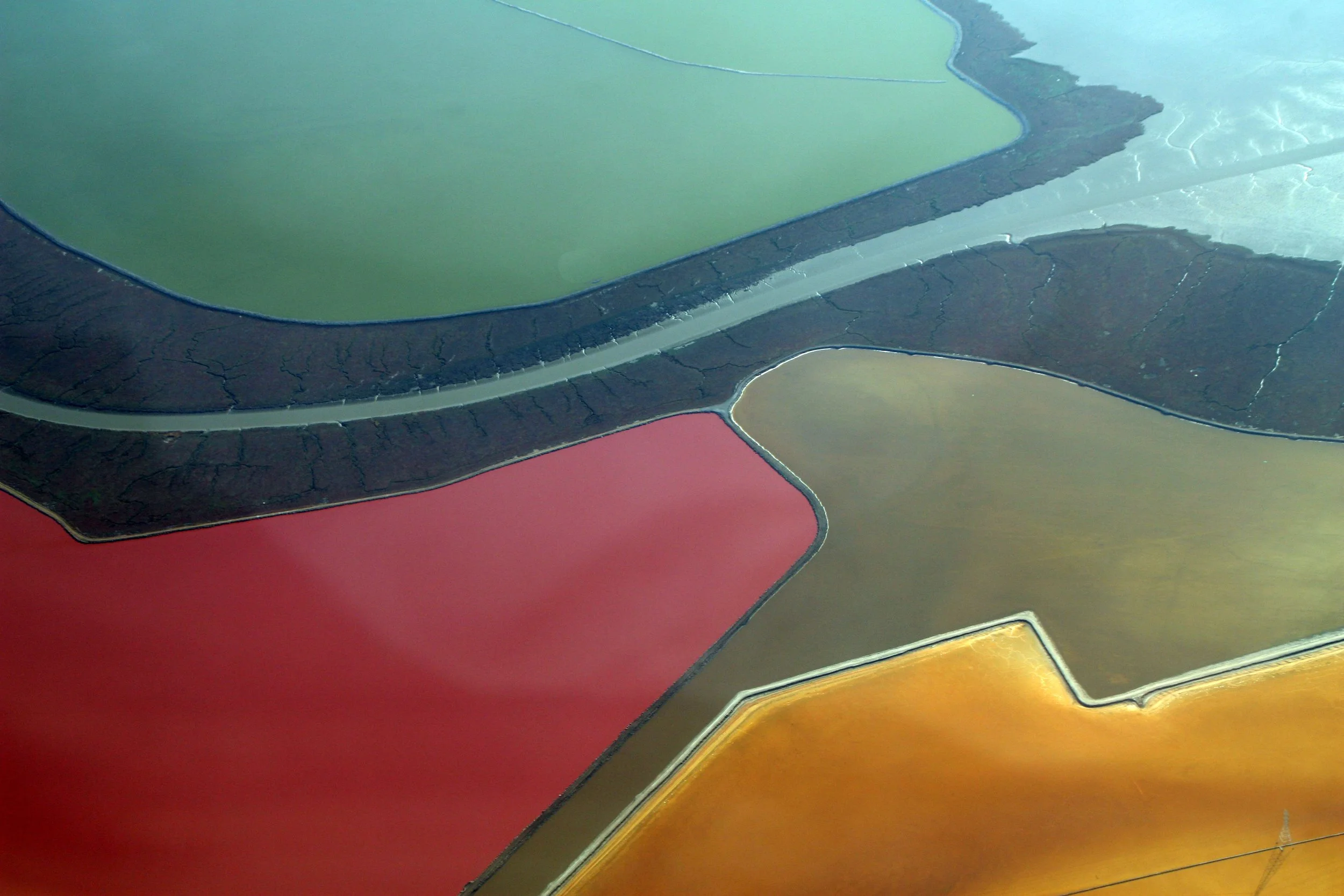
Felix Poon: I just want to share this picture of what these lagoons look like. Because this is still a method that’s used today.
[MUX OUT]
Nate Hegyi: Okay. San Francisco Bay salt ponds. Oh, those are beautiful.
Felix Poon: Like, look at all those colors.
Nate Hegyi: It looks like a, um, a close up of stained glass. It's got yellows and reds and browns very, very vivid.
Felix Poon: Yeah. You've got green water from algae. Then there's yellow and brown water that’s because of brine shrimp.
Nate Hegyi: That's cool.
Felix Poon: All these impurities basically get filtered out later. But like in the process of evaporation, there's all these like microorganisms and like chemistry going on that colors the lagoons.
Nate Hegyi: Yeah.
Felix Poon: But anyways, another way our ancestors got salt was to mine it from underground salt deposits. These are essentially leftover from when ancient seas or salt lakes dried up.
This was pretty dangerous work, because of dehydration from the constant breathing in of salt dust, and the life expectancy of miners… was pretty bad.
These days a lot of salt mines have been repurposed. Some of them are used for storage. Like, in Kansas there’s one that stores government records and old film-reels, because they keep really well in the dry air.
Nate Hegyi: Oh that is actually a good use for salty air.
Felix Poon: Exactly.
Nate Hegyi: And then there are a lot of mines that are actually tourist destinations now.
And I want to show you some pictures of these because they are very impressive. Like just take a look at these. So here's the Slanic mine in Romania.
Nate Hegyi: Wow. It looks like a cathedral.
Felix Poon: And then let me just show you this. This is the Wieliczka Mine in Poland.
Nate Hegyi: Yeah. This is not I thought I was expecting like, you know, shafts dark and cramped. These literally look like underground cathedrals.
Felix Poon: Like, it literally looks like something out of like, Lord of the rings or something.
Nate Hegyi: Creepy but amazing Gothic. You should really look at if you haven't seen one of these.
Felix Poon: We'll put a link to it in the show notes.
Nate Hegyi: Yeah. Click on that link right now and check it out.
Felix Poon: Another way to get salt was from Salt Springs.
Ashley Dumas: They would very simply collect some of the salt water from the springs, put it in these bowls, and place the bowls directly over a fire or hot coals.
Felix Poon: This is sometimes referred to as a salt works kind of like an ironworks. Yeah. And one of the places they use this method was in the southeastern United States among indigenous people before European contact.
Ashley has mainly focused her research in present-day southwest Alabama, to study the role salt played there. This was about a thousand years ago, and at that point salt was a relatively scarce resource.
Ashley Dumas: I can't think of a better parallel then to compare the desire and production and trade of salt and antiquity to the desire and production of trade of oil in the modern day.
[MUX IN: Noe Noe by Blue Dot Sessions]
We've seen what people will do, the extremes that people will go to, to acquire a mineral resource that they want, that they need, that they don't have.
Nate Hegyi: Wow. So were they like Salt Wars?
Felix Poon: So based on the evidence Ashley has seen from three archaeological sites in Southwest Alabama, she thinks that one group of indigenous folks took control over the land from another group, and took over their saltworks.
Ashley Dumas: We see a change in technology. A different types of ceramic bowls are being used. They're larger, they're made completely differently. And we don't see this as a local change in technology like these late woodland people just decided to start doing it differently. We see this instead as sort of an colonization event by people from outside the region.
Felix Poon: So whether or salt wa s the reason for the takeover, or even whether they fought wars over it as opposed to some kind of peaceful transition isn’t exactly clear.
But the general point Ashley makes is that in pre-modern times, whoever controlled salt controlled the ability to feed their people, to run their economy, and to maintain their armies.
Nate Hegyi: Like I would totally watch a ten part Netflix series about this. Like a historical recreation Game of Thrones except it’s called The Salt Wars. I'd watch that.
Felix Poon: That’s a great title for a Netflix series, the Salt Wars.
Nate Hegyi: Yeah it’s not Star Wars, it’s the Salt Wars.
[MUX SWELL AND OUT]
Felix Poon: There is a pretty dramatic example of what role salt played in a war, the US Civil War. Do you remember what strategies the Union Army used against the Confederacy?
Nate Hegyi: My Civil War knowledge is not very strong. Felix, you're gonna have to help me out with that one.
Felix Poon: Okay, so one of their key strategies was actually depriving the south of salt.
Nate Hegyi: Wasn't there salt springs throughout south, the southeastern United States, were they not not using those.
Felix Poon: They were primarily getting their salt, not from Salt Springs. They were getting it from, you know, where we get a lot of our salt these days. Global trade.
Ashley Dumas: The southern states were producing cotton and they would send the cotton over, usually to England, where it would be spun into cloth. And one of the items that was sent back in the ballast of those ships was salt.
Felix Poon: But one of the first things the union did at the start of the war was blockade the South.
[MUX IN: El Tajo by Blue Dot Sessions]
So the supply chain for all sorts of essential goods, including salt, dried up nearly overnight. I mean, the governor of Alabama even called it a salt famine.
Nate Hegyi: Mhm.
Felix Poon: And yeah, salt was used to preserve meat, which was an essential food ration for soldiers. But it was also used to tan leather to make saddles and shoes. So not only were soldiers going hungry, a lot of them wound up barefoot.
Nate Hegyi: So you really can't run an army without salt?
Felix Poon: Yeah. Not in those times at least. They didn’t have refrigeration yet, or polyester shoes. So that is why the South tried to ramp up their salt making Locally with those salt Springs
Nate Hegyi: Okay, so they did use the salt springs.
Felix Poon: Yes they did, but then the North would attack those saltworks wherever they found them.
And then enslaved Black men and women who were working these salt works were sabotaging them, or giving up the locations to the Union army and navy.
Ashley Dumas: So it was sort of like a game of whack a mole between the the Union Navy and the Confederate salt production.
Felix Poon: In fact, one historian estimated that taking out one saltworks was the equivalent of taking out 20,000 Confederate soldiers. And, you know, while we can't say if the South could have won the war, if they'd just had enough salt, historians do say that the lack of salt definitely contributed significantly to their defeat. And as one southern veteran put it after the war, quote, “do you know why you northerners whipped us Southerners? It's because you had salt.”
[MUX SWELL AND OUT]
Felix Poon: Anyways, these days, salt is way more abundant, mostly because of new technology. But not every country makes their own salts either because they have no coastline or salt deposits, or because they just haven't developed the infrastructure for it. So salt is still traded around the world for that reason, but also because of fancy gourmet salts that only exist in certain regions.
Nate Hegyi: Yeah. Like the Himalayan pink salt.
Felix Poon: Yes, exactly. What? Do you know why it's pink?
Nate Hegyi: Um, probably because it's mixed with another mineral.
Felix Poon: I mean, true, but what do you think those minerals are? What's the key mineral that's turning it red iron. Iron oxide.
Nate Hegyi: Rust.
Felix Poon: It's rusty salt. Himalayan salt is just rusty salt. It's mined from the Punjab region of Pakistan, has trace minerals in it that include iron oxide. Yeah. Okay.
And then there's French gray salts or sel gris, huh? French gray. Salt is gray because it's raked from the bottom of solar evaporation pools. And so it picks up some clay.
Nate Hegyi: Okay.
Some people say French gray salt is healthy because it contains essential minerals like magnesium, potassium, calcium, which do you remember what these are all examples of? Nate.
Nate Hegyi: They are all electrolytes.
Felix Poon: Yes. Ding ding ding ding ding. Electrolytes. Next time you're running a marathon, make sure to pack some French gray salt in your pocket.
[MUX IN: Plastic by Ryan James Carr]
Nate Hegyi: I would be the fanciest marathon runner out there.
[MUX SWELL]
So, Felix, do you think that sodium is as, uh, worth its salt?
Felix Poon: I mean, it's got so many uses. It helps our bodies function. But also, you know, don't try this at home, uh, unless you know what you're doing, but it can show you a pretty good, uh, fireworks display.
Nate Hegyi: What I have learned is don't drop sodium by itself into your cooking pot. I have learned that, uh, too much sodium, and we all know not good for our hearts, but, hey, you better make sure you have sodium. It's like water for us. We have to have it to survive.
Felix Poon: Yeah, I would like to survive. That sounds good.
As they say, all things in moderation!
Nate Hegyi:
Okay, that is it for today. If you've got a suggestion for our next element of surprise, send us an email at outside-in at npr.org, or you can call us on our hotline one 844 Go Otter. Do not suggest iodine because my buddy Chris Schleck wrote in via email and already suggested that one. And now I just don't want to do it to spite him. No, I'm just kidding. We'll probably do iodine.
Felix Poon: If you want to hear about any of the elements, we've already covered helium, aluminum, lead, silicon. You can listen to those episodes now and subscribe on Apple, Spotify, or wherever you get your podcasts.
Nate Hegyi: This episode was reported, produced and mixed by Felix Poon. It was edited by our executive producer Taylor Quimby. Very much worth his salt. Rebecca LaVoy is NPR's director of On Demand Audio. I am the host of Outside In. Nate Hegyi. Our staff also includes Justine Paradis, Marina Henke, and Jessica Hunt.
Felix Poon: Special thanks to Mark Kurlansky, author of Salt A World History, and to Theodore Gray, the man Behind a series of YouTube videos titled Sodium Party, where he explodes sodium chunks of varying sizes in a lake on his farm.
Felix Poon: Music in this episode is from Ryan James Carr, Blue Dot sessions, Lennon Hutton, and Hampus Naeselius
Nate Hegyi: Outside/In is a somewhat salty production of New Hampshire Public Radio.
You know “Salt Wars,” by the way, Felix, that could be the next Star Wars.
[Felix hums Star Wars theme song]
Nate Hegyi: It’s a long, a long time ago. In a land not so far away.
This is a classic Felix goes on too long with the song. Sorry everybody.
Felix Poon: Rebel salt makers striking from a hidden base, have won their first victory against the evil salt empire.