It's like riding a bike
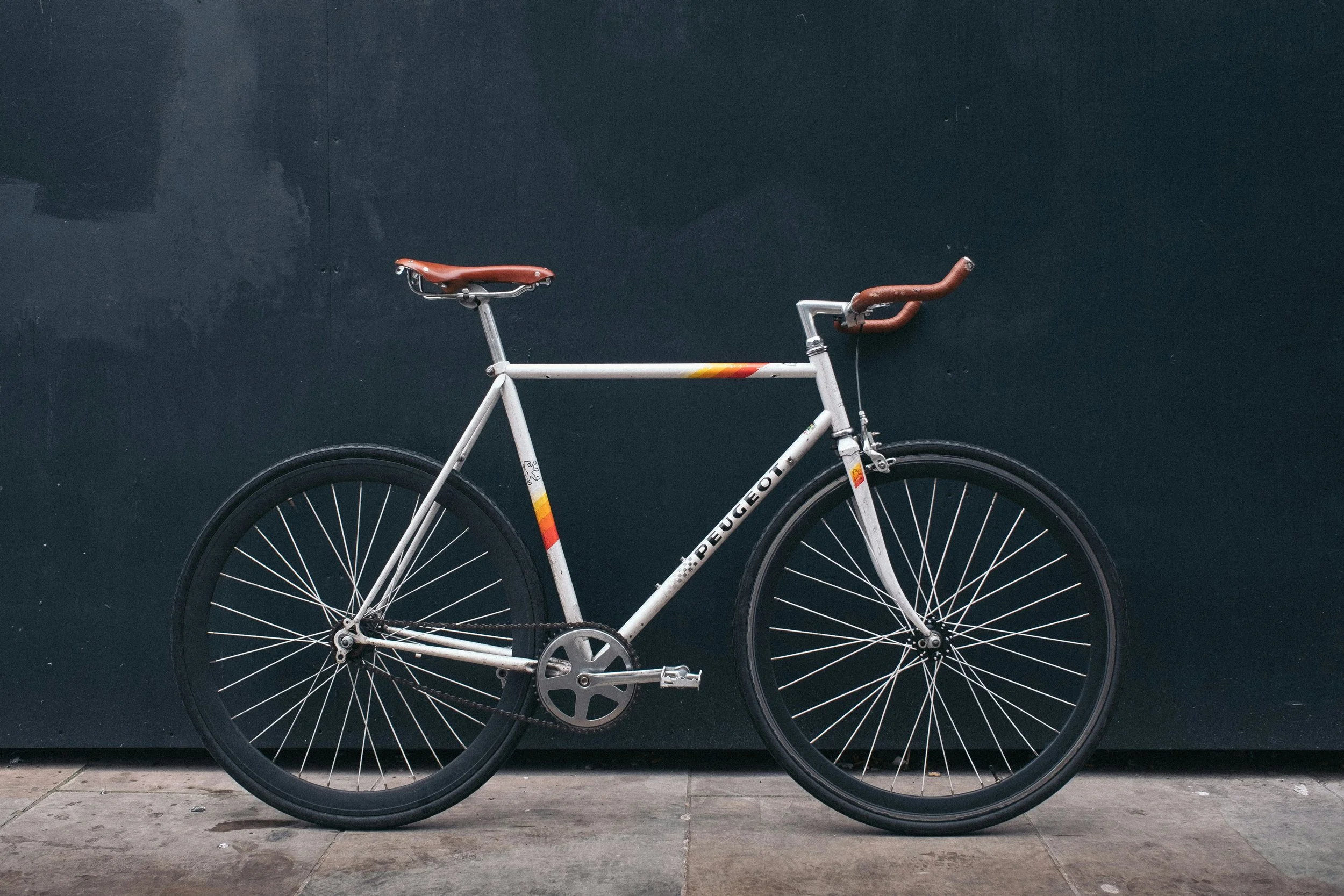
Photo by Robert Bye via Unsplash.
To hear an ad-free version of this episode, join our Patreon.
Producer Felix Poon used to be a reckless moped driver who weaved in between semi trucks. Now he’s a cautious cyclist constantly looking over his shoulder for the slightest sign of danger, wondering why he still bikes at all.
To figure it out, Felix enlists the help of other cyclists. A city bike commuter who dismisses his mom's concerns about his safety. A self-identified "fat" woman who gets back on the bike after years of not biking. And a father who wished his son would risk the kind of scraped knees and broken bones he got when he was a kid.
Together, Felix and the gang consider what biking means to their lives, and what, at the end of the day, gets them back on the saddle.
Featuring Reece Taylor Williams, Marley Blonsky, and Taylor Quimby.


ADDITIONAL MATERIALS
The “Four Types of Cyclists” paper was written for the city of Portland, Oregon to try to understand risk tolerance and whether people choose to bike or not. Which type are you?
Photojournalist Reece Taylor Williams’ “Self-portrait, Die in for cyclists killed in hit-and-runs in New York City, City Hall Park, August, 26, 2026” (Instagram)
Learn more about Marley Blonsky’s size inclusivity work through the organization she cofounded called All Bodies on Bikes.
SUPPORT
To share your questions and feedback with Outside/In, call the show’s hotline and leave us a voicemail. The number is 1-844-GO-OTTER. No question is too serious or too silly.
Follow Outside/In on Instagram, TikTok, or join our private discussion group on Facebook.
CREDITS
Host: Nate Hegyi
Reported, produced, and mixed by Felix Poon
Editing by Taylor Quimby
Our staff also includes Justine Paradis, Marina Henke, and Jessica Hunt.
Taylor Quimby is NHPR’s Director of Podcasts.
Music by Blue Dot Sessions, Guustavv, and Sven Karlsson
Outside/In is a production of New Hampshire Public Radio.
Audio Transcript
Note: Episodes of Outside/In are made as pieces of audio, and some context and nuance may be lost on the page. Transcripts are generated using a combination of speech recognition software and human transcribers, and may contain errors.
Nate Hegyi: From NHPR. This is outside in a show where curiosity and the natural world collide. I'm your host, Nate Heggie, here with producer Felix Poon.
Felix Poon: So, Nate, when did you first learn to ride a bike?
Nate Hegyi: I think I first learned, uh, and the way that any kid learns, I was probably like three years old. And I remember my dad, like, pushing me along on a bike with training wheels.
Felix Poon: Yeah. Same.
Nate Hegyi: And it just, like, took off from there for me.
Felix Poon: And then did you end up, like, riding around town after that or.
Nate Hegyi: Oh, yeah. I, I was like a bicycle explorer.
[MUX IN: Bundt by Blue Dot Sessions]
I lived in a small town in Wisconsin. And I remember my mom told me, do not cross the busy main street. And of course, you know, I had an entire summer to myself. I crossed that busy Main street. And then I was caught by my music teacher who saw me riding around in the part of town I wasn't supposed to be riding around in. She told on me. She. Tattletaled.
Felix Poon: Oh. A snitch!
Nate Hegyi: And I got grounded. Yep. And so I'll always remember that.
[MUX SWELL]
Felix Poon: Well, I'm still jealous of your experience because, like, I didn't get that. I lived on that busy street. Yeah. Um, so I only got to bike on our driveway.
[MUX OUT]
I didn't get the equivalent experience until I was an adult in my 20s. Um, I lived in Bangkok for a year teaching English.
Nate Hegyi: Whoa!
Felix Poon: And I bought a moped because the traffic there is horrendous.
[MUX IN: Decompression by Blue Dot Sessions]
It's like I'm zipping in between cars on gridlocked city roads. There are 2 or 3 lanes wide. Yeah, it was just the fastest way to get around.
Nate Hegyi: It also sounds kind of dangerous.
Felix Poon: Oh, yeah. Like, I did this, like, reckless thing where I'd go down in between like two 18 wheelers that are on either side of you.
Nate Hegyi: Oh, we were so dumb in our early 20s, weren't we?
[MUX SWELL AND OUT]
Felix Poon: I moved to Boston in my 20s, and I got on a bike instead of a moped because it was, you know, just like, the fastest way to get around. Mhm. But then over the years, I ended up seeing a lot of headlines about cycling fatalities. One even happened just outside my workplace. Oh, wow. A grad student was killed by, like, the same kind of 18 Wheeler that I would, you know, bike around in in Bangkok.
Nate Hegyi: Yeah.
Felix Poon: So I ended up going from this pretty reckless moped driver in Bangkok to an increasingly cautious cyclist who sometimes wonders, like, oh my gosh, like, why am I even getting on the bike to begin with, given the risks.
Nate Hegyi: Yeah, I definitely feel like I've evolved in somewhat of the same way. Yeah. I just feel like, you know, I've had a couple of close calls with big semi trucks on busy highways and I don't want to die that way.
Felix Poon: So we've changed how we relate to biking. I wanted to hear from other cyclists about their relationships to biking.
Felix Poon: From what biking means to their lives.
Jon Jensen: Something about the wind in your face. It just feels like freedom.
Felix Poon: To what it says about who they are.
Marley Blonsky: I thought I was the queen of the world. I felt unstoppable, I felt powerful.
Felix Poon: And what, at the end of the day, gets us back on the saddle?
Nate Hegyi: I'm gonna have Felix take it from here. Stick around.
<<FIRST HALF>>
Felix Poon: This is Outside/In from NHPR. I’m Felix Poon.
I grew up in a place where it wasn’t practical to bike beyond my driveway. So I never got that childhood joy of exploring the neighborhood on a bike.
That got me wanting to talk to someone who did have that experience.
Reece Taylor-Williams: I grew up in a town called Greenburgh in Westchester County, New York.
we lived in a section of town called colloquially known as the The Hills
And that's where I learned, you know, the tricks of like riding side to side to, to, you know, add some relief to your really steep incline.
[MUX IN: Jadie Grange by Blue Dot Sessions]
Um, so yeah, just, I mean, many, many, many summer days spent, uh, riding bikes, riding bikes to football practice.
Felix Poon: I imagine a lot of like joy and freedom. Was that the case?
Reece Taylor-Williams: Absolutely. Absolutely.
Felix Poon: This is Reece Taylor-Williams. Reece biked a lot with his younger brother growing up. He especially remembers this one time…
Reece Taylor-Williams: we had ridden pretty far from home and like, we felt safe. We knew what we were doing. We were having fun. We got caught in a pretty bad rainstorm and like rode home.
As a kid, Reece loved not having to rely on anyone to drive him somewhere. Now as an adult, Reece lives in New York City working as a photojournalist, and he loves not having to rely on public transit.
Reece Taylor-Williams: Was freelancing for a little bit. So I was riding my bike to every freelance assignment.
He bikes miles across the city, and across bridges between the different boroughs.
Reece Taylor-Williams: it just sort of became the only way I wanted to get around.
[MUX SWELL AND OUT]
Reece has always been a safe biker. He got that from his dad who was also a biker and raised him and his brother to follow the rules of the road, and always wear a helmet.
His mom though…
Reece Taylor-Williams: my mom has always been, uh, like, just really uncomfortable with me biking around the city
Reece Taylor-Williams: But I, I thought that her concern was that I wasn't being safe, you know?
And I'm like, I'm safe. I'm wearing my lime green helmet. I've got my lights, I've got my reflectors.
Um, and now I think I realized that her fear is more about like the, uh, the other folks.
[MUX IN: Archers Point by Blue Dot Sessions]
Felix Poon: The “other folks” Reece is talking about are drivers. And the reason Reece is realizing it’s more about their driving than his biking, is because of what happened to him in August.
Reece was feeling good after a particularly joyful weekend. It started with going to the inaugural Jamaica Day parade with his brother and his cousins.
He went to a birthday party where the guests wore all-white.
So I was like riding my bike, wearing all white. And, you know, like I was, I was just feeling really good. You know, it was a really, really beautiful weekend.
[MUX OUT]
[BROADCAST]
Felix Poon: It was early evening, the Monday after a weekend of great weather and great bike riding….
Felix Poon: And then one early evening, after this stretch of great weather and great bike riding, Reece stepped out to run an errand to the corner store on his bike. It was a short enough ride that he simply slipped on his Birkenstocks, and didn’t bother with his helmet.
Reece Taylor-Williams: I was riding near Saratoga Park in Bed-Stuy.
Felix Poon: This is a small neighborhood park in Brooklyn.
I'm coming down a one way
with a lane of parked cars on his left and a lane of parked cars to his right.
Reece Taylor-Williams: and it intersects with another two lane one way.
Reece has the green light. So he’s going through the intersection, and just then a truck comes barreling through, and it hits him.
Reece Taylor-Williams: Everything slowed down.
my body is now separating from the bike
I think my first thought was this is really disappointing
I'm really disappointed that I'm gonna cause my mom so much pain
because I'm getting hit by a car and I'm going to die. She certainly is going to be disappointed to know that I wasn't riding with the helmet, which was uncommon for me.
I’m like, the next thing that’s going to happen is, I’m going to this is before I hit the ground. This is like I’m going fly through the air. I'm going to land. I'm going to crack my head open. And I will not get to apologize to my mom. Nor my brother, nor my dad. And then all my friends.
Reece Taylor-Williams: I remember thinking, like, this is really embarrassing.
Felix Poon: Reece hit the ground. The truck drove off.
Reece Taylor-Williams: okay, I guess I'm still alive.
so I started to get up.
Uh, and I managed to like, get to my feet, started walking. And I remember thinking like, okay, you're kind of okay. You're alive. don't be weird. walk, go get your shoe, go get your bike out of the street.
Felix Poon: Reece says he got two staples in his head and some stitches on his knee. But the worst, as Reece tells it, was what happened to his heels and the soles of his feet, which weren’t protected by the Birkenstocks he was wearing. They got severely cut up.
[MUX IN: Louver by Blue Dot Sessions]
Both of his parents and his brother met him at the hospital that night.
when they showed up at the hospital, I was like, I'm sorry. I'm just really sorry.
she dismissed that and said, like, you know, please don't. I, I'm just happy you're safe and alive.
[MUX SWELL FADE UNDER AND OUT]
Um, so we, you know, we, we sort of addressed that immediately. Uh, I didn't feel like I could really greet anyone without acknowledging like. I'm sorry for being short sighted and I'm sorry that you're here right now, frankly.
Felix Poon: How's your body now? I guess it's been a little over a month. Like, ah. How's the healing going?
Reece Taylor-Williams: Healing is going pretty well. I mean, you know, staples and, um, stitches have been removed... I'm better. But, you know, but, you know, a lot of the trauma feels unseen. Uh.
Felix Poon: Yeah.
Reece Taylor-Williams: You know.
Felix Poon: I mean, speaking of unseen trauma, like, how did that change things for you? Like, how was how are you relating to biking differently?
Reece Taylor-Williams: Um.
Felix Poon: Like, do you feel like you've lost kind of something there? You've lost an innocence or like sense of freedom in biking?
Reece Taylor-Williams: Yeah. Yeah. I told my brother shortly after, I mean, a few weeks ago because he's biking throughout the city as well. Uh, and I just felt like it was my responsibility to remind him that, like, actually biking around the city is not about enjoyment.
[MUX IN: Langustina by Blue Dot Sessions]
Reece Taylor-Williams: And it's not about freedom. Maybe it's about like, it's, it's, it's a form of commuting, as is any other form of commuting. And it is only as freedom giving as any other form of commuting.
Felix Poon: Does that make you feel sad?
Reece Taylor-Williams: It feels like a loss in some ways I'm sad for some of the enjoyment to be removed from it, but. I think it's mature.
[MUX SWELL]
A few weeks after the crash, Reece went to New York’s City Hall Park to a cyclist die-in. A die-in is when a bunch of people lie down on the ground to show what a statistic, like dozens of cyclist deaths every year in New York City, would look like.
Reece has covered die-ins before. He’s taken photos of them… from a distance.
But this time, Reece lay down on the concrete, and he turned his camera towards himself.
He titled the photo:
Reece Taylor-Williams: Self portrait die in for cyclists, killed in hit and runs in New York City. City Hall Park. August 26th, 2026.
[MUX SWELL AND OUT]
VOICE MEMO: New message…
Levi: What's up? Outside in. This is Levi from Indiana. Just wanted to share my cycling story. Started around ten years old and it was my first shot at freedom. My circle grew from a few block radius to about a ten mile radius, where I could hang out with friends and explore my my city. that ended around 16 when I got a car and a driver's permit and didn't pick back up until, uh, about three years ago in my early 30s. when I discovered that me and my partner both wanted to get back on the bike, I hadn't realized that the car that I picked up at 16 would kind of keep me away from other people inside my box. And as soon as I discovered the bicycle and a local coffee outside group, I realized that I was missing the old hangouts with friends on a bike that I had had as a kid. Um, that community developed into something that we do every Sunday where we drink coffee outside and ride afterwards, and has turned into a newfound love of the bike.
[MUX IN: Candy Paint by Guustavv]
So there’s this paper that was published in the 2000s that talks about four types of cyclists.
Now it’s obviously not perfect, but it's been used by city planners, researchers, and advocates to try to understand risk tolerance and whether people choose to bike or not.
First there’s the “Strong and Fearless.” Sounds a bit like Reece before his crash. Then there’s the “Enthused and Confident” — they recognize the safety risks, and might bike more cautiously, but they still bike.
As opposed to the “Interested but Concerned” who WOULD bike if it felt safer.
Finally there’s the “No Way No How” group.
[MUX FADE OUT]
By the time she was in her 20s, Marley Blonsky was a “No Way No How.” Even though that’s not who she was as a kid.
Marley Blonsky: I was kind of the youngest in our, our neighborhood friend group. And so the bike was like the, the leveler, um, that I could tag along with my big sister and all of her friends.
Her big sister and friends let Marley play with them…but they weren’t very nice to her.
Marley Blonsky: Um, I had kind of a, I don't want to use the word evil. She's lovely, but a very mean big sister. And so she was kind of the ringleader in getting the rest of the neighborhood kids to like to make fun of me
Marley Blonsky: I mean, I was chubby as a kid and yeah, totally. I, my nickname was like the Poky puppy or Miss Piggy.
And I was often, um, you know, if they would play monkey in the middle or, um, chase or tag, I, I was the, uh, like always the kid who was like, okay, Marley will do the crappy job.
[MUX IN: Decompression by Blue Dot Sessions]
and who knows how much of that you can attribute to like actually being bigger bodied, but in my head.
Felix Poon: Sure.
Marley Blonsky: Everything was because I was fat or I was chubby or whatnot.
Felix Poon: Marley stopped biking as a teen. She got her driver’s license and she drove everywhere.
She thought about biking in her 20s, but was like…no… way.
Marley Blonsky: biking was You know, it was for a certain person who dressed a certain way and looked a certain way
Felix Poon: Wearing spandex, like
Marley Blonsky: Exactly like. You know you’re wearing those funny shoes, you’ve got a fancy bicycle. And I lived in Seattle at this time. So there was also a big kind of like alternative bike culture with bike messengers. And I always thought they were super cool, but like, oh, that's not me.
[MUX SWELL AND OUT]
Felix Poon: And then Marley had some big life changes. She got divorced, moved to a more bike friendly part of town. And then one day her coworkers told Marley about forming a team for Bike MS.
Bike MS is an annual bike ride fundraiser for Multiple Sclerosis.
Marley Blonsky: And my coworker was like, you should do it. And I was like, well, okay, why not?
She signed up…and reacquainted herself with her bike.
[MUX: Dusting by Blue Dot Sessions]
Marley Blonsky: so I started bike commuting to work. Um, I borrowed a pannier from a coworker.
Felix Poon: A pannier is essentially a bag you put on the back of your bike.
And I remember on my very first commute to work
it fell off and almost got run over by a bus. Yeah.
Felix Poon: She thought, okay, it’s fine. Just pick it back up keep peddling.
[MUX RESUME]
Then she thought, let’s really get our head in the game, and get my order in for the team outfit.
Marley Blonsky: I had to get the largest men's size. It was like a men's three XL. It still didn't fit right.
I didn't feel comfortable all day long. It was digging in. It was like riding up. I hated it.
Marley Blonsky: and I was like, what am I doing? Like, I am such an imposter.
Felix Poon: But Marley stuck with it. She even got those buses to help her, instead of running over her panniers.
you know, Seattle's super hilly. So I would, I would ride down the hills, but then I learned how to put my bike on the bus to go up the hills.
Felix Poon: She rode to work, she rode to the park, she rode everywhere.
[MUX SWELL AND OUT]
and I just kind of started rediscovering my love of cycling.
Marley Blonsky: And so I did my very first ten mile ride. Um, and I thought I was the queen of the world. Like it was the coolest thing in the world. I felt unstoppable, I felt powerful. And it really gave me confidence.
[MUX IN: And so it goes by Blue Dot Sessions]
Marley got into all kinds of biking from there — mountain biking, gravel biking, bike camping.
She started blogging about her experience, and even calling out bike apparel brands on social media for not carrying her size.
One thing led to another, and now she’s the cofounder of an organization called All Bodies on Bikes. And…she’s kind of a big deal now. She’s got her own collection with a cycling clothing brand called Shredly. She’s even featured in a documentary short funded by Shimano, which is a pretty big brand name in the cycling community.
[MUX SWELL]
It’s hard for her to believe she went from being the kid who’s always stuck with the crappy job, to being a cycling influencer.
Over the course of her adult life she’s gone from being No Way No How, to Enthused and Confident on a bike. She’s so confident, in fact, that she now identifies, very publicly, as a “cyclist”… that same identity she once felt like was unattainable.
But she does it in her own way.
[MUX OUT]
Felix Poon: so on your Facebook page, you identify as a fat cyclist, quote unquote. Um, yeah. Uh, can you tell me about that, that, that label.
[00:35:44-00:35:44] Marley Blonsky: Yeah. Um, so as we started doing this size inclusion work, I realized that a lot of people were dancing around the terminology, you know, people didn't know what to say. And there was this hesitancy to use the word fat.
When I was a kid, if I got called fat, that would have been like the worst part of my day. And then, you know, as I started doing the size inclusion work,
I learned that like, it doesn't have to be that way. Fat can just be a neutral descriptor of our body size.
[MUX IN: Sharp Lapel by Blue Dot Sessions]
Um, it doesn't have to mean bad or good. It's literally just a word.
And so I use it as kind of a way to disarm people. Um, you know, as a, as a public figure on the internet, I get a lot of trolls, a lot of people saying, if you actually rode your bike that much, you wouldn't be that fat and, you know. Things Like that.
Felix Poon: Really mean stuff.
Marley Blonsky: Yeah. But by self-identifying as fat, it forces them to be a little more creative, like, okay. And like, what else do you have?
Marley Blonsky: Like, that's. Probably the least interesting thing about me is that I'm fat.
[MUX SWELL]
Felix Poon: We’ve got more stories about our relationship to biking, after the break.
Stick around.
<<MIDROLL BREAK>>
Felix Poon: Welcome back to Outside/In, a show where curiosity and the natural world collide. I’m Felix Poon.
[MUX IN: The Crisper by Blue Dot Sessions]
In reporting for this episode we asked you, our listeners, to send us your voice memos about biking.
Jon Jensen: Hey there. Outside in.
Brittany: Hey Outside/In
Levi: What's up? Outside in.
You shared your joys with us.
Jon Jensen: Wow, do I love cycling. It just feels like freedom to me.
Where you go on your bike
Alex: going downtown to the farmer's market. To the library.
You also shared your questions about proper etiquette. Like in this message from Brittany.
Brittany: my partner and I went out running on our local trail, and we were running with our headphones in, and we were coming up on this puddle. And my partner went one way and I had to sort of jumped to the side to sort of avoid stepping in the puddle and right as I had done that a biker was just passing us at like full speed and actually hit my hand and, and it hurt quite a bit and frightened me. There was no apology, no nothing.
Um, and I was just kind of wondering, like, what's sort of the etiquette there? you know, who's supposed to be responsible for sort of safe passage between the parties?, not sure if this is really what you guys are looking for, but I guess it's another side to sort of the story that you guys are maybe looking to tell. Um, so yeah, thank you so much. Love you.
[MUX]
Felix Poon: That was very sweet. Thank you for your memo, Brittany. And sorry that happened to you! Personally I think it’s the cyclist's responsibility here. As the person on a vehicle that could seriously hurt someone, it’s on the cyclist to slow down and announce themselves to pedestrians. That kind of care I think can go a pretty long way.
If listening to any of today’s cycling stories inspire you to share a story, send us an email at outsidein@nhpr.org. Or hit us up on social media. We’re @ outsideinradio on Instagram, Tik Tok, Bluesky, and X.
[MUX SWELL AND OUT]
So, we heard different themes in the first half of the episode on why people choose to bike. There’s joy, there’s freedom. Or maybe it’s just practical, the fastest and easiest way to get around town.
But, I wanted to hear from someone who likes to bike because the risk and maybe even the fear itself is the point.
Taylor Quimby: I never had to go to the hospital for a bike accident when I was a kid, but I definitely, um, but I definitely like had lots of crashes. Like I was just kind of reckless with my body
[MUX IN: Craz by Blue Dot Sessions]
I found that person and he’s my boss. Taylor Quimby is the Director of Podcasts here at NHPR.
Taylor owns that he was a dangerous biker growing up. That he made stupid decisions, and got a thrill from doing it - like when he would speed down the steep hill on his road as fast as he could.
Taylor Quimby: the feeling of going as fast as a car on a thin piece of you know metal pipes that have been welded together and two wheels is amazing.
Taylor Quimby: like, I am so exposed and yet I'm going so fast, it feels a little bit like flying. And there's the thrill that is equivalent to the fear.
Felix Poon: Um, it's almost like going on a roller coaster
Taylor Quimby: Yeah. And you know, you know, when you hit that point, that's just beyond what is comfortable. Like, you know, you know, now that you're going so fast, if something were to go wrong, you're in big trouble.
[MUX SWELL AND OUT]
Felix Poon: It was an attitude that lasted into his 20s. when something finally did go wrong. I’ll spare you the details, but Taylor literally flew off his bike, and landed in a ditch. Both of his wrists were broken. He had to get surgery.
Taylor didn’t ride for years after that. And when he eventually got back into it, it just wasn’t the same.
when I would get onto a hill, I, I could like I didn't like it.
I could that that thing that we were talking about where you hit the like fun, uncomfortable speed and like, it's just uncomfortable. I don’t like it. I can remember the feeling of flying off my bike.
[MUX]
Felix Poon: Taylor might be a more nervous biker now. But he doesn’t regret any of it. To him, this is how your youth should be, scrapes and broken bones and all.
So when he eventually became a dad, and taught his own son to ride a bike, that’s what he was expecting. But his kid wasn’t really into it. The bike mostly just sat on the porch, or in the basement.
Felix Poon: Did that bum you out. Like, were you like, oh, like he's not getting that like fun experience I had when I was a kid.
Taylor Quimby: Yeah. Oh yeah. Well, plus, you know, we live in a world where it's like there's so many indoor distractions and technologies and, you know, we want our kids to be able to engage in the, the real world. And the bike is, the bike is a gateway to a whole set of experiences.
And like I said, you know, the stuff I got into when I was a kid, a lot of it, you know, your parents don't want to hear about those things, but I do think you need to get into some scrapes and messes when you're young to sort of like, learn what the boundaries of life are.
Felix Poon: Totally
[BROADCAST]
But as Taylor’s son got into high school, something shifted. His mom got him a new, cooler bike. Taylor moved to a new part of town where they were closer to his son’s friends, and there’s a rail trail right there.
Felix Poon: Yeah. So when and how does he eventually get into biking more?
Taylor Quimby: so, so at some point, like, um, his mom got him a new bike. And immediately for the first time, after all these different times, he's tried it. Like this time he immediately took to it and he loved it. Like he's he is really, really into his bike now and to the point where, you know, he expressed some regret and maybe even a little annoyance at me for like, not forcing him to get into biking more when he was young.
Felix Poon: Wow.
Taylor Quimby: Yeah.
he even said something. He was just like, oh, it's so amazing to have this freedom to be able to go places when I want to.
[MUX IN: Jadie Grange by Blue Dot Sessions]
And, you know, I'll be like, walking on the trail. Um, this rail trail. And he'll just suddenly, like, whiz by me on the bike because he's like, out with friends. He's got a fishing pole stuck on the back and he's like, going to find a fishing hole.
Felix Poon: Oh my gosh. So idyllic.
Taylor Quimby: It's amazing. It's it's everything. It's everything I've wanted. Like there was a recent time I'm working from home, and so I’m sitting at my desk. Yeah. Uh, it's pouring out. And I know he was, like, out on his bike fishing with a friend and I could hear the rain coming down. I'm like, oh, man, he's getting soaked. At some point, I hear the door open and he comes in and he like shouts at me to throw him a towel. He is covered in rain and mud because, you know, it's like spattering mud on him. And he's just got like, this gleeful look on his face. And he was like, I fell, and he's got this big gash on his leg. And he's like, thinks it's hilarious and he likes, goes up and takes a shower and changes his clothes and then actually went back out and I was like, this, this.
Taylor Quimby: I was like, this is childish. This is what it's supposed to be like.
[MUX SWELL AND OUT]
Felix Poon: I had to ask Taylor though…is it all just happy feelings? Or does he worry too? Does he think of the worst case scenario?
Felix Poon: Like, what if he flies over the handlebars like I did? And. Something worse happens than broken wrists.
Taylor Quimby: Yeah.
Taylor Quimby: I think the thing that's, that's strange about it is that just like it is for you, fun and scary at the same time, as a parent, it's the same. I'm so happy that he's discovered this, but also, yeah, I, I do worry that he has this fragile little body that can go 30 miles an hour ripping down a hill and that that fragile little body in a, you know, a moment of bad luck or bad decision making on his part or the part of a driver could, you know. Yeah. Um, could be terrible.
But I also am like, life lived without, without risk and without experiencing the thrill and the freedom of a bike or any number of other things that, that, you know, have the same duality is not a life totally worth living.
Felix Poon: I nod my head in agreement with Taylor. This is why I keep getting back on the saddle.
[MUX IN: Tras TK by Blue Dot Sessions]
For the “thrill” and freedom of a bike, also the “efficiency” of a bike for me.
I mean I’ve been doing this for a long time, ever since my moped days in Bangkok, I’m not gonna stop biking and lose that… what, just because something bad COULD happen?
Of course, I DO worry. I mean I literally look over my shoulder…often. Especially when a 16-wheeler drives past me.
But at the same time, I do love that there’s no separation between me and the world when I bike: the Charles River beneath me as I go over a bridge. The vast blue sky above me. The sounds of birds, and the wind in my face. I do feel the thrill, the freedom, and the worry…
all at the same time.
Taylor Quimby: just this past weekend, he was like, hey, do you want to go fishing with me? You you haven't been fishing with me to all these cool spots I've found. And I said, sure. And so we hopped on bikes.
And then we ripped down this hill and he's in front of me and I can feel the, you know, like the wind flying by me. And I have that little bit of nervousness. I do not like that feeling anymore. But I also can see him in front of me, like loving it. And I could not be happier.
[MUX SWELL]
<<CREDITS>>
Nate Hegyi: That does it for this week’s episode of Outside/In.
A fun fact about the bicycle. It was first invented in 1817, and one of its early nick names was: “the velocipede.” I am so glad they changed that, can you imagine? “I’m about to hop on my velocipede!”
Here’s another fun fact. The world record for the fastest cycling speed ever is 183 miles per hour. 183 miles per hour!
Anyways! Don’t forget, we are on Patreon – become a member there for just 5 bucks a month and you’ll get ad-free episodes. Join as a Raven and we’ll give you a shout out, like Brian Payst. Thanks for your support Brian!
This episode was reported and mixed by Felix Poon.
It was edited by Taylor Quimby, Director of Podcasts. Our team also includes Justine Paradis, Marina Henke, and Jessica Hunt. I’m your host Nate Hegyi.
I once ran a marathon and then the next week tried to ride my bicycle across Washington state. Needless to say, I got a pretty bad overuse injury and had to quit.
Felix Poon: Special thanks to all who spoke to me about their bike stories including Levi Huffman, Shane Rhodes, Jessie Singer, Peter Cheung, and Madeline Acri (ACK-ree).
Felix Poon: Music in this episode was by Blue Dot Sessions, Guustavv, and Sven Karlsson.
And speaking of musicians, you know, Beyonce was once quoted as saying:
“It’s amazing how I’m able to ride around on a bike. People kind of see it’s me. And by the time they realize it… I’m already gone.”
[BROADCAST]: Also, we are a podcast! If you wanna hear more check us out wherever you get yours. Just search Outside / In.
Outside/In is a production of New Hampshire Public Radio.