Goats, Ghosts, and Roadkill [Live stories from Portsmouth]
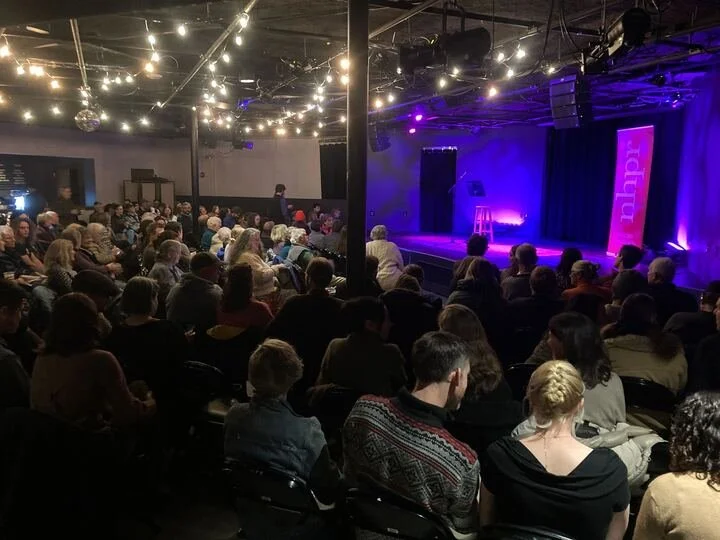
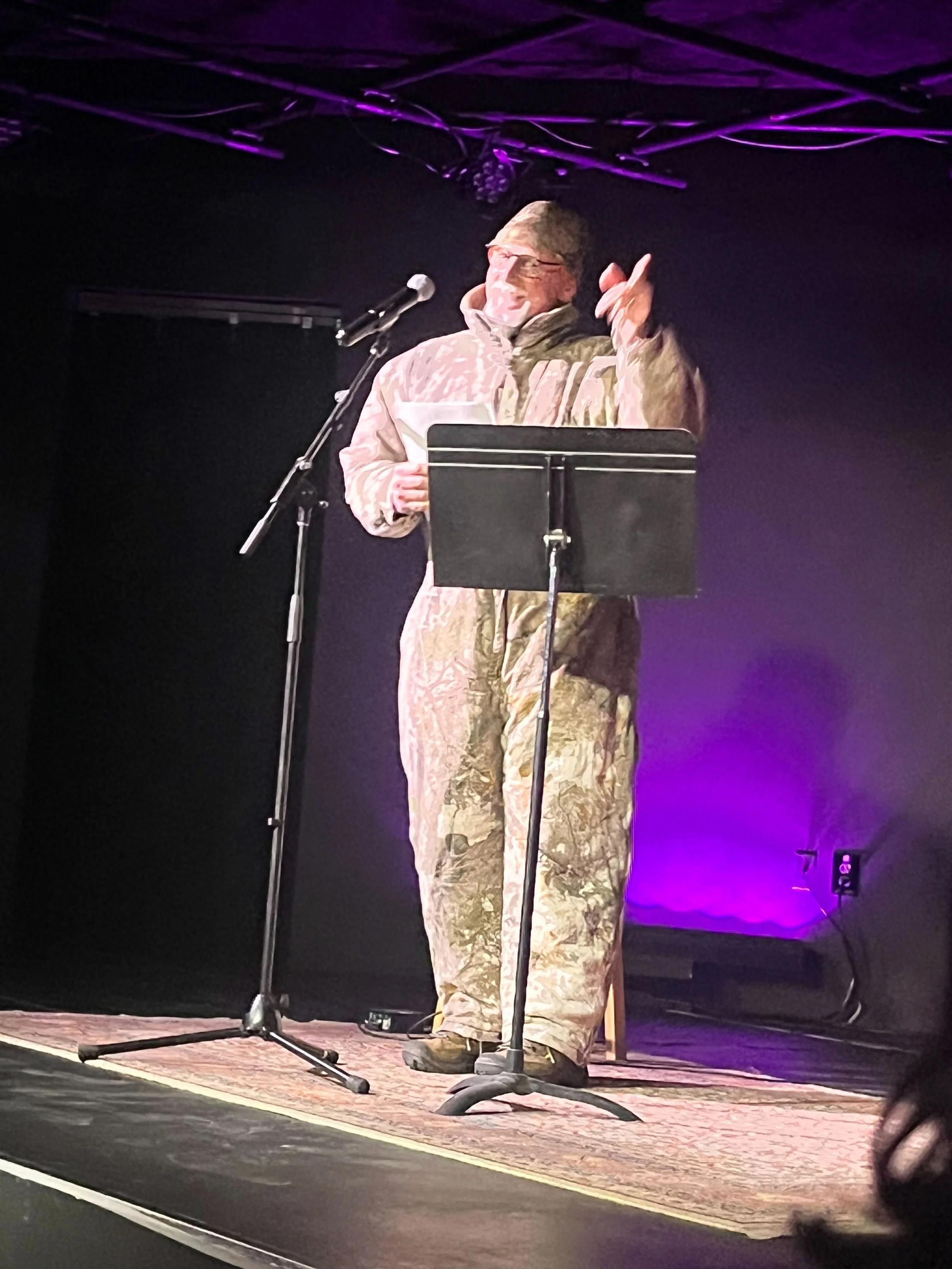
A few weeks ago, Nate gathered a group of storytellers in front of a live audience in Portsmouth, N.H. to celebrate 10 years of Outside/In. From goats to ghosts and ill-fated coloring book pages, this motley crew of storytellers explored the theme of metamorphosis in a changing world.
If you’ve got a special moment or episode from Outside/In’s long history, we’d love to hear about it. Send us a note at outsidein@nhpr.org.
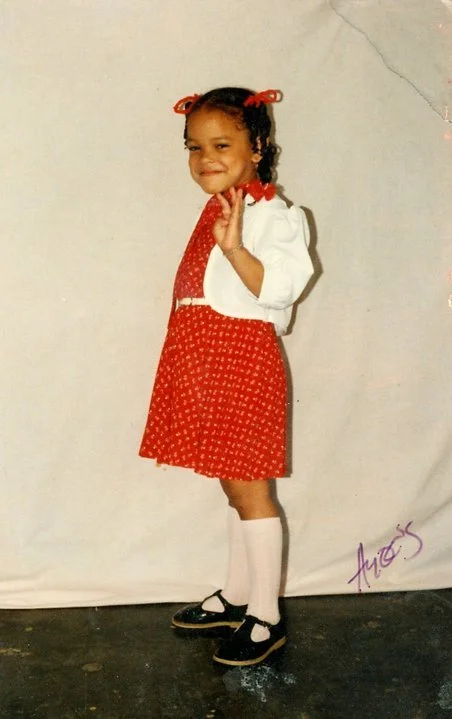
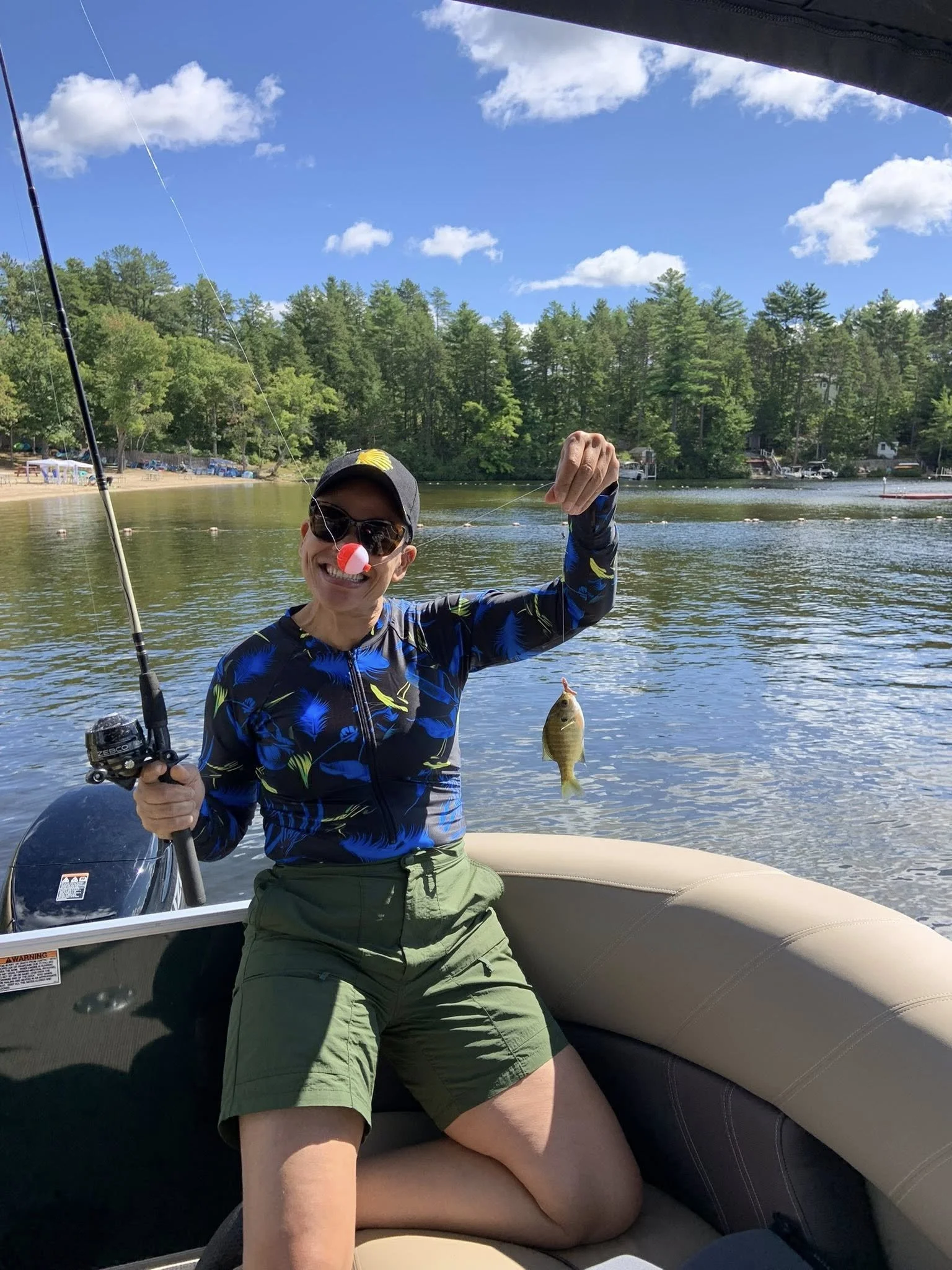
Featuring Gretchen Legler, Kianny Antigua, Sara Lamagna, Jake Lewis, Aubrey Nelson, Dave Anderson


LINKS
Check out Gretchen Legler’s blog, where she writes about all sorts of nature and farm-inspired subjects, here.
More on the work of Kianny Antigua can be found on her website.
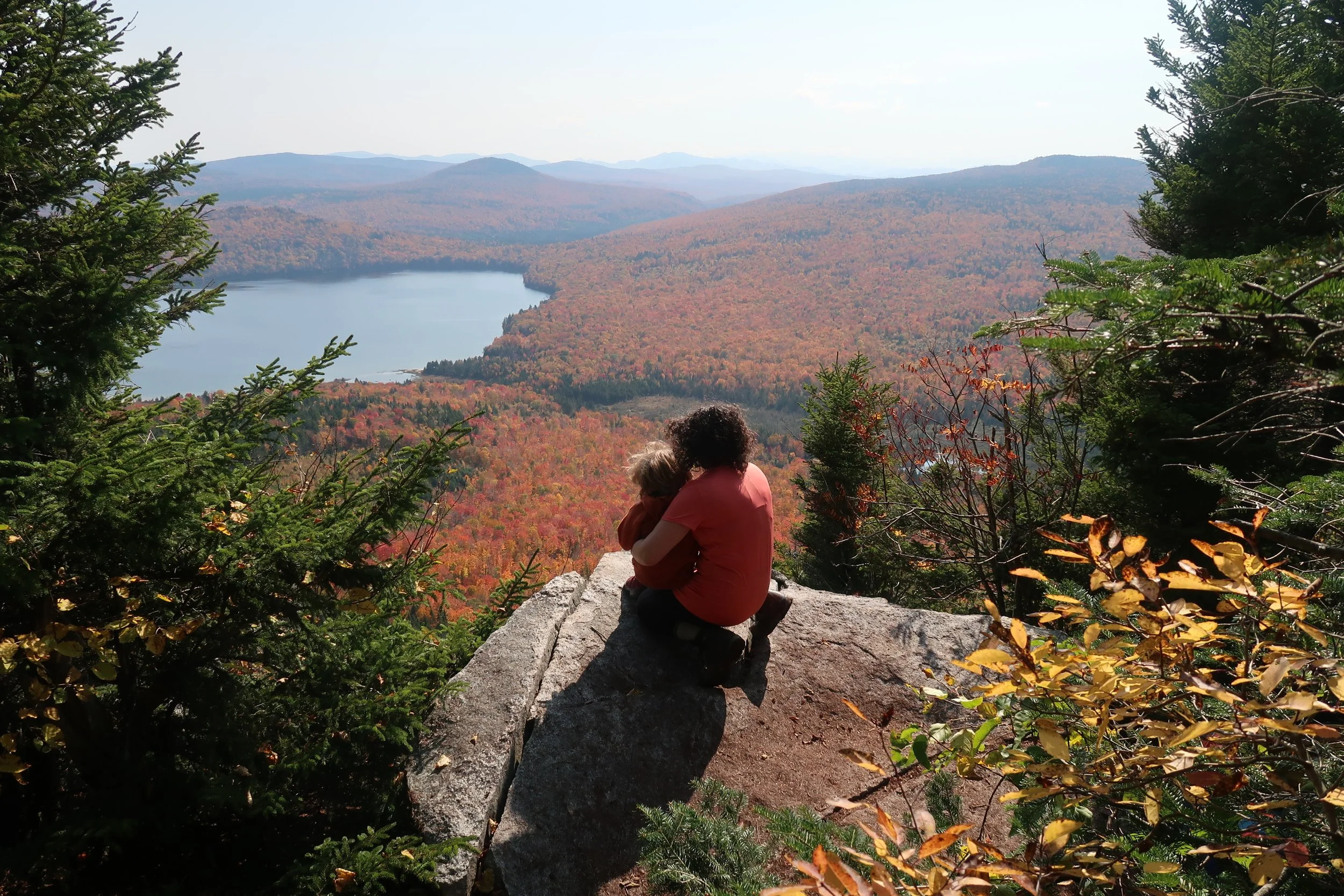
Listen to Sarah Lamagna’s interview for a previous episode of Outside/In, where she and Taylor talk about tricking kids into loving hiking.
Check out Jake Lewis's storytelling website.
Interested in learning more about Aubrey Nelson's call for "more purposeful, real-world education?" You can contact her "Ecosystem of Educationeers" via this form.
Listen to more musings from naturalist Dave Anderson on NHPR’s Something Wild.
If you want to hear more of Nate’s music, check out “Snoweater” on Bandcamp.
CREDITS
Host: Nate Hegyi
Produced by Zoë Mitchell and Taylor Quimby
Mixed and edited by Taylor Quimby
Our staff includes Justine Paradis, Felix Poon, Marina Henke and Jessica Hunt
Executive producer: Taylor Quimby
Rebecca Lavoie is NHPR’s Director of On-Demand Audio
Music by Blue Dot Sessions and Nate Hegyi
Our theme music is by Breakmaster Cylinder.
Outside/In is a production of New Hampshire Public Radio
Submit a question to the “Outside/Inbox.” We answer queries about the natural world, climate change, sustainability, and human evolution. You can send a voice memo to outsidein@nhpr.org or leave a message on our hotline, 1-844-GO-OTTER (844-466-8837).
Audio Transcript
Note: Episodes of Outside/In are made as pieces of audio, and some context and nuance may be lost on the page. Transcripts are generated using a combination of speech recognition software and human transcribers, and may contain errors.
Nate Hegyi: I'm Nate Hegyi, and this is outside in a show where curiosity and the natural world collide. And tonight we are recording in front of a live studio audience. At three Art Space in Portsmouth, New Hampshire. And we are here to celebrate Outside In's 10th anniversary. Now, if Outside In was a child, they'd be in like fourth or fifth grade, which I think is totally fair for some of the humor that we have on the show tonight. We have a handful of generous folks who have agreed to share true stories on the theme of metamorphosis, and the reason we chose this theme is because change is one of the only constants in nature, but it's also one of the most essential ingredients in good storytelling. Everybody in this audience has a story to tell about something that changed them in a fundamental way. It could be falling in love, losing someone, discovering a passion. This is the stuff that stories are made of. But change isn't just an ingredient in storytelling, it's also an outcome. And as journalists, we believe in the power of a good story to change minds and maybe very occasionally, very occasionally change the world. I want to introduce our first storyteller tonight. Gretchen Legler is a farmer, gardener, teacher, writer, and lover of the natural world. Her book, Woods Queer Crafting a Sustainable Rural Life has won multiple awards. Gretchen is also the kind of person who can personally tell you from experience why you should not put a tanned beaver hide into your washing machine. Please welcome Gretchen.
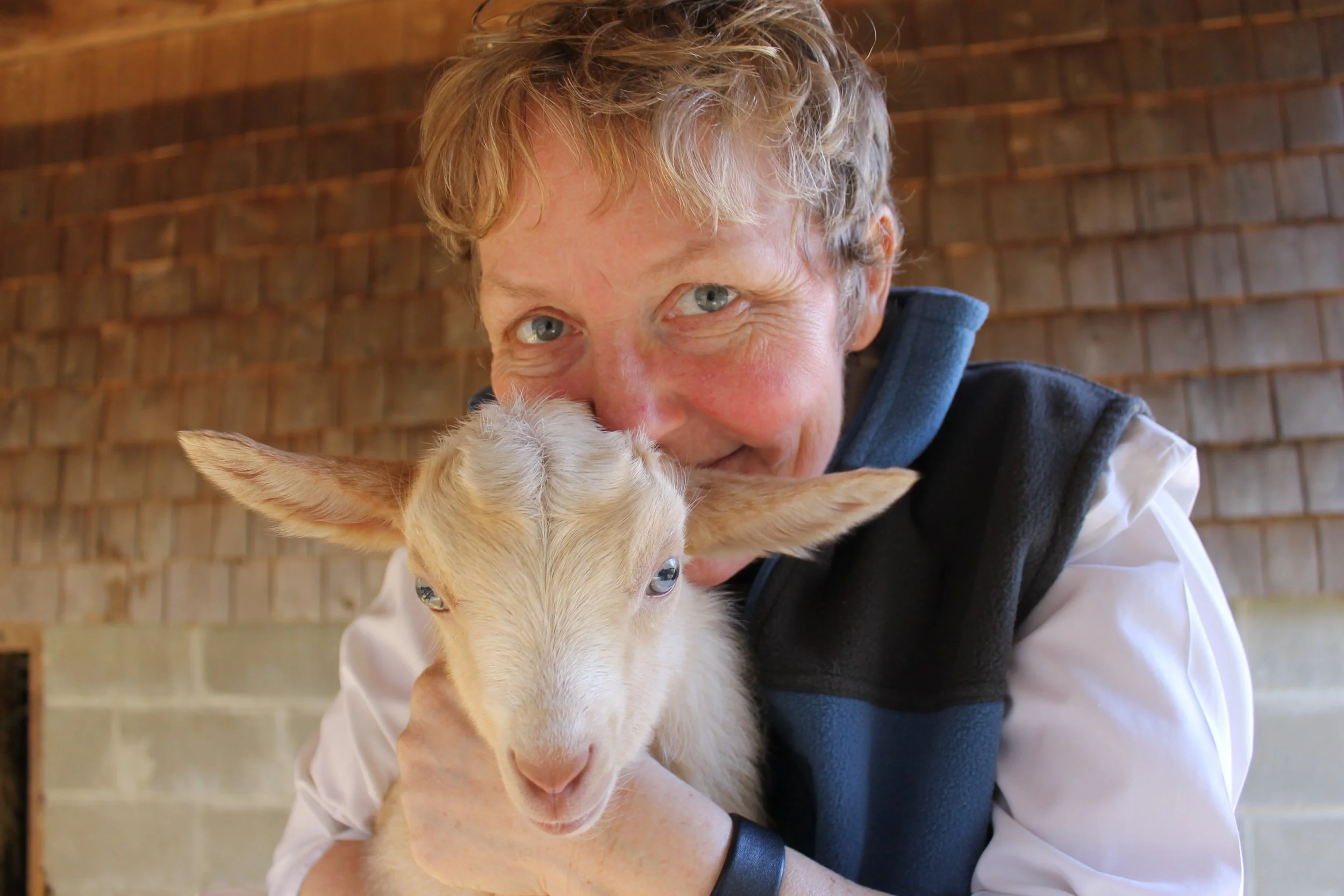
Gretchen Legler: It's one of the coldest weeks on record in Maine. There's a nor'easter bearing down on us in the western mountains, and two of our goats are about to give birth. So my partner Ruth and I were getting the barn ready. We've got stacks of cotton towels. We've got a hairdryer. When those babies come out of their moms, they're going to be wet. And in these temperatures, if we were not there to dry them off with the towels and the hairdryer, they would freeze and die. So normally we would not be having goats born in January. We would be having goats born in May. But we've been raising goats for eight years now and it's expensive. So I'm Trying something new. I'm going to turn my hobby into a business, and I'm going to have 40 pound milk fed kids to sell on the Easter market. At least that's the plan. We don't really know whether after they're born, we're going to be able to sell them or not, because we love our goats. They bring us so much joy, incredible amounts of joy. We've got two goats, Anna and Nima. Anna's been through this rodeo before. She knows what she's doing. Nima is a first time mom. She's a beautiful Saanen, a creamy white goat, beautiful, blocky body. And, um, she's been off, you know, the week before the birth. She's been off. I've tried to feed her grain, which normally she would just gobble right up, but she doesn't want it.
Gretchen Legler: And I think, ah, first time mom jitters, that's what's going on. So it's the night of the birth, and my partner and I are sleeping in the barn because we want to be there when this happens. We hear the first sounds of a goat in labor, and we leap up and we're there. And Anna gives birth to this beautiful baby. We name him Worm Moon, and Nima gives birth to two little twins. Beautiful twins. We named them Freo for cold and Spanish and Borodin for cold in Arabic. And we dry them off and we put them spread eagled on the towels. And so we can put the hairdryer on their little genitals so they get warm and dry and don't freeze. And then we present the babies back to their mom so they can get that first really important sip of colostrum, that nutrient rich milk. But Nima's udder is swollen and hard and hot and the babies can't get any milk out and they're frantic. So we milk Anna, and we put Anna's milk in little baby bottles, and we feed these two starving, frantic little guys, and they're so beside themselves they just rip the the rubber off the baby bottles. So we make it through the night and in the morning Anna is worse. And we call the vet. And the vet says, well, it's mastitis. So what you need to do is you need to put hot compresses on her udder, and you need to milk her every hour on the hour more often if you can.
Gretchen Legler: So I start milking her, and what comes out of her teats is green, gooey pus. In the morning the storm is here. Power is flickering on and off. Trees are falling on the roads. We call the vet again. She says. I can't get there. I live an hour and away. I can maybe meet you halfway. So Ruth tries to meet the vet halfway. She brings home this liquid antibiotic in this enormous syringe, in this long needle. And I'm supposed to stick this syringe up in nima's teats and deliver this medicine, which I do, but it doesn't work. So we're not sure whether she's going to make it. We make it through the night, and then in the morning, when the storm is over, the vets come. They drive up in the yard and, um, they come into the barn and they look at Nima and her. One of her udders is black. And they tell us she's got necrotic mastitis. And the only humane thing to do is to put her down. So the vets these lovely, strong young women. They shave this patch in her neck, and they. They're about to inject this anesthetic, and I. And I say, let's give the babies one last moment with their mom. So we do that, and they crawl all over her and they nibble her ears, and then they inject this anesthetic in her neck, and then they're so gentle.
Gretchen Legler: They hold her head as it gets laid down in the hay after the life has left her. We put her on this big black sled, and we haul her out of the barn across the snowy yard, and we put her body in the back of their cab. They're going to take her back to the to the veterinary place, and they're going to cremate her and put her ashes in the garden outside. So I look at the vets and I say, was this my fault? And they say, well, why would you say that? I said, well, it was too cold. I bred her too early. She was a first time mom. I was trying to make money off her babies. I said, you know, sometimes they just get sick. Sometimes they just die. I don't think you're to blame. So despite their reassurances, I'm still haunted by her death and heartbroken by it. The memorial service that Ruth and I had while the vets were doing their work in the barn. That helped. We had a candle and we had an icon of Saint Francis, the patron saint of animals there. And Ruth was playing a melancholy tune on her banjo. And I said some words. I said, Neema, you're no longer in pain and fear. Your body will continue to nurture other creatures. Your life on earth did not go unnoticed. Your days counted for many things. Thanks.
Nate Hegyi: That was writer and farmer Gretchen Legler. So next up we have Antigua. She is a writer, a translator. She works at Dartmouth College as a senior lecturer of Spanish. She is a dual citizen of the US and the Dominican Republic, and has said in interviews that she sees home as a state of mind rather than a place. County has published over 40 books in fiction, poetry, children's literature. Please welcome Kioni Antigua.
Kianny Antigua: Wow. It's dark. Hi. Hello. Yes. I was born and raised in the Dominican Republic. And maybe you're thinking Dominican Republic equals beach, white sand, tropical weather, Paradise. And the truth is, I'm not going to disagree with you. Especially these days. But the real reality is that I was born in and raised in a city, and we didn't have a car. We didn't have money to buy a car. Even though the beach was less than an hour away. I would go there maybe once, maybe once a year. I remember one time my mother took me to a fishing trip and I was so excited. I was so ready for the adventure until I realized I had to dig my own worms. But I know they're not going to hurt me. It's just that they don't have a face. Um, so. So, to make a long story short. I climb a tree, and I spend the next three hours up there until I. I jumped because I saw a lizard. Approaching slowly from the bottom, opening and closing this thing. You know what I'm talking about, right? Like the dewlap? Um.
Kianny Antigua: And the thing is. No. You laughing, you laughing? But in Dominican Spanish, those creatures are called salta kokoti. That translates to throw or neck jumper. See what I mean? Yeah. So that's what I was looking at me with this dewlap opening and closing or like, a hand fan. Like a abanico de mano. You know, like those Spaniard things. Okay. And then I jumped from the tree, and I don't remember what happened after that. Well, I mean, you get the gist, right? I wasn't born for that. I was born for concrete. And and I confirmed that hypothesis when I moved to New York City. And I didn't have a car either. I didn't have money. I didn't have to go to the gym. Window shopping was my Pilates. Um, and there I went to college, and I started writing. And then love found me here in New Hampshire. He's right there. I cannot see him because you know what I mean? But he's right there. And the hustle and bustle was replaced by the chickadee songs. And and the. Of the downy woodpecker and the.
Kianny Antigua: Ah, ah.
Kianny Antigua: Of the ravens or crows. Who am I to judge? I don't know. Um. And I went from writing l deserve, uh, which is a story. A short story about a Brazilian wax to. El canto de la lechuza, the owl's song. And tras la sombra del cuerpo, Which is a short story about a sexually abused girl. And now having a relationship with a married man to Writing Us a Peculiar Song, which is a chapter book for children about Robert Frost. My now 14 year old child was two when La Gringa, my loving friend from college, came to visit and after being mesmerized of how my life has turned around, she said, Kenny, how are you? And I said, yeah, it's fine, I'm okay, you know? But gringa.
Kianny Antigua: It is so boring here.
Kianny Antigua: So boring. And she said, you know, with that, let me tell you. Girl accent. You're not bored. You're at peace. It took a minute. He probably took more than that. But I could see, I could perceive, I could feel something change. Something changed. And now. Not only I leave to walk in the belly of a mountain. Now I even have a little garden with its own homegrown worms. Thank you. Muchas gracias.
Nate Hegyi: That was writer and translator Kianny Antigua. And stay tuned. We've got more storytellers coming up after a break. Hey, this is outside in a show where curiosity and the natural world collide. And today we are celebrating our 10th anniversary with stories told in front of a live audience. The theme of the night was metamorphosis. All right, our next guest. So, you know, when I was meeting everybody on zooms and everything else like that, one of the big things I always have to have is pronouncers for names. I'm notoriously bad at pronouncing things. And from the Midwest, something happened where I can't pronounce things. And so Sarah told me that her last name rhymes with lasagna. But now in my head, she is Sarah Lasagna. She is not. Our next storyteller is Sarah Lamagna, and she has a career that has spanned countries, ecosystems, creative disciplines. She was an ecologist for over a decade. Then she became a writer, specializing in outdoor travel and hiking guides. Now she's put business owner on the list. The tiny bookstore that she owns just across the river from here is called literally, Kittery. Please give it up for Sarah Lamagna.
Sarah Lamagna: I've kept field notes for most of my life. Sometimes it was scribbled on data sheets, or maybe even a professional write in the rain notebook covered in mud, rain, dirt, whatever. Take this one, for example. Back when I was attending a teeny tiny little school in the middle of the Adirondacks studying to be a forest ranger because for some reason I thought bugs and isolation was a career path. So this is my andrology field manual. So we're talking about a sugar maple. The leaf characteristics are as follows. Simple orbicular glabrous above and below. And please don't ask me what that means because I no longer know despite having a forestry degree. But what I did write later on it says it's palmately five lobed, rarely three. And I wrote in the margins. I can high five maple trees. But eventually my field notes became less formal and a little bit more personal. Maybe a journal entry there or a notes app ramble here. And this story is one of those field notes about how I completely misunderstood what adaptation meant. Despite having three environmental degrees, I used to think that adapting was a weakness of failure. And the thing that you did basically when you couldn't hack it anymore. When I was younger, I would walk through the woods in a very measured way.
Sarah Lamagna: I had a fixed shape. I never met a challenge that I didn't want to aggressively overachieve. Like hiking the 48 4000 footers in the dead of winter trekking, the tour de Mont Blanc, summiting fourteeners in Colorado like I was collecting Pokemon. If it was hard, I met it with fury, and I believed that strength meant endurance, that the best days left me exhausted, depleted, and smugly sore. But then I became a mother, and no one can prepare you for it, because metamorphosis is an isn't elegant. They're like, oh, you're going to be tired. But it's magical. But no one actually says your entire personality and life will vanish in an instant. So just like a caterpillar doesn't just sprout its wings, it dissolves first. Its whole body breaks down into goo before anything new forms, which is honestly rude. And that's exactly what early motherhood is. The version of me who moved fast and fearless through the woods was suddenly just gone. My body was healing from a traumatic emergency C-section, so I was goo. Sleep came in 2 to 3 hour intervals that felt like power naps in a war zone, and my kiddo was permanently attached to me like some sort of adorable but exhausting marsupial. The rules I had lived by no longer applied.
Sarah Lamagna: I couldn't just push harder. I couldn't power through. I couldn't just try more. So I leaned back on what I knew from my field. Notes. Nature has seasons. Nature adapts, and apparently so does motherhood. Some seasons are about rest, and sometimes it's just straight up survival. Whether it's getting your kid on the bus on time, finding the missing hockey sock, cleaning equipment that smells like a crime scene, baking brownie pops at 10 p.m. for Valentine's Day. It takes strength. It's relentless and mostly invisible. Nature also has seasons of simple existence, and motherhood is the same. Take eastern box Turtles, which I studied for one summer in college. Turtles don't rush. They don't hustle. They don't grind. They just endure. They move at their pace that their bodies require. They survive because they live within time, not against it. These days when I walk in the woods, I move slower to photograph my kid. Finding a rock that looks like a heart to answer why leaves change color yet again. To skip rocks at the pond 200ft along the trail. And that is as far as we go. It took me a long time to stop seeing this as a loss. I navigated motherhood on the trail by allowing good and bad days.
Sarah Lamagna: And what I mean by that is that some days were really slow. My kid led the hike, others I led like this one, for example. I have a field book of all the hikes I've done with my child. This is just one of them. Everett's Hiking Log September 10th, 2019. This was hike number 48. This was Island Lake Trail in the San Juan National Forest in Colorado, 7.5 miles. This was the hardest hike I had done with you up to this point. I climbed 3000ft equivalent of two Empire State buildings in three miles with you on my back. It was beautiful. However, I sprained my ankle on the way down. So you were carried by a stranger for two miles? Fun fact we are still friends with those people. So nature has never asked us to stay the same forever. It only asks us to respond honestly to the conditions we're given. Motherhood changed my environment completely, so I had to change shape. Not a weaker one, just a different one. And my final field note. The one that I keep coming back to is this adaptation isn't the opposite of strength. It's how life goes on and how I will continue to show up for my kid from now on.
Nate Hegyi: That was ecologist turned writer and bookseller Sarah Lamagna. Coming up, a naturalist turned hunter talks about eating roadkill, and a teacher struggles with the nuances of environmental education in the jungles of Madagascar. We'll be right back. I'm Nate Hegyi, and this is outside in. Tonight we are celebrating ten years. A decade of a show with stories told in front of a live audience. You guys. Noise, noise, noise. That's right. A live audience here at Three's Artspace in Portsmouth, New Hampshire. The theme of the night is metamorphosis. And our next speaker is Jake Lewis. So Jake is a storyteller, teaching artist and facilitator. He has guided people on transformative educational experiences for 13 years, and he also owns and operates the Exeter Handy Folks, a home improvement business on the seacoast. Please welcome Jake.
Jake Lewis: This is a true story and it really happened. I grew up with a friend, a man named Evan Scofield, who was my best and brightest. We did everything together. We called each other the brothers. We choose every day. Yeah, it's pretty cute. We walked El Camino de Santiago together. It's. Oh, okay. Thank you. Thank you. It's a 500 mile trek across northern Spain, and so took us a little over 30 days. We were cheek by jowl the whole time. We were just right next to each other. It was basically like living a buddy movie with no montages. But we were next to each other the whole time walking, sleeping, eating. We spent one afternoon apart. We got in one small fight, but the rest of the time was just this amazing adventure with my best friend. This was in college when we did that, and after college I went and started working as an outdoor educator. I had gone on a outdoor adventure program when I was 15, when I was a teenager, and it totally changed my life. It showed me something true about myself that I could not recognize at the time, and I really wanted to give that experience to other teens, to other young people. So I was doing that work, leading groups out on multi-day, sometimes multi-week expeditions all around New England. Right around this time was also when Evan was diagnosed with a sarcoma that was in his chest wall lining, and he wrestled with it, but it withered him significantly over time.
Jake Lewis: I was out on a trip with a co-leader and a bunch of teens doing a canoeing trip in the Richardson Lakes region across the border in Maine, and I had talked with the group about my friend and how sick he was. I had talked with my co-leader a lot about that, and we were out on this island. We were camped out and actually I got a call. I got a phone call while I was out there, which was kind of surprising, but I had been anticipating it and dreading it. So my co took the group the teens out to the lake and they were swimming. And I took the phone and went to a different part of the island and answered it. And it was Evan's fiance calling to tell me that that morning Evan had died and I fell apart. I completely came unraveled. I don't know if I will ever make the sounds that I made that day again in my life. All of the pictures that I had in my mind, all of the imagined futures that we had talked about for so long, uh, they were gone. So I walked out into the lake a little bit and was standing about thigh high in the water, just weeping.
Jake Lewis: Completely, completely broken open. Sound travels on a lake. And just a little bit away was my group of kids, the teens. So they heard me. They saw me. They had known what was going on. I guess they put two and two together. And a really strange thing happened. Teens are not generally known for their emotional literacy. It's not often one of their gifts high on the list. There are many gifts that teens have, but they they were over there in the water and they started to swim over towards me, sort of drifting through the water until they were in this sort of semicircle. Around me as I stood there keening for my friend. They didn't say anything to me and I didn't say anything to them. They were present in this moment, and it felt a little bit like, as I've thought about this for you tonight, it felt a little bit like a wild animal encounter, like seeing a deer and locking eyes with it in the forest, or suddenly finding yourself in a swirl of butterflies in warm sunlight, just these teens in a semi-circle around me in the water. And they just bobbed there for a while and then slowly drifted away. And on my good days, I try to live my life such that a moment like that might happen to me again. Thank you.
Nate Hegyi: That was storyteller and guide Jake Lewis. All right, so our next guest is Aubrey Nelson. Aubrey is a environmental educator. Some of her favorite work is helping teachers integrate hands on and outdoor learning, authentic problem solving and climate action into their curricula, including energy efficiency. She's an energy efficiency nut. We're standing over at that door. She felt the cold draft coming in and she was like three seconds. Three. Yes. Feeling a draft here anyways. Aubrey Nelson.
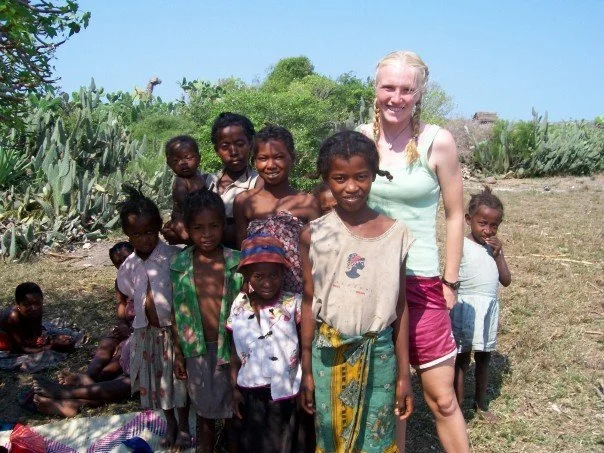
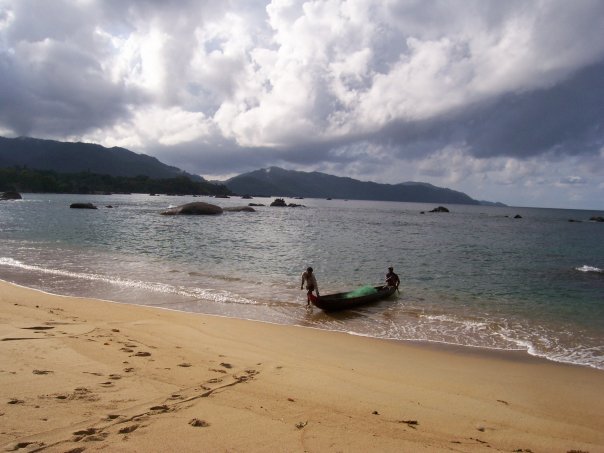
Aubrey Nelson: Everywhere that I went, I was followed by a chorus of Vasa. Vasa Vasa. Vasa is a word that means stranger or foreigner or white person, and roughly translates to the word ghost in Malagasy. I was 20 years old. I had just trekked about 100km through the Malay Peninsula and the national park. It took me about three days. I had amoebic dysentery. I was supposed to meet a guy for my project in the town that I had trekked to, and he never showed up. And I wrote in my journal, I'm all alone. I have no appetite. I don't know what's wrong with me or who to ask or where to go. I was in Madagascar for a four month study abroad program, and I was maybe naively trying to study how environmental education might help people who were living in villages surrounded by national parks, which had been kind of plunked upon them. So the national government of Madagascar had just said, one day, like, this is a park and you can no longer fish and you can no longer cut these trees. And the story that we hear internationally about Madagascar's environmental destruction and degradation is about Tavy. And Tavy is the practice of slash and burn agriculture, which is used to usually cultivate rice. But in my previous months in this amazing place, I had realized very deeply that environmental destruction is far broader than local action, and in fact mostly depended on International action.
Aubrey Nelson: So climate change, of course. Stronger typhoons that destroyed villages and displaced people. Another example would be Rio Tinto Mining Company, who was opening the years that I was there, a giant mine in the southern part of Madagascar to mine ilmenite, which is titanium dioxide. And it's used in making things white. So paint and toothpaste. No one was talking about this, though. There were there were people working to do environmental education. I ran into one fellow who was there from an unnamed nature organization, who may be sometimes confused with a wrestling organization. Um. Whose job he told me was to engender appreciation for local animals and stop deforestation. And the way he was doing this was by passing out coloring books, and the picture on the front was an I. Lemur II lemurs are reclusive, they're nocturnal, and in the communities surrounding that part of the world, they are an omen of death. So we've got in Madagascar, the word is fady when something is so taboo and terrible. Um, so I were very fatty, and so I was feeling pretty lost at this point in my life. I was feeling very lonely when another ghost entered my life. After about a month of not seeing anybody who was as extremely vasa as me. Um, Rachel, it turned out, spent summers in Moultonborough, New Hampshire, which is the exact town I grew up in. She was in the Peace Corps.
Aubrey Nelson: She helped me find yogurt so that I could restore my health. She helped me find a translator so I could figure out what the heck happened to this dude. And she helped me arrange a boat to a very town in a national park where I could actually ask my questions about what have you been told? So I get there. I talk to the villagers. I asked them my questions. What are they telling you so you can subsist on your land? Have they taught you about different types of agriculture that still good for the forest? And they didn't care what I had to ask about that. They were like, there are so many people that come to this village and they want to know all the things that we need, but no one listens. The thing we need is an ambulance. And so to put a point on that, literally the next day there's a little girl who had gashed her head on a rock, and they came to me with this girl. I mean, I had like wilderness first aid training, but I was way out of my league and I thought to myself, I can't even, like, fix this really small need of a gash on the head. And I wrote in my journal, I want to change the world in a really big way. Help stop environmental destruction and poverty and corruption and stupidity. But it would take close to a lifetime to make a dent in a place like Madagascar.
Aubrey Nelson: And I just don't know enough about this place or the people or what my place is among the people. Really, the only solution to these situations I can come up with is to become a teacher. Then hopefully my students will better the world and I can contribute through them. 20 years later, I'm deep in a different kind of journey, still pretty much as tangly as the mangroves of Madawala, but I at least grew up here and I know it, so the path is a little bit easier to see. How to make change. I want education that allows students to figure out things like how their toothpaste and their paint impacts communities as far away as Madagascar. And that asks them to do something about it with more context, sensitivity and strategic sense, perhaps, than coloring books. Because I'm still just a slightly older kid who wants to change the world in a big way. And so I'll continue to follow the advice that I wrote to myself on my last day in Madagascar. I don't know how I'm going to deal with American culture, but it's my home, so at least I have a better chance of understanding it and changing it for the better. And I just have to remember to keep learning, because that's what makes me feel really happy, even when I'm alone. And then I'll be fine.
Nate Hegyi: That was environmental educator Aubrey Nelson. To see pictures from her time in Madagascar, check out our website outsideinradio.org. So our last guest, Dave Anderson, is a naturalist and a tree farmer. It's the senior director of education for the Forest Society. He's also the longtime co-host of NPR's Something Wild. And here's the thing about Dave is that, you know, someone told me earlier that I look like what my voice sounds like. And I got to tell you, Dave, and I say this with all love, Dave. You look like a Viking. Like you've got the Viking hair. You've got the Viking goatee. He looks awesome. So without further ado, Dave Anderson.
Dave Anderson: I wasn't raised in New Hampshire. I was from New York City, or maybe even worse, Staten Island. And I grew up in new Jersey, northern new Jersey, just far enough west of New York City that we could see stars if we looked to the to the West, but not to the east. So I wasn't raised with any kind of firearms or chainsaws or motorcycles. And well, one night I brought home a little doe, a deer. A little dead deer I hit and killed with my Volkswagen Beetle while on the way to a high school keg party. It jumped out of a hedge in New Vernon, new Jersey, from an estate that was owned by the Secretary of the Treasury. And we changed the blown tire, and we did some impromptu bodywork, and we brought the deer to my buddy's house because his family has a place in Palermo, Maine, and he showed me how to gut it, and we hung it, and later we butchered it together. And I gave him half. Seems fair, and I brought the venison home wrapped in freezer paper, and I encouraged my family to join me in eating it. And my family was aghast. My dad said, son, you're different. We don't eat roadkill in this family. We think if you do consider college, maybe you should look at northern Vermont or Maine.
Dave Anderson: So I split the difference and ended up in New Hampshire. So hunting was not in my family's culture. And yet my grandfather worked for 50 years making shotguns for Mossberg down in New Haven, Connecticut, where my parents grew up. My home is a 54 acre tree farm at the foot of a steep knob of granite, a hill south facing a little vale, a cove. It's along a back dirt road just outside a classic little rural New Hampshire village. I'm a tree farmer. I'm a working naturalist. I'm an educator. I'm a practitioner. For 40 years, I've worked to cultivate a closer, more intimate relationship to the land. We boil maple sap in our sugar house. We prune fruit trees. We plant and cultivate gardens. And in the autumn, we process, produce and make apple cider, sometimes peach wine or raspberry jam. We carve pumpkins and we hunt bucks. We wait. What? You're hunting? You're hunting bucks. It sounds like a country music song. Because deer are beautiful. They're probably my favorite animals. They are quiet, they're graceful, they're just stunning. But they're also common. And some people would say too numerous. The deer population densities certainly impacting forest regeneration and the health of the winter deer herd. We don't see oak seedlings, maple seedlings or birch seedlings anymore. They're too tasty. So in 2016, my son said, well, why don't we hunt? Because we've done some target shooting.
Dave Anderson: We had some 20 twos. And you know, we'd plink cans and shoot little paper targets. So we took the mandatory hunter safety training course and a field test, and we bought our first deer licenses. We didn't know much. And apparently I still suck at deer hunting. In the past ten years, I've shot two deer. My son is shot five. So we have a 20% and a 50% success rate. But let me tell you, the meat is delicious. It's delicate, lean, apple fed, acorn fed, local backyard, sustainable protein. It's honest meat. It's the only red meat I would prefer to eat if I consistently could hunt more successfully. It is superior to farm fed or feedlot raised beef. It avoids the guilt of industrial farming practices and animal cruelty, and the associated climate change considerations and ramifications. The deer on my tree farm. I have watched some of them since they were fawns in June gamboling around with their mother doe. I see groups of Doe's year round nanny dose two year old aunties traveling with their mothers. I see them on cameras. I begin to know the family relationships and they spar in the middle of the night. They're nocturnal and they're smart and they are not easy to hunt. They can appear and disappear silently.
Dave Anderson: So I've been hunting, and it's sacred to me now. It's a kind of a rural form of prayer. It's communion with the forest. I am intentional hunting is the original form of forest bathing. I struggle with how to explain how killing could be life affirming. And yes, sometimes hunting does involve killing. But it's not about the killing. For me, hunting is about belonging to this forest, fully being part of that circle of life. You can cue the Lion King theme music. It's really hard to convey what it's like to return again to the pre-dawn November woods, cold and dark and trying not to sweat or make noise while climbing a steep ravine to reach a fixed steel ladder. Pre-placed in a tree stand in the dark. And you can often hear the rustle of leaves as the deer are running away all around you. And there's a huge inflection point, that moment of having one brief clear shot and the emotional flood. If you take it, there's immense gratitude. And I'm not going to lie, I cry well, twice. Twice in ten years. I get obsessed with deer in autumn, walking, scouting. I'm more native to this place now. My own home. The deer are changing the forest. I'm seeing it. The deer are changing me. You're right. Dad, I am different now.
Dave Anderson: Thank you.
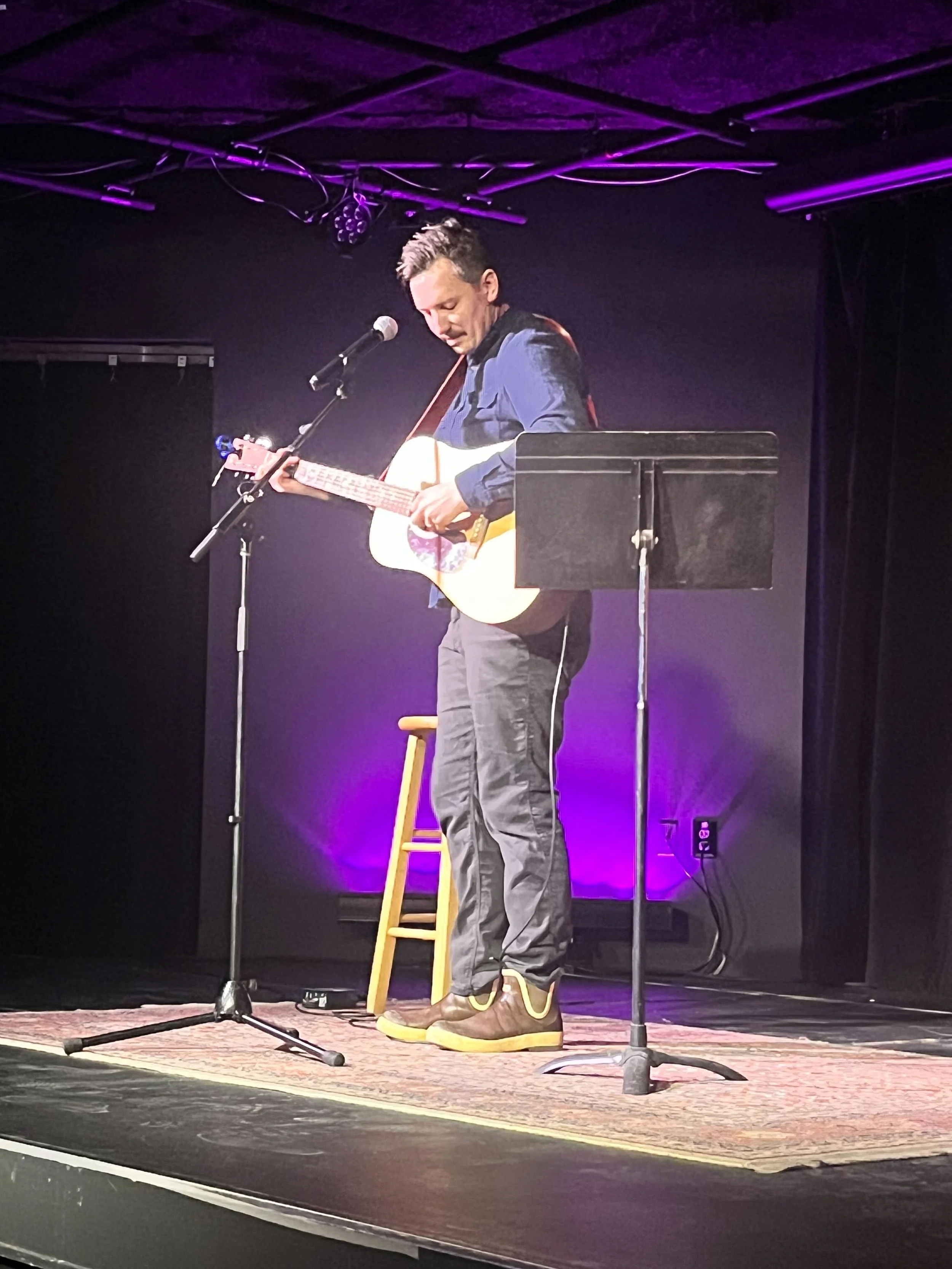
Nate Hegyi: That was Dave Anderson, tree farmer and host of NPR's Something Wild. Now, I said that Dave was our last storyteller, but that was only half true because I told my own little story in Portsmouth. And here it is. All right. So before I became a journalist, when I was younger, I really, really wanted to be a musician. I wrote songs every day. I practiced, I started a folk rock band. We toured around the country and we were like, okay, we opened for The Decemberists, which, if you're a millennial or have watched Portlandia, you might know who they are. Here's our real one the Lumineers opened for us. Of course, of course. They hold themselves to international fame and my band. Well, we played our last show in an Irish pub sandwiched between a subway and a Domino's. We broke up, but I still wanted to keep the dream alive. I continued touring by myself all around the Pacific Northwest, and I remember one particular morning waking up after sleeping in the back of my Toyota Corolla. Very sore, being like, what are you doing, dude? The dream is dead. And, you know, I think we've all had dreams, right? Or things we've tried to do. And when it doesn't go right, it's like a breakup. You're just like gut punch. And for my. You know, my reaction to this breakup was I just ran away from it all.
Nate Hegyi: I stopped playing music. I stopped writing songs, I stopped playing live. I even had a rebound, which was journalism. I got a job for $10 an hour as a part time radio reporter in Montana Public Radio. Turned out I actually really loved journalism, and I think one of the reasons I really love it is because it's like documentary songwriting. You know, I get to go out in the world, tour the country, if you will, talk to people, collect stories, bring them back, mix them with music. It's a whole thing. I love it, I love it so much, but there would still be people in my hometown that would be that come up to me and they'd be like, hey, I heard you on NPR. You still play music? I'd be like, no, I don't have time for that. I wasn't totally true. I think I was just so afraid of trying it again. But I've gotten older now, and I've realized that your passion doesn't necessarily have to be your profession, and you can just do things for the fun of it. So tonight I'm going to play my first live song in like, forever. So bear with me. Of course, this song is about a breakup because all songs are about breakups.
Nate Hegyi: Leaving MCO but the moon was howling. Death. Coke bottle of mascara. Along the coast of Mexico. There's marigolds and black beans and rice in the streets. There's Death Valley and all the signs that you were leaving me cold black winter storm in kill my heart. Leave me with nothing but Mexican. Rolling out of Mochis to see a black cow in a truck. Startles and shakes as the engine breaks. Auto bus whining. Together we ride to Yuma. To a wall that breaks the north, and a slaughterhouse in Salt Lake City that we both don't know about. Cold black winter storm in. Kill my heart. And left me with nothing. Save Mexico. That is it for the show today. Thanks so much to our storytellers.
Nate Hegyi: From that night. Gretchen Legler, Kianny Antigua, Sarah Lamagna. Jake Lewis. Aubrey Nelson and Dave Anderson. Special thanks to our live event sponsor for that evening, The Nature Conservancy. And special thanks to all of you for listening and supporting our work these past ten years. If you've got a special moment or an episode from outside Inn's long history, we would love to hear what it is. Shoot us a note at Outsidein@nhpr.org. I'm your host, Nate Hegyi. This special live event was produced by NHPR's community engagement manager, Zoe Mitchell and our executive producer, Taylor Quimby, with help from the rest of the Outside/In team, which includes Marina Henke, Felix Poon, Justine Paradis, and Jessica Hunt. Rebecca Lavoie is NHPR's director of on demand audio. Music in this episode came from Blue Dot sessions. Outside/In is, and for the past ten years has been a production of New Hampshire Public Radio.
Nate Hegyi: Thank you. Thank you very much.