You’ve got scorpion
A listener recently asked, “Has the entire surface of earth at some point or another been covered in poop?” Turns out, there are some questions that even we can’t answer.
In this installment of our regular mailbag segment, the Outside/Inbox, we do our best to take on your zany inquiries, or find experts who can. Here are this week’s questions:
Is there any official recognition for hiking the Appalachian Trail, Pacific Crest Trail, and the Continental Divide Trail?
Why do kids (and adults) chant “Do it! Do it! Do it!” and other chants?
Featuring Kathleen Simmons, Carlos Santibanez-Lopez, and Barb Lake.


ADDITIONAL MATERIALS
Go to AirNow.gov and put in your zip code for air quality data where you live.
If you complete the Appalachian Trail, the Pacific Crest Trail, and the Continental Divide Trail, then you can get a Triple Crown of Hiking Award through the American Long-Distance Hiking Association West.
Learn more about the life and work of scientific celebrity Dr. Herbert Stahnke, who created a life-saving scorpion antivenom in the 1950s.
SUPPORT
To share your questions and feedback with Outside/In, call the show’s hotline and leave us a voicemail. The number is 1-844-GO-OTTER. No question is too serious or too silly.
Outside/In is made possible with listener support. Click here to join our Patreon and get ad-free episodes of the podcast.
Follow Outside/In on Instagram, TikTok, or join our private discussion group on Facebook.
CREDITS
Host: Nate Hegyi
Reported, produced, and mixed by Felix Poon, Marina Henke, and Nate Hegyi.
Editing by Taylor Quimby
Our staff includes Justine Paradis and Jessica Hunt.
Executive producer: Taylor Quimby
Rebecca Lavoie is NHPR’s Director of On-Demand Audio.
Music by Blue Dot Sessions, Jules Gaia, Lennon Hutton, Pastis, OTE, Kikoru, and Trabant 33.
Outside/In is a production of New Hampshire Public Radio.
Audio Transcript
Note: Episodes of Outside/In are made as pieces of audio, and some context and nuance may be lost on the page. Transcripts are generated using a combination of speech recognition software and human transcribers, and may contain errors.
Marina Henke: Testing. Testing. One, two.
Nate Hegyi: Should we go into it?
Taylor Quimby: Should we do a little zip zap zap first?
Felix Poon: Oh, yeah. Let's let's do a clap.
Taylor Quimby: Yeah, there we go.
Felix Poon: I'm gonna count down from three and then clap on zero. Three. Two. One. Clap. Okay. Good enough.
Marina Henke: Clap on zero. I was ready for zero.
[MUX IN: Starlight Corps by Blue Dot Sessions]
Nate Hegyi: This is Outside/In a show where curiosity and the natural world collide. I am Nate Hegyi, and I have my Outside/In team here with me. We got Marina Henke.
Marina Henke: Hello.
Nate Hegyi: Felix Poon.
Felix Poon: Hello.
Nate Hegyi: Taylor Quimby.
Okay. So. Yes. All right. So, Felix, we are all gathered here because you wanted to kick us off by playing us a voicemail we recently got from a listener. Right?
Felix Poon: That is right. Uh, this is from Emma calling from Massachusetts.
Emma: This is a question I've been thinking about for a while, and I really think you are the best team to figure it out. I want to know, has the entire surface of earth at some point or another been covered in poop?
[MUX SWELL]
Emma: And also, how high would that poop go up into the atmosphere? I hope you can figure this out for me, because I've really been wondering for a while.
Nate Hegyi: I love this question, but I also kind of don't understand. I don't understand it.
[MUX FADE OUT]
Taylor Quimby: It. Well, I think the first part anyway. Right. Say you're walking in the woods with your dog. Your dog takes a poop. Yeah, you're supposed to clean it up, but let's say you don't, um, you know, there's that poop there. There's maybe some animal scat in the woods elsewhere. And so over millions and millions and millions of years has poop covered everything at some point.
Felix Poon: Like, oh, so so you're not talking about like all at once, like over time, over millions of years, right? Has every point on earth been covered at one point in poop?
Nate Hegyi: And that would include like worm?
Taylor Quimby: Oh, yeah.
Nate Hegyi: You know, worm feces and like yeast, right? When yeast ferments, isn't that just yeast poop.
Marina Henke: Well, I mean, let's, you know, I guess.
Taylor Quimby: Marina's like, you gotta draw the line somewhere.
Nate Hegyi: Well, isn't it like soil? Isn't soil essentially digested material?
Taylor Quimby: Yes, it's leaf litter.
Nate Hegyi: It's breaking down. What's breaking it down is microorganisms, which are then, you know, essentially pooping out the waste.
Taylor Quimby: My feeling about this is that if you take a really generous approach to what what is defined as poop in this question? Yeah, maybe the answer to the first part is yes. If you're more if you're more like talking, you know, brown poop, then no would be my, my feeling.
[00:02:35-00:02:38] Nate Hegyi: There's also white poop. Just just saying, let's not discriminate.
Felix Poon: But wait, what about the second part of her question? Because Emma asks, how high would that poop go up into the atmosphere?
Marina Henke: I think I think there is somebody who can answer this, a scatological expert.
Felix Poon: I don't know.
Marina Henke: If you're out there, if you're out there and you are that person.
Felix Poon: Who would that be? Who? Who are we reaching out to?
Taylor Quimby: Nobody. No.
[MUX IN: Urban Conspiracy by Jules Gaia]
Nate Hegyi: This is a wonderfully unanswerable question.
Taylor Quimby: Yeah, we love the energy. I think it's a great question. I think we are not the team to actually do this one.
Marina Henke: You may have chosen wrong.
Nate Hegyi: Wah wah.
[MUX SWELL]
<<NUTGRAPH>>
Nate Hegyi: All right. Great question, but we are stumped on this one. And if any listeners out there think they can math this one out, please let us know. But we do have a number of listener questions we think we can answer. So in this episode, we are opening the outside inbox from the strange antics of children.
Kate: Why do kids chant?
Kids: Higher! Higher! Higher!
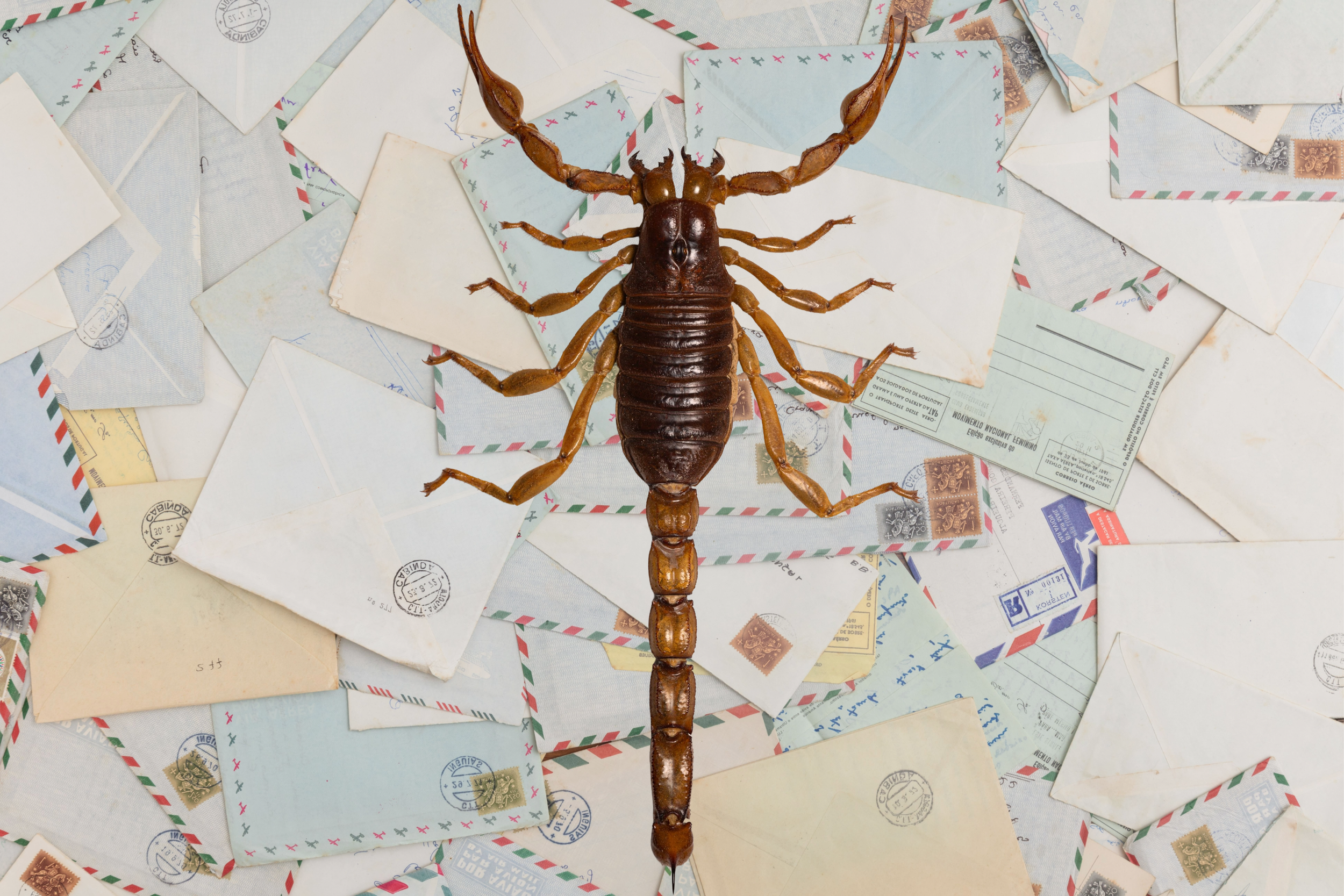
Nate Hegyi: …to why there’s an explicit rule that you can only send scorpions in the mail as long as it’s for medical reasons.
Nate Hegyi: Stay with us.
Group: Stay with us! Stay with us! Stay with us!
<<PREROLL>>
Nate Hegyi: From NHPR this is Outside/In, a show where curiosity and the natural world collide.
I am your host, Nate Hegyi, and I am here with Marina, Taylor, and Felix.
Felix Poon: So let’s start with our first question. This is from Ingrid in Newmarket, New Hampshire.
Ingrid: I'm calling because a couple of months ago, in the midst of one of the biggest snowstorms in New Hampshire in years, I looked at my phone weather app to see when there might be a break so I could time my shoveling. I popped an air quality alert on the dangerous, excessive carbon monoxide. Something. Something over 100. I was puzzled, but decided it was a good excuse to go back to sleep for a while and check to see if it improved, which it did in a couple hours. Was it because it was also so cold that morning that everyone's furnace was blowing out more carbon monoxide in the outside air? A neighbor who was very science tuned in said he saw it too and was puzzled. Thanks.
Taylor Quimby: I'm thrown off by carbon monoxide. Carbon monoxide is. I just associate that with car exhaust, right?
Nate Hegyi: Uh, no. It's definitely 100% comes from burning fossil fuels. So when you have a furnace, you're burning fossil fuels.
Taylor Quimby: Like we talk about CO2 all the time. How often do we talk about CO1?
Marina Henke: Not enough. It's really dangerous. We should all get carbon monoxide detectors.
Nate Hegyi: Yes. It's really important to have in your house.
Marina Henke: Well, okay, this maybe this is. I'm full of too much hubris, but I think I know the perfect person to ask this question of. It is rare in life when this happens, but my one of my longest childhood friends builds air quality sensors for his job.
Taylor Quimby: That does sound like a good source.
Marina Henke: I think I think we might, I think we might have our guy.
Felix Poon: Okay. Do you want to take on this question then?
Marina Henke: Give it to me.
[MUX IN: Window Weepin’ by Lennon Hutton]
Marina Henke: Okay, so I did. I reached out to my friend. I said, you are the perfect person to answer this question. And he actually said, Marina, this is a New Hampshire specific question you must ask the scientists in New Hampshire. Um, and that is exactly what I did.
[MUX SWELL AND FADE OUT]
Marina Henke: So a few weeks ago, I sent out an email to the New Hampshire Department of Environmental Services, and I said, you all you need to help me. You need to help Ingrid.
Kathleen Simmons: My name is Kathleen Simmons. I work with the New Hampshire Department of Environmental Services.
Marina Henke: Kathleen Simmons is all in. She's an employee of the New Hampshire Department of Environmental Services. Think of her like, sort of as a weather forecaster, but for air quality.
Taylor Quimby: Nice.
Marina Henke: I also told her I thought she sounded like maybe a journalist of the skies, and she really appreciated that.
Nate Hegyi: That's great.
Marina Henke: So Kathleen pulled up the carbon monoxide levels from January 26th, which is the day that Ingrid got this alert. And this came from the Londonderry Monitoring Station, about 25 miles away from where Ingrid lives in Newmarket, but it's the closest one for the NH D s stations.
Kathleen Simmons: And the data didn't really show anything substantial…. the highest it got for an hourly reading was 0.4 ppm
Marina Henke: So for context, that is way lower than what the EPA would consider a dangerous hourly level of outdoor carbon monoxide. That is actually anything over 35 ppm. So way, way much more. So I mean, it begs the question, right? Like, why is Ingrid's weather app saying that this was dangerous? Yeah. Um, we said this carbon monoxide, it can accumulate outdoors, but it happens in these very specific areas.
Kathleen Simmons: Like say you're right next to the tailpipe of a car or you're near a power plant or something.
Marina Henke: For that reason, Kathleen didn't actually think that Ingrid's furnace hypothesis, or frankly, our furnace hypotheses were right because even though a ton of people on a cold winter day could be heating up their homes a bunch, that amount of exhaust, it actually dissipates very quickly in the outdoors.
Taylor Quimby: Yeah, which makes sense because if it was like super high, all people would be dying or going to the hospital with carbon monoxide poisoning.
Marina Henke: But Kathleen, real trooper to the outside in team to Ingrid. She looked at the rest of the day's air quality metrics for us. We both sort of wondered on a call together, could Ingrid have maybe been confusing carbon monoxide for another air quality metric? New Hampshire A lot of people are burning wood stoves, and this increases the particulate matter in the air.
Kathleen Simmons: But overall, I'd say it seems pretty typical for winter time.
Marina Henke: So once she's seen this, Kathleen formed a hypothesis. Ingrid's weather app was just wrong.
Taylor Quimby: [gasp]
Marina Henke: I know.
Kathleen Simmons: Sometimes we see those discrepancies because these apps and phones are just pulling from everything.
Marina Henke: Kathleen really means everything. So this includes the state's data. These stations that Kathleen's team is running. But a lot of this data is also pulled from low cost sensors. This is something that you or I could buy. We could install right outside of our home.
Nate Hegyi: Oh, so like our own little personal weather stations.
Marina Henke: Exactly.
Kathleen Simmons: for the most part, a lot of this data, when someone's buying a sensor is publicly available
Taylor Quimby: Yeah, it's kind of weird.
Marina Henke: Weather app companies, they see this, they take advantage of this and they pull a lot of this data. But who among us four have ever installed something incorrectly?
Felix Poon: Oh, all the time.
Marina Henke: All the time. Yeah. People, I mean, they're setting their sensors up right next to a vent. So it's reading these really high numbers. They're setting it up too close to the ground. Some people they're buying. I could see this happening to me. They're buying. What they don't realize is an indoor sensor and they're just putting it outside.
Nate Hegyi: Oh, okay. Yeah.
Kathleen Simmons: Whereas we have an entire team going out to our very robust regulatory, very expensive monitoring equipment.
Marina Henke: But even when the apps use data from this really fancy equipment, mistakes can also still happen.
Kathleen Simmons: One time someone reached out to me and they had something on their phone. They showed just this like apocalyptic values of carbon monoxide.
Nate Hegyi: Whoa.
Marina Henke: But no apocalypse. That morning, the state's carbon monoxide detector in Peterborough had malfunctioned.
Felix Poon: Ah.
Taylor Quimby: It happens, it happens.
Marina Henke: We all make mistakes. Even our hearty equipment. Kathleen's team had gone in there. They'd corrected the data, but the air quality apps had already pulled that data into their system.
Kathleen Simmons: But some of these apps or companies, they don't see that and it shows a completely different story to the people in that area.
Nate Hegyi: Okay. So like, is there a like, if I can't trust my Apple Weather app to tell me about air quality, like where can I go for like actually reliable data on air quality?
Marina Henke: Yeah. So you can go actually straight to airnow.gov. You can put in your zip code and it's going to show you reliable air quality metrics that you can trust.
[MUX IN: Beignet by Blue Dot Sessions]
Nate Hegyi: Cool. Well, that's helpful, especially like as like if you're out west and we're entering like fire season right now, you know, that becomes something you think about every day. So it's good to know about airnow.gov.
[MUX SWELL / FADE OUT]
Felix Poon: Alright so, this next question is from Sabrina in Portland, Oregon.
Sabrina: So Japan and Spain have this program called Dual Pilgrim, and it's where you hike two different pilgrimage routes. And if you hike both of them, you get like a little souvenir reward certificate as well as your photo on a website. And I was just wondering if the United States had anything similar. Like, I know we have the Pacific Crest and the Appalachian, but other than that, I don't know any major hikes in the United States. Or if we have anything like the dual pilgrim program.
Taylor Quimby: I'm pretty sure. And I can't remember what the third…um, very long trail, in addition to the AT and the Pacific Crest Trail.
Nate Hegyi: Continental Divide Trail.
Taylor Quimby: Yeah. That's it. It’s the Continental Divide. If you do all three of those, I do believe it's like the Triple Crown.
Marina Henke: The Triple Crown.
Taylor Quimby: I don't know if there's like a physical award or an organization that tracks it, but I bet, I bet some somebody does.
Felix Poon: Okay so I looked this up and it IS called a Triple Crown if you do all three trails. And there is a a commemorative plaque for people who complete all three. And it’s issued through an organization called The American Long-Distance Hiking Association - West.
[MUX IN: In the Shades by Pastis]
Nate Hegyi: It should. I think it should really be like a trophy with like a hiker on the top as opposed to just a plaque, you know, like the kind of trophy you'd get in high school. That's what I want.
Marina Henke: I never got one of those.
[MUX SWELL AND FADE OUT]
Felix Poon: Okay, so that was from Sabrina, but Sabrina actually asked two questions. Here's another one of her questions. This one is about the US Postal Service.
Sabrina: I found out a fun fact where you can't send scorpions through the mail unless they are for medical reasons. So I just didn't know if there was any other like fun or strange rules that the male had that you just didn't know about until you find out.
Nate Hegyi: That's a great question. That's such a good question.
Marina Henke: And what medical purpose are scorpions, uh, serving?
Taylor Quimby: I think that's the real question. Do you think this is one of those old blue laws wherethat's a law that was put on the books like 70 years ago because of some very particular weird set of history, and it makes no sense now. Like there is no medicinal use for scorpions.
Marina Henke: Yeah. It's like leeches can go in the mail to take your blood
[MUX IN: Arizona Moon by Blue Dot Sessions]
Marina Henke: and scorpions, to shift the humors.
Taylor Quimby: To shift the humors.
[MUX SWELL AND FADE OUT]
Felix Poon: Okay, so I looked into this, and it turns out that most live animals can't be sent by the US Postal Service, which includes cats, dogs, flying squirrels.
Taylor Quimby: That seems fair.
Felix Poon: But there are some animals that do make the cut, like live scorpions, for example.
Nate Hegyi: Wait, so you can have. You can't flying squirrel, but scorpions. Yes, yes. All right.
Felix Poon: But there's a reason for that, which goes back to history. It dates back to the mid 20th century. In 1951, a scientist in Arizona by the name of Herbert L Steinke had been working for decades to create a cure for deadly scorpion stings. So what do you do? Is he'd inject diluted scorpion venom into cats. Oh, he'd wait for them to build up an immunity to it, and then he would draw their blood to extract the antibodies required for antivenom.
Marina Henke: Yeah. You have to wonder if he was a cat guy or a dog guy.
Nate Hegyi: I think Guy was definitely a dog guy.
Felix Poon: So to make a single dose of his serum. Donkey needed about 150 live scorpions. And he wanted to stock this serum in every hospital in Arizona. So he put out a call to the public saying, I need 10,000 deadly scorpions alive.
Nate Hegyi: How did he put this call out to the public? Was he like writing, like in the newspaper or like.
[00:15:46-00:15:47] Felix Poon: I think it was in the newspaper.
Nate Hegyi: Yeah. Okay.
Marina Henke: That's why we should bring that back.
Felix Poon: And then in 1955, an Arizona senator brought a bill to the Senate floor in order to help Stahnke out. He proposed a change to the U.S. Postal Service rules that would allow live scorpions in the mail for the first time. And the bill passed. So that's why to this day, more than 70 years later, you can send live scorpions in the mail.
Nate Hegyi: Look at that cooperation in Congress back in the day, right?
Taylor Quimby: Yeah. That would never happen today. There would be like gridlock,
Nate Hegyi: sorry, no scorpions in the mail.
Felix Poon: To address Sabrina's other part of her question. Yes, there are other interesting animals that you can send in the mail, by the way. Chicks, baby. Alligators, snails.
Marina Henke: I've seen chicks come in the mail before.
[MUX IN: Waste of Bass by OTE]
Felix Poon: Have you?
Marina Henke: They're so cute. They come in a little box.
[MUX SWELL]
Nate Hegyi: Alrighty we’re gonna take a quick break but first, we just wanna let you all know that Outside/In is now on Patreon!
[Cheesy cheering / confetti / champagne bottle sfx]
You can support our show on Patreon and you’ll get access to ad-free episodes!
Plus other benefits, like behind-the-scenes blog posts, postcards from yours truly, or discounts on merch.
Head on over to patreon.com/outsideinradio to become a member.
We’ll be right back.
[MUX SWELL AND FADE OUT]
<<MIDROLL>>
Nate Hegyi: Welcome back to Outside/In from NHPR, a show where curiosity and the natural world collide.
I am your host Nate Hegyi here with Felix Poon, Marina Henke, and Taylor Quimby.
Felix Poon: And we got a question from Kate.
Kate: And I am calling from Managua, Nicaragua. Um, and my random question is, why do kids chant? Is this something that, um, other animals do? Have any researchers looked into this? It's just really interesting. I'm a teacher and I have two kids myself. And kids would just start randomly chanting all together about something.
Felix Poon: Well, first of all, does everyone know what she means by kids chanting?
Taylor Quimby: Oh yeah.
Marina Henke: Ice cream, ice cream.
Taylor Quimby: Do it.
Felix Poon: Do it, Do it.
Taylor Quimby: Literally, I mean, all you need is somebody with, like, the pizzazz and charisma to start shouting something in just the right way. And people will join in. Yeah.
Felix Poon: Do we just lose that pizzazz and charisma as adults? Like no one's willing to, like, take that first step out.
Nate Hegyi: I disagree, though, because if you go to sports, you watch a game.
Felix Poon: USA! USA! USA!
Nate Hegyi: Still chant as adults.
Felix Poon: Kate did wonder if this is something that other animals do as well.
Nate Hegyi: It's a great question.
Taylor Quimby: Yeah. I mean, there's, there's so many animals that have, you know, varieties of vocalizations and calls that they do. You know, wolves howling or whatever. But the unison thing that's kind of unique.
Felix Poon: The unison, the repetition.
Marina Henke: Well, and the peer pressure thing, like, are there animals that are chanting to peer pressure each other into doing something?
Nate Hegyi: Manatees.
Marina Henke: It feels like a very human thing. Manatees.
Nate Hegyi: No, I'm just kidding. Just like the idea of manatees chanting at each other.
[MUX IN: Crossing States by Kikoru]
Marina Henke: It'd be very slow.
Nate Hegyi: Yeah. Swim swim swim swim.
[MUX SWELL]
Felix Poon: Alright so I didn’t find any research on chanting specifically, but there is research on doing things in unison.
One researcher, Tal-Chen Rabinowitch, did these experiments with kids where she swung two kids on swings in synchrony. And then she swung two kids on swings asynchronously.
And what she found was that the kids that were swung synchronously, they did a better job at cooperating with each other afterwards than the kids who were swung asynchronously.
So there’s definitely a case to be made for the social cohesion of doing something syncrhonized, like chanting, and that when you join forces there’s a power in numbers thing going on.
Nate Hegyi: Yeah. I mean, like that's, you know, protests. You feel like the power and number when we're all chanting the same thing.
Felix Poon: Yeah.
Marina Henke: Yeah. Or like from a task completion thing. Like, I don't know, I was, I was doing an egg toss this weekend actually. And what and with my partner, we started on unison to count together. 123 throw. And, and I felt like I was more in sync with my partner.
Taylor Quimby: Yeah, that totally makes sense.
Felix Poon: And then I looked into whether animals do this or not, and so far it doesn't look like it. I reached out to all sorts of experts a hyena expert, primate experts, a meerkat expert. And so these animals can vocalize in groups, which is often for social cohesion, but they don't have the whole in unison thing going on.
Nate Hegyi: Don't like okay, so all making the same exact sound, I got it. So like even wolves. Yeah. When they're howling, they're not all howling together. They're kind of like.
Taylor Quimby: Yeah.
Felix Poon: They're not doing like howl, howl, howl.
Taylor Quimby: I think it's like sometimes you'll hear wolves and they will momentarily kind of feel like they're harmonizing.
Nate Hegyi: Yeah.
Taylor Quimby: But that's, that's a little different, right?
Felix Poon: I wonder where this came from in humans. When was the dawn of chanting and human evolutionary history?
Taylor Quimby: Dude, I bet it was something just like Marina was talking about it. It was like one, two, you know, it was it was literally like, we're hunting and we're about to pop from around the corner and try and, I don't know, kill this wooly mammoth or what have you. Um, spear on three, you know.
Marina Henke: And it'll be like, is it spear on three or on zero after three.
[MUX IN: Window Weepin’ by Lennon Hutton]
Felix Poon: Our last question. This is from Rob in Archdale, California.
[MUX FADE OUT]
Rob: I have heard that predators have forward facing eyes and that common prey species have eyes on the side of their head. I wanted to know if this is true and if it is true. Are there examples in nature where this does not hold? It's a counterexample.
Nate Hegyi: I love this question because I'm just like going through in my head images of all the different animals. Obviously it does not work with spiders. Or does it? They do have eight eyes, but they're like all on the front.
Taylor Quimby: Yeah, yeah.
Marina Henke: Let's stick with two eyes. Let's, let's, let's say two eyes for this question.
Nate Hegyi: Does an eagle when an eagle looks at you. I think an eagle eyes in the front. Owls for sure. Here's one, here's one. Killer whales.
Nate Hegyi: I think they got eyes on the side.
[MUX IN: Pips and Boil by Blue Dot Sessions]
Taylor Quimby: It would be interesting to see if there's specific trends to your point between, you know, the kind of like air, land and sea, you know, birds versus marine animals versus, you know, like the predators on the African savanna, for example.
[MUX SWELL AND FADE OUT]
Nate Hegyi: All right. So, so I went and looked into this one, and you've probably heard this factoid before. I mean, it's kind of like hard and fast rule that's taught in an elementary school science classroom. But in case you were sick that day, it also shows up in more untraditional places.
Joe Rogan: Things that have eyes on the side like a deer. They're looking for coming at them. But when something has eyes going forward, it's looking to attack and aliens have eyes facing forward, which is interesting.
Nate Hegyi: Joe Rogan, who I guess knows something I don't about aliens.
Felix Poon: I guess I'm thinking about all the alien movies right now. I guess they are all on the front.
Nate Hegyi: I mean, yeah, he makes a good point. Anyways, for the most part, this factoid is true. A lot of land based predators do in fact have forward facing eyes.
Barb Lake: When you have two eyes in front of your head, you're seeing overlapping vision. So each eye is seeing a little bit on the left and a little bit on the right. And that helps you with depth perception.
Nate Hegyi: So this is Barb Lake. She's a wildlife technician with the Alaska Department of Fish and Game. And she says this depth perception helps predators when they hunt.
Barb Lake: It's really great because then you know exactly how far or how close you are to whatever it is that you're stalking or pouncing on.
Marina Henke: Yeah, that makes sense.
Taylor Quimby: Yeah.
Nate Hegyi: Right. Meanwhile, a lot of the prey that these predators are pouncing on, they will have eyes on the sides of their heads. And what they lose in depth perception they gain in a wider field of vision, which is important if you are constantly looking for threats.
Barb Lake: So things like horses, it's really great if your head is down and feeding in the grass, you can still see all the way around you to see if that predator is coming.
Taylor Quimby: What preys on horses?
Nate Hegyi: I mean, I think if you're like a young juvenile horse, maybe like a mountain lion, okay, but don't hang your hat on this fun fact completely, because there are a lot of exceptions to the rule, especially if you go underwater. Take sharks.
Barb Lake: I mean, obviously their eyes are on the side of their head and obviously they're predators. So what's up with that? That doesn't make any sense. But if you think of how a shark moves in the ocean, it's very different. So they swim with kind of like a side to side kind of movement. And if your eyes are on the side of your head while your head is moving side to side, inevitably each eye is seeing forward at any time. Whereas for land animals, if you're like a big cat stalking its prey, your head is never moving. It's staying very, very still.
Marina Henke: Can you imagine moving through the world that way? Yeah, in that kind of motion, that just seems.
Nate Hegyi: I'd be very dizzy.
Taylor Quimby: It just makes you realize how completely different. It wouldn't be like Finding Nemo at all.
Nate Hegyi: Well, here's also like, the thing is that, like, sharks actually don't have that great of eyesight because there isn't a lot of light underwater. Um, so instead many marine predators, they will take advantage of other organs. They have to find their prey. For example, sharks and fish, they have lateral lines. These are organs that run the length of their body and sense vibrations in the water.
And then you've got whales and dolphins whose eyes are also usually on the side of their face, and they rely on something called their spermaceti. So the spermaceti is that large, bulbous organ you often see on, like the front of a beluga whales head. And it's responsible for transmitting echolocation, which is kind of like a whale's sonar system.
Marina Henke: Spermaceti. I did not know that word.
Nate Hegyi: I know it's kind of a fun word.
Felix Poon: Looking at the spelling of it, It looked kind of like an Italian pasta name or something, you know?
Marina Henke: Spermaceti.
Felix Poon: Spermaceti.
[MUX IN: Espresso Bar Italia by Trabant 33]
Nate Hegyi: That’s great.
[MUX SWELL]
<<CREDITS>>
Nate Hegyi: Okay. That does it for this episode of Outside/In.
If you’ve got a question for us, you can call our hotline 1-844-GO-OTTER.
Or you can email us at outsidein@nhpr.org.
Or you can post a comment on our Patreon – where you can also get ad-free episodes of the podcast for just $5 a month.
This episode was mixed, reported, and produced by Felix Poon, Marina Henke, and me, Nate Hegyi.
It was edited by Taylor Quimby and Marina Henke.
Taylor Quimby is our executive producer. Rebecca Lavoie is Director of On Demand Audio. Our team also includes Justine Paradis, and Jessica Hunt.
Marina Henke: Special thanks to Pietro Vannucci, who helped me get my head around air quality science.
Felix Poon: and to Marta Manser for talking to me about meerkats, and Andrew King and Julia Fischer for talking to me about primates.
Taylor Quimby: I feel bad I don’t have anybody to thank, specially.
Nate Hegyi: I didn’t either.
Taylor Quimby: No special thanks from me.
Nate Hegyi: Yeah, none from me.
Music in this episode was by Blue Dot Sessions, Jules Gaia, Lennon Hutton, Pastis (PASS-TEES), OTE, Kikoru, and Trabant 33
Outside/In is a production of New Hampshire Public Radio.
[MUX SWELL]