Time heals all wounds
Did you know that some species of worms can be cut into multiple pieces and each piece will make a new worm? Some can even make a whole new brain. Wild, right?
While not all forms of healing are quite as miraculous as this, the body’s ability to repair itself is pretty darned cool. So today, we’re answering your questions about healing. Like…
For our next Outside/Inbox roundup, we’re looking for questions all about love! From what happens in our bodies when we fall in and out of love, to whether animals fall in love. Send us your questions by recording yourself on a voice memo, and emailing that to us at outsidein@nhpr.org. Or you can call our hotline: 844-GO-OTTER.
Featuring Mansi Srivastava, Mona Gohara, Susan Taylor, Henk Brand, Jane Sykes, Aditi Garg, Carolina Estêvão, and Sandra Langeslag.
SUPPORT
To share your questions and feedback with Outside/In, call the show’s hotline and leave us a voicemail. The number is 1-844-GO-OTTER. No question is too serious or too silly.
Outside/In is made possible with listener support. Click here to become a sustaining member of Outside/In.
Follow Outside/In on Instagram or join our private discussion group on Facebook.
CREDITS
Host: Nate Hegyi
Reported, produced, and mixed by Felix Poon, Justine Paradis, Marina Henke, and Taylor Quimby.
Editing by Taylor Quimby, Justine Paradis, and Marina Henke.
Our staff also includes Jessica Hunt.
Executive producer: Taylor Quimby
Rebecca Lavoie is NHPR’s Director of On-Demand Audio
Special thanks to Emily Lovett, Abby Foy, and Evelyn Olmos.
Music by Blue Dot Sessions, Arthur Benson, Josef Bel Habib, Rand Aldo, and Matt Large.
Our theme music is by Breakmaster Cylinder.
Outside/In is a production of New Hampshire Public Radio
Audio Transcript
Note: Episodes of Outside/In are made as pieces of audio, and some context and nuance may be lost on the page. Transcripts are generated using a combination of speech recognition software and human transcribers, and may contain errors.
Nate Hegyi: Hey, this is Outside/In, a show where curiosity and the natural world collide. I’m Nate Hegyi with producer Felix Poon in the recording studio.
Felix Poon: Hi Nate. So to kick things off, I wanna ask you, did you ever dissect a frog in high school?
Nate Hegyi: Yeah, I can remember the smell. It was like the smell of formaldehyde. And they would be all rubbery. And slick.
Felix Poon: Yeah so, not your thing – but …I spoke to someone named Mansi Srivastava, who’s a lot more comfortable with dissection. She spent her college years in the early 2000s cutting up animals for science.
Mansi Srivastava: back in those times, people didn't have a lot of tools. Right? No fancy Crispr and whatnot, but you could take a razor blade and cut things up so you could cut up embryos. You could cut up animals.
Felix Poon: But Mansi had a specific focus to her studies. And so there was a very…special thing that these organisms would do after she cut them up.
Mansi Srivastava: I did work on worms that you could cut up and watch them regrow, which was pretty amazing.
[MUX IN: No Time for Grumps by Arthur Benson]
Felix Poon: Not only would they survive getting cut in half…but they would actually, regenerate.
Nate Hegyi: That’s so wild I wonder if she like could see it in real time . I’m sure not. But you’d be like oh my gosh. Bottom half of that worm is coming back
Felix Poon: So Mansi Srivastava is a professor of organismic and evolutionary biology at Harvard University and she studies regeneration.And Mansi says there are lots of animals that have this ability, most iconically: lizards, star fish, worms. The one she studies is called the three banded panther worm.
Mansi Srivastava: You can cut them into multiple pieces, each piece will make a new worm, including. They'll make a whole new brain out of nothing, which will ultimately recover full function.
Nate Hegyi: Wow, that’s like a multi-headed hydra. You know. You cut off one head and it just grows another.
[MUX OUT]
Felix Poon: So the reason they can do this is because of something they have, something called pluripotent stem cells… or as Mansi puts it, stem cells with super powers.
Mansi Srivastava: these cells can make you all the neurons of the brain. They can make you all of the types of the muscle you need. They can make you all of the types of gut cells you need. So on and so forth…
Felix Poon: Unlike worms, and star fish, we humans only have these superpower – pluripotent stem cells – in the very beginning of our embryonic life, but only until like a week after conception. After that, they’re not pluripotent anymore. They’re specialized. Like skin stem cells will regenerate our skin. Intestinal stem cells will regenerate our intestinal lining. But they can’t just regenerate into any cell they want anymore. But some species keep their pluripotent stem cells even into adulthood. Take the axolotl.
Mansi Srivastava: which is a type of salamander where you can chop off its arm multiple times and it will regrow the entire arm. And they’re are colleagues of mine in the field who are trying to really get at these questions of, well… are there ways to maybe enhance the process in humans somehow?
Felix Poon: Yeah. Let's inject some humans with some axolotl blood or something and allow us to regenerate our arms.
[MUX IN: Hot Pursuits by Jules Gaia]
Nate Hegyi: Alright, not all forms of healing are quite as miraculous as this… but even the body’s ability to repair a scrape is pretty darn cool. So, today on the show, we’ve got an episode for you that’s all about the wonders of healing. From why animals lick their wounds, to healing from heartbreak, and even… why we like to pick at scabs.
Felix Poon: Stay tuned.
<<Pre-Roll Break>>
Nate Hegyi: This is Outside/In, a show where curiosity and the natural world collide. I’m Nate Hegyi and here to bring us our listener questions about the wide world of healing is producer Felix Poon.
Felix Poon: Hey hey! So we just talked about regeneration, and I thought this question we got from Lucy Perkins on Instagram was kind of related. Lucy asked us: “Why do people like to pick scabs?” Do you pick your scabs Nate?
Nate Hegyi: Who doesn’t.
Felix Poon: why do you do it?
Nate Hegyi: Because sometimes it just feels good. I can’t. This is….I’m just gonna say it and you can totally cut it. I’ve been playing hockey a lot. And so I’ve had eczema on my legs. And eczema is an allergic reaction. It gets really itchy. And when you scratch it, it scabs out. But the scratching feels so good, that you keep doing it, and you create this worse and worse problem. It’s infuriating. I feel like I’m constantly picking at this scab. So sorry everybody.
Felix Poon: Well that’s gross. But for a more scientific response. We’ve got our executive producer Taylor Quimby looked into this. So, I’m just gonna pass it off to him to take it from here. So here’s Taylor.
<<1. Scabs>>
Taylor Quimby: People sometimes say, “the eyes are the window to the soul.”
But our largest bodily organ – and yes, the skin is an organ – is more like a window into our neuroses.
Mona Gohara: Skin-picking is a thing, not just with scabs, just in general. People, their anxiety lands on their skin and they pick.
Taylor Quimby: This is Mona Gohara – a board certified dermatologist and professor at Yale School of Medicine.
Mona Gohara: they pick pimples, they pick scabs, they pick normal skin, they just pick everything.
Taylor Quimby: And while it’s true that scabs are sometimes like fidget-spinners – we toy with them because we can – the most common reason we pick scabs is because they can be super freaking itchy!
So what creates that itch?
Mona Gohara: So when your skin gets injured, your body basically jumps into action.
Taylor Quimby: A newly forming scab acts like a sticky mesh or tarp that covers the fresh wound.
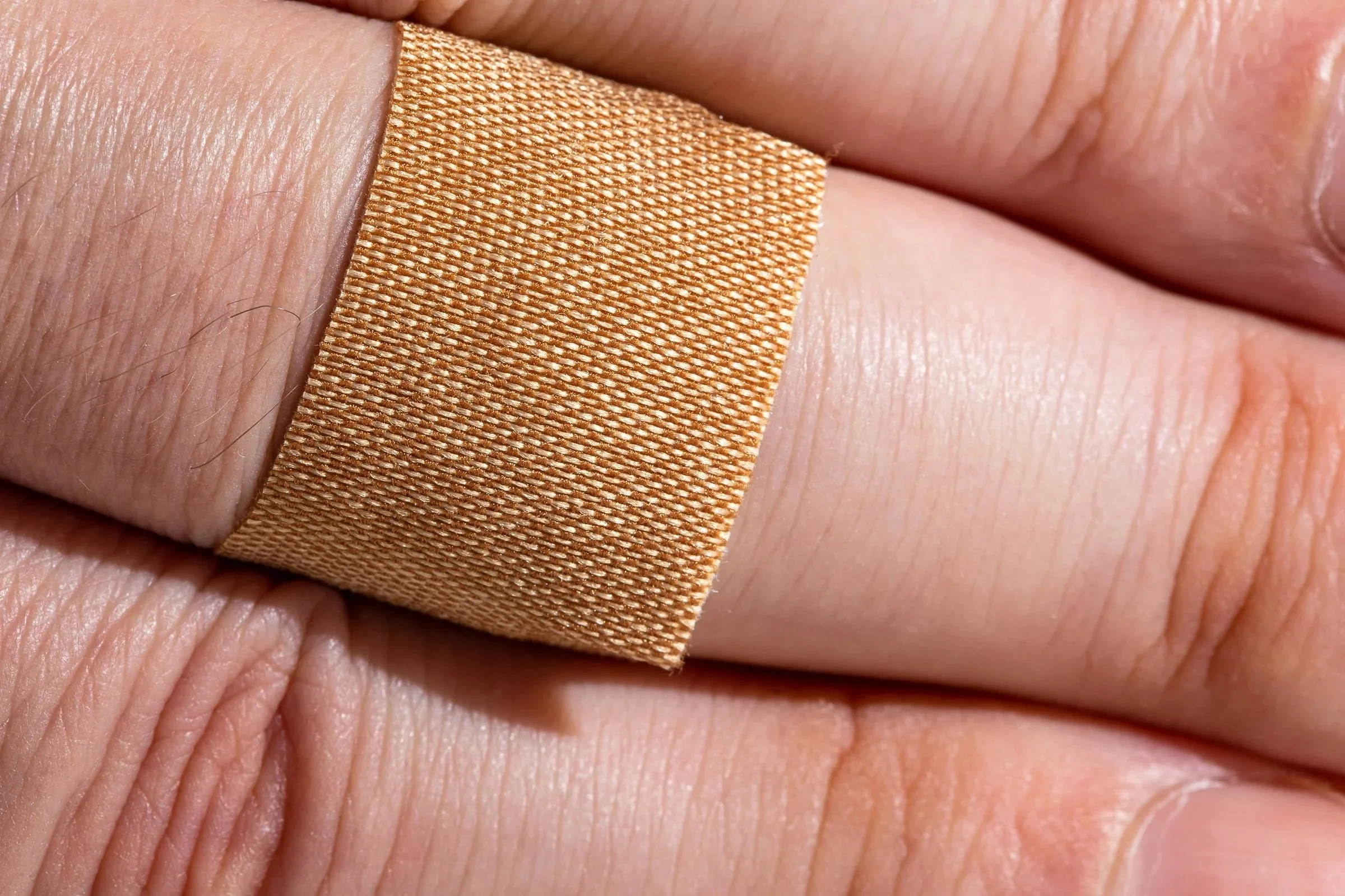
Mona Gohara: And that sticky mesh is essentially a net that traps blood cells, it dries out and becomes a hard crust. It's basically your body's built in band aid, made of, um, dried blood, platelets and fibrin.
But just under the surface, there’s something else flooding the wound too.
Susan Taylor: Immune cells, uh, come in to help fight infection because remember you fell down. It's going to be dirty cement or dirt.
Taylor Quimby: This is Susan Taylor, The Bernett Johnson Endowed Professor of Dermatology at the University of Pennsylvania.
And besides fighting infection, she says those immune cells can have an unfortunate side effect: inflammation.
Susan Taylor: I mentioned those inflammatory cells that are in the wound. They release mediators that cause itching. So it's not the scab itself that causes the itching. It's the healing wound that causes the itching. Right. But since the scab covers the wound, that's what we're going to tug at.
Taylor Quimby: So that’s the basic answer. The itch that makes you want to pick doesn’t come from your scab — it’s what’s going on underneath. And most of the time, it's actually a sign the healing process is working. Needless to say, dermatologists will tell you, you shouldn’t be picking scabs – if you can help it. You want to give the skin underneath time to grow, and cover the wound.
Susan Taylor: Remember, all of your skin cells – we call those keratinocytes – have been scraped off. So the skin cells at the edges are going to start migrating, moving towards each other to seal that up.
Taylor Quimby: And once that’s done, the scab should dry up and flake away on its own. And you should feel victorious, for not succumbing to the itch. But Mona Gohara told me something else surprising: ideally, you don’t want a wound to form a scab at all.
Mona Gohara: Honestly, I bet if you interviewed like 100 dermatologists, they would be like, oh, no scabs. We don't want scabs.
Taylor Quimby: Scabs may be the body’s natural band-aid. But Susan Taylor says you can form an artificial scab that’s going to heal the wound even faster. All you have to do is clean it gently, and cover it in something like Vaseline or Aquaphor.
Susan Taylor: That is going to seal that wound. It's going to provide a very slippery environment for those, uh, keratinocytes to migrate together. It's going to seal out that external environment that's susceptible to infections and all kinds of bacteria.
Taylor Quimby: So whether you scraped your knee or nicked your finger – here’s a handy rhyme to guide you: Keep it moist, clean, and covered in Vaseline.
[MUX IN: Trapped in the Stairwell by Blue Dot Sessions]
Nate Hegyi: Producer Taylor Quimby.
Felix Poon: Nate what’s the scariest wound you had to deal with?
Nate Hegyi: Ohhh, my mom cut herself with a kitchen knife once, and it just started pouring blood. And she had that, I’m okay, I’m okay, I’m okay. And you’re like, noooo.
Felix Poon: But did she lose a finger? Did she lose a digit?
Nate Hegyi: No she didn’t. She didn’t lose a digit. But she had to go to the hospital. And, and she has an aversion to knives now. She doesn’t like touching knives.
Felix Poon: Yeah, that makes sense.
Nate Hegyi: Which, yeah. That’s the scariest I’ve had to deal with.
Felix Poon: Yeah. Our next question is kind of related to this question of wounds. This comes to us from Luke in Richmond, Virginia.
Luke: I am wondering why animals lick their wounds… I see my dog do it, but I don't think humans should. At least I’ve never heard so. And I wonder if animals have something different that makes licking their wounds good for them… or if there's some other story here.
Felix Poon: I’ve always wondered about this too. You know, it’s like, the animals must be on to something, right?
Nate Hegyi: Mmhm.
Felix Poon: And to find out what, producer Justine Paradis looked for an answer.
<<2. Wound Licking>>
Justine Paradis: Wound licking is thought to be instinctual. Not only do dogs lick their wounds – so do cats, rodents, bison, and primates – including humans.
Henk Brand: It’s not only animals doing this. If you in the morning are preparing your sandwiches for lunch and you accidentally cut your finger… You put your finger in your mouth…
That’s Henk Brand, a medical biologist at the Academic Center of Dentistry in Amsterdam.
When animals lick a wound, their tongue is physically cleaning it by removing debris and dead tissue. But there’s also a chemical agent involved: saliva, which is the focus of Henk’s research. Humans actually have plenty of old legends about saliva. From the Scottish Highlands to ancient Rome, and an old French folk saying which translates to “the best doctor medicine is the mouth of the dog.” And it turns out these legends are kinda right. Saliva isn’t just for digestion.
Henk Brand: 99% of saliva is indeed water. However, the other 1%... are the very interesting part.
Jane Sykes: There's a bunch of different proteins and growth factors in saliva that might help with like blood clotting and wound healing. Saliva even contains analgesic substances that might help to reduce pain.
Justine Paradis: This is Jane Sykes, a professor of veterinary medicine at UC Davis.
Jane Sykes: When you actually think about wounds in the mouth – an ulcer, or you lose a tooth – the wounds often heal much faster than wounds on the skin, possibly because of the effect of all of these substances in saliva.
Justine Paradis: This is a little puzzling, because another thing about the mouth is that it is a perfect environment for bacteria. If oral bacteria does find its way into an open wound, it can be very dangerous. There’s this one case study about an immunocompromised individual licking their finger after hurting it in a bike accident – resulting in infection and eventually, a partial amputation of the thumb.
If a dog were to lick that same open cut on a human hand, the risks of a serious infection might be even greater , especially for babies or immunocompromised people. So, turns out the best doctor actually isn’t the mouth of the dog.
But as for a dog licking its own wound –
Jane Sykes: Interestingly, unless a bite wound is involved… we often don't see these particular bugs causing infections in dogs and cats that are just licking their own wounds… they more commonly get infections from growth of bacteria that normally live on the surrounding skin, rather than those that live in the mouth.
Justine Paradis: Still, wound licking can become obsessive and prevent healing. Jane recommends stopping pets from overdoing it, especially if it’s a surgical wound. You can use tools like the Elizabethan collar – more commonly known as the “cone of shame.” Meanwhile, researchers like Henk think there’s a lot of therapeutic potential in the healing agents found in saliva.
Henk Brand: If you purify them and you would be able to synthesize them, you would have a kind of new generation of antibiotics.
Justine Paradis: In fact, his lab has already worked on reproducing one of these wound enhancing factors –
Henk Brand: We were able to synthesize it in the lab artificially. And it now is being added to some gels, etc. to enhance the wound healing effect of those gels.
Justine Paradis: But there are also other effective tools to care for open cuts, almost certainly in your house right now: soap and water. There are alternatives to licking our wounds.
[MUX IN: None of My Business by Arthur Benson]
Nate Hegyi: That was producer Justine Paradis. If you’ve got a question for us, send it to us! The next theme we’re working on is on the topic of love. For a little inspiration, maybe you can ask us what’s going on in our bodies when we’re falling in love? Or out of love? Or maybe whether animals fall in love?
Felix Poon: I guess we could take questions about animal behavior, or reproduction…
Nate Hegyi: Kind of depends on how we decide to interpret this one, yeah. Anyway…. You can record yourself on a voice memo and email it to us at outsidein@nhpr.org. Or you can call our hotline at 1-844-GO-OTTER.
Felix Poon: We recently had someone leave us a question there, and then, right before they hung up.
[MUX OUT]
Kyle: Oh I called 1-800-GO-OTTER which i think you should try to see how funny it is, but it's not 800 its 844.
Felix Poon: I got curious and gave that number a call.
Automated Voice: Hello and congratulations. Just for calling today, we’re offering you a free medical alert device. You know, it’s the little life-saving button you can wear around your neck in case of an emergency. These devices are often very expensive, so press one now to take advantage…
[MUX IN: The Life of a Divorced Bumblebee by Josef Bel Habib]
Nate Hegyi: Our number is 844-GO-OTTER. Give us a call there at the 844 number and leave us your questions.
Nate Hegyi: Alright we’ll be right back.
<<MIDROLL>>
Nate Hegyi: Hey, welcome back to Outside/In a show where curiosity and the natural world collide, I’m Nate Hegyi.
Felix Poon: And I’m Felix Poon.
Nate Hegyi: And today we’re answering listener questions about healing.
Felix Poon: And on that topic, this next question comes from Monica in West Hartford, Connecticut.
We’ve all heard the phrase, “take a deep breath,” and associate it with calming down. So, I was wondering about the science behind breath work, how it works, and why it’s so powerful to regulate the nervous system.
Nate Hegyi: Okay so I’m gonna close my eyes… I’m going to inhale…
Felix Poon: Wait that’s an exhale.
Nate Hegyi: Oh. You said inhale right? I was inhaling.
Felix Poon: What? That sounded like…Okay, okay, okay.
Nate Hegyi: That’s how I inhale all the time. You’ve never heard me breath? I’m always going… [heavy breathing]Anyway, I’m gonna inhale, Felix. My nose is a little stuffy. And I’m gonna pass this on to you.
<<3. Breath work>>
Felix Poon: Can you lead me just to actually what you would do for a healing style of breathing?
Aditi Garg: Yes… This is called diaphragmatic breathing or belly breathing or full yogic breathing… and just this practice calms you down instantly.
Felix Poon: This is Dr. Aditi Garg, a yogic and naturopathic physician, guiding us through a basic yoga breathing exercise. Feel free to join in, if you can.
Aditi Garg: You have to place your left hand on the abdomen, your right hand on the chest. You have to sit comfortably. And then as we breathe in, we will feel our chest is expanding. Also, try to expand your abdomen. Fill it up like a balloon. And as you breathe out, the abdomen comes down. Chest comes down. When it comes to our breath, most of the time we’re not really thinking about it. It’s involuntary. Our body just does it automatically. And how we breathe depends on what's going on around us.
Aditi Garg: So we have two phases of our nervous system. One is the sympathetic nervous system where we are mostly in the fight or flight mode.
Felix Poon: Let’s say there’s a lion chasing you, or maybe a high stakes presentation at work. Your sympathetic nervous system would kick in.
Aditi Garg: you would not want to digest food. You would not want to sleep. You would want to run, your breath becomes shorter, and your heartbeat becomes faster.
And then when the coast is clear, the other phase of your nervous system kicks in, the para-sympathetic system, also known as:
Aditi Garg: “Rest and digest,” which is when you are relaxing, you’re digesting food, you are able to calm down your mind.
Felix Poon: So if our breathing changes depending on which nervous system mode we’re in, does it work the other way around? Because an amazing thing about the breath is that it’s also voluntary – we have the power to consciously change how we breathe. So does changing our breath change the state of our nervous system?
Aditi Garg: Breathing can work as the switch… Maybe change the rhythm, maybe change the, uh, you know, length and breadth.
Felix Poon: So this is essentially what breath work is: any method of modulating the breath. And some studies suggest it can be a powerful tool. Research has shown it can reduce anxiety and depression. Some studies found breath work helped control blood sugar for people with type 2 diabetes. Others have even shown that it can reduce inflammation and boost immune cells that fight off infections. But how does it do this? I spoke to Dr. Carolina Estevao, a neuroscience and mental health researcher. And she says we don’t have conclusive evidence yet.
Carolina Estevao: Breath work is still seen as woo woo. It's not seen as actual science. So it's very difficult to get, uh, public bodies to fund this kind of research. And as a result, we only have very, very small studies that don't really give us that definitive answer
Felix Poon: A lot of research into breath work focuses on the vagus nerve. Think of the vagus nerve as the trunk of a tree. It’s rooted in our brain, then it runs all the way down to our heart, lungs, and intestines.
The idea is that our breathing is connected to the vagus nerve, and we might be able to use breath work to send signals to, say, our cardiovascular system or digestive system. Different techniques are intended to achieve different results.
Carolina Estevao: There are so many different patterns of breathing... There are types of breath work that make you more active, more alert. There are types of breath work that heat you up if you're feeling cold. So it's not just about calming you down.
So, this segment is not intended as medical advice! But Carolina says you don’t have to wait for science to figure this all out before you try breath work for yourself. Diaphragmatic breathing is a good place to start. You can also try alternate nostril breathing, a technique you often see in yoga classes.
Aditi Garg: You can just close one of the nostril and breathe in from the other. Then close the other one and see. You will see that there is some resistance in one of the nostrils, which means that the opposite one is more active at that moment.
Felix Poon: Aditi says the right nostril correlates to that sympathetic, or fight or flight mode of your nervous system, while the left correlates to the parasympathetic, or rest and digest mode. So alternate nostril breathing could help you activate one mode over the other, or bring greater balance between the two. But if you’re looking for something more advanced, Aditi suggests 4-7-8-4 breathing.
Aditi Garg: We breathe in for four counts. Hold the breath for seven counts, breathe out for eight counts and hold the breath again for four counts.
Felix Poon: When your breath stops, your thought stops. And that is why retention of breath is really important. And even if that’s all it does — pausing our thoughts – for many of us, that is a welcome relief.
[MUX IN: Saga Melodies by Rand Aldo]
Nate Hegyi: [Exhale audibly through the mouth]
Felix Poon: Okay Nate, which of your nostrils is more open than the other, left or the right?
Nate Hegyi: Maybe the left one right now?
Felix Poon: Huh, my right one is more open.
[MUX FADE OUT]
Felix Poon: Okay, for our final listener question, we heard from Jenna in North Carolina.
Jenna: What is the best outdoor activity to do to heal your heart after it’s been broken?
Nate Hegyi: This is a great question.
Felix Poon: Producer Marina Henke looked into this one.
<<4. Healing from heartbreak>>
Marina Henke: Answering the question of how to heal from a break-up can feel like a near spiritual task. Love, heartbreak… they’re all pretty squishy feelings.
Sandra Langeslag: What I study is how can people use the way they think or what they do to feel better after a heartbreak.
Marina Henke: Not for Sandra Langeslag. She’s an associate professor of psychological sciences at the University of Missouri in St. Louis. In order to figure out how to recover from heartbreak, Sandra starts with what goes on during heartbreak.
Sandra Langeslag: it changes your emotions… so you may get more what's called sympathetic nervous system activation, which is fight or flight response.
Marina Henke: There’s different theories about why this happens, but a centralizing idea is when a breakup occurs you lose a ‘core attachment figure.’ Leave the psychology language behind… and the phrase that comes to mind from personal experience: lost at sea. Now, there’s LOTS of ways to heal from heartbreak, and probably just as many articles about it online. But Sandra’s particularly interested in something called “negative reappraisal.” I know… this sounds pretty ruthless. But the idea is to focus your attention on the parts of the relationship that didn’t make sense.
Sandra Langeslag: So what mean thing that they said? What is that hobby that you didn't like?
Marina Henke: Sandra found that negative reappraisal can help people feel less in love. BUT when she tested it in a lab, it didn’t make her participants feel any happier.
Sandra Langeslag: And that was, of course, not my intention because I was like I’m going to make these people feel better, but I made them feel worse.
Marina Henke: Which gets us to those outdoor activities. Sandra told me that distracting yourself after a breakup does tend to make people feel better – especially when paired with reflection. And WHAT is more distracting than the great outdoors? Now, Sandra wasn’t going to declare whether rock-climbing or kayaking would do the job better. But, according to the research, nearly 100% of adults have felt heartbreak in some way. So I put out a call – asking people on the internet how they handled their break-ups
CLIPS: I’m going through a breakup right now and one of the only things that genuinely helps is like going for a walk… I’d just moved to a new city and there was a very lovely trail near my apartment… I try not to let myself listen to anything… and I would go on runs every morning and I was NOT a runner… no podcast, no music. And just hear the birds, it’s like the only thing that gets me out of this anxious, very sad headspace.
Marina Henke: The listener who reached out with this question told me that she’d signed up for a watercoloring & backpacking trip after a big breakup. The painting had forced her to concentrate on exactly what was in front of her and the backpacking, in her words, helped her “embrace the suck.” It seems that moving in nature – in any way – helps. And THAT, Sandra could agree with.
Sandra Langeslag: Even though your mind will still have a chance to maybe think abo ut your ex-partner I do think those can be very valuable to help people feel better.
Marina Henke: I noticed that many people gave examples of being alone in nature. One listener who’d never been to her local park before… that is, until her divorce.
CLIP: But now, I would wake up at 6 in the morning. I'd walk 2 miles in, I'd walk 2 miles back out to my car.
Marina Henke: Eventually – she started inviting friends on those walks. And that can also be an important part of the healing process: outdoor activities may be especially promising if they involve spending time with people – social support has shown really positive outcomes for breakup recovery when tested by psychologists. Whether it’s watercoloring or running for the first time – there’s a core idea here: you can help yourself heal….
Sandra Langeslag: Sometimes people will say, you know, love is a natural process. You shouldn't mess with it. And sometimes people even think they shouldn’t!! But, you know, depression is a natural process, cancer is a natural process. We're definitely trying to mess with those.
Marina Henke: Repairing heartbreak isn’t just a matter of time. It’s also what you do with that time.
[MUX IN: High Drama by Matt Large]
Nate Hegyi: Producer Marina Henke. Speaking of heartbreak, if you’ve got questions about matters of the heart, and matters of love, send them our way. You can call and leave a voicemail at 1-844-GO-OTTER. Or, better yet, record yourself on your phone, and email us at outsidein@nhpr.org.
<<CREDITS>>
Nate Hegyi: That does it for today’s episode.
This episode was recorded, produced, and mixed by Felix Poon, Justine Paradis, Marina Henke, and Taylor Quimby.
It was edited by Taylor Quimby, Justine Paradis, and Marina Henke.
Our staff also includes Jessica Hunt.
Taylor Quimby is our executive producer. I’m your host, Nate Hegyi. Rebecca Lavoie is NHPR's director of on demand audio.
Felix Poon: Special thanks to Emily Lovett, Abby Foy, and Evelyn Olmos.
Music from Blue Dot Sessions, Arthur Benson, Josef Bel Habib, Jules Gaia, Rand Aldo, and Matt Large.
Nate Hegyi: Outside in is a production of New Hampshire Public Radio.