Operation Night Cat, Episode 3: A Duck’s a Duck
“Operation Night Cat” is a special three-part series from NHPR’s Document team and Outside/In. We recommend starting with the first and second episodes.
Episode 3: A Duck’s a Duck
Two sets of potential crimes, investigated by more than five sets of law enforcement agencies. Why most of them never took a shot at accountability.
This episode contains strong language. News audio clip credit: WMUR.
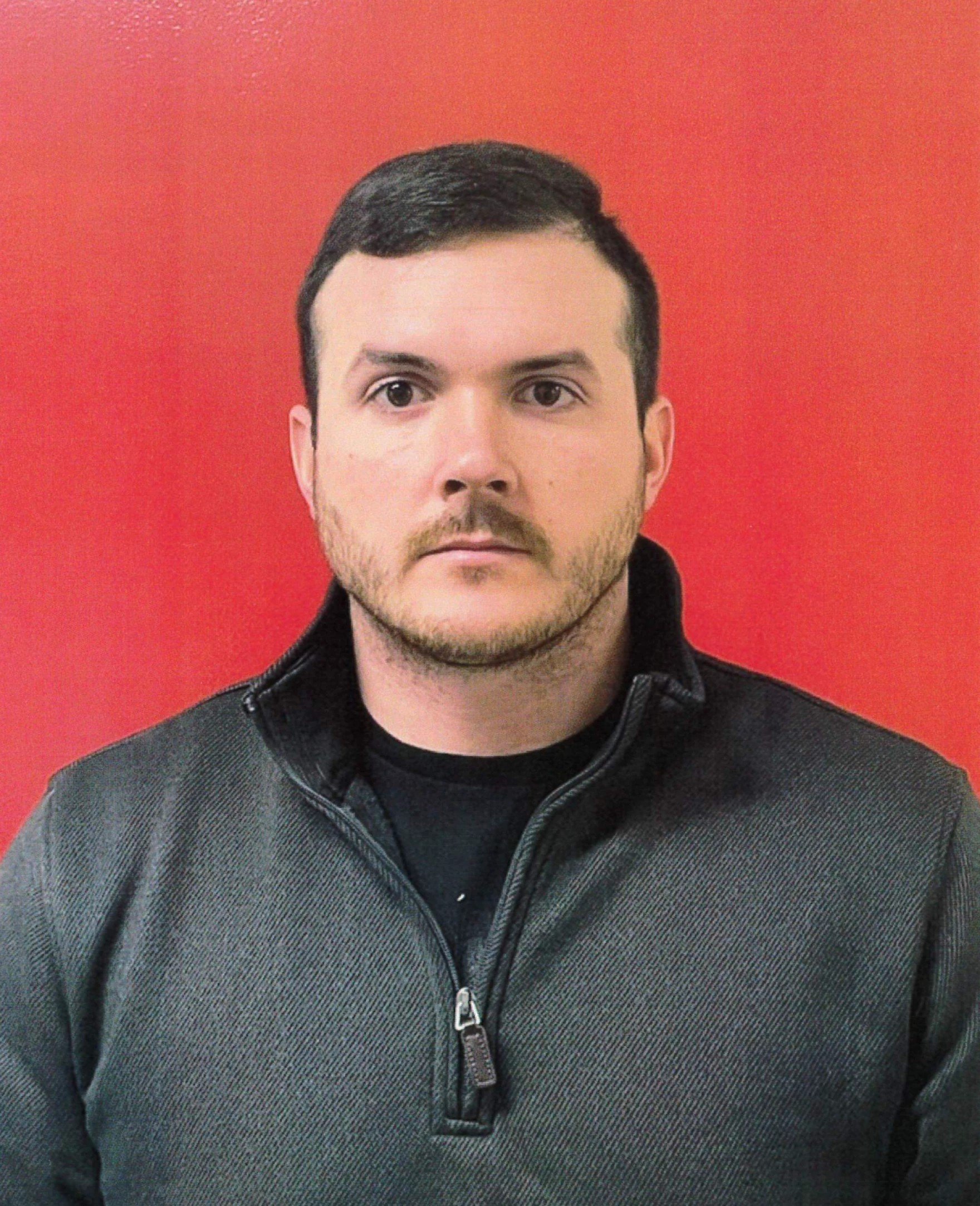
Thomas Kelley. Photo: State of New Hampshire / NHPR Records Request.
SUPPORT
Operation Night Cat is made possible with listener support. Click here to support independent, investigative journalism.
To hear more of Document's investigative journalism, including their three-part series on New Hampshire's YDC scandal, subscribe wherever you get your podcasts.
Follow Outside/In on Instagram or join our private discussion group on Facebook.
Submit a question to the “Outside/Inbox.” We answer queries about the natural world, climate change, sustainability, and human evolution. You can send a voice memo to outsidein@nhpr.org or leave a message on our hotline, 1-844-GO-OTTER (844-466-8837).
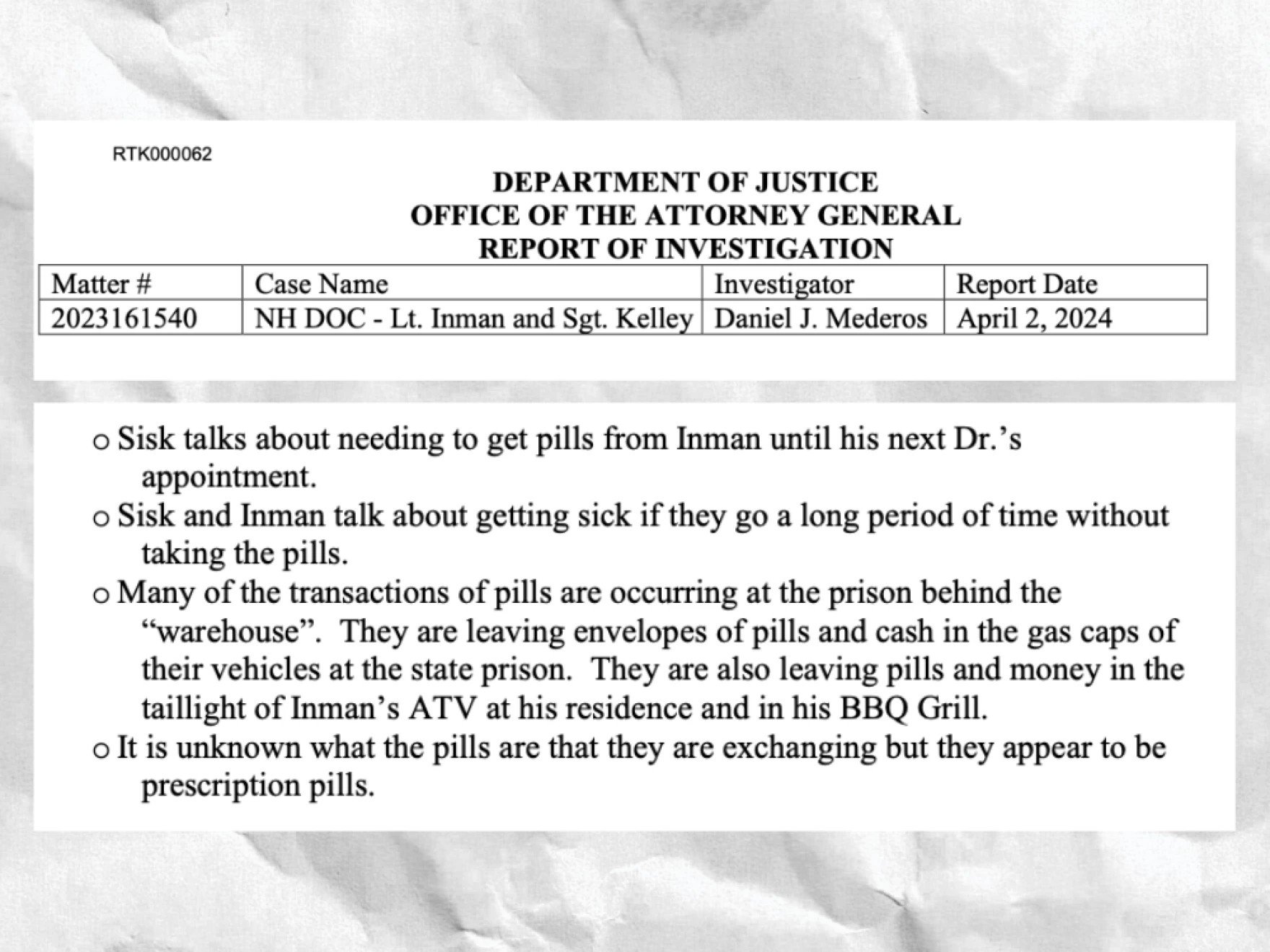
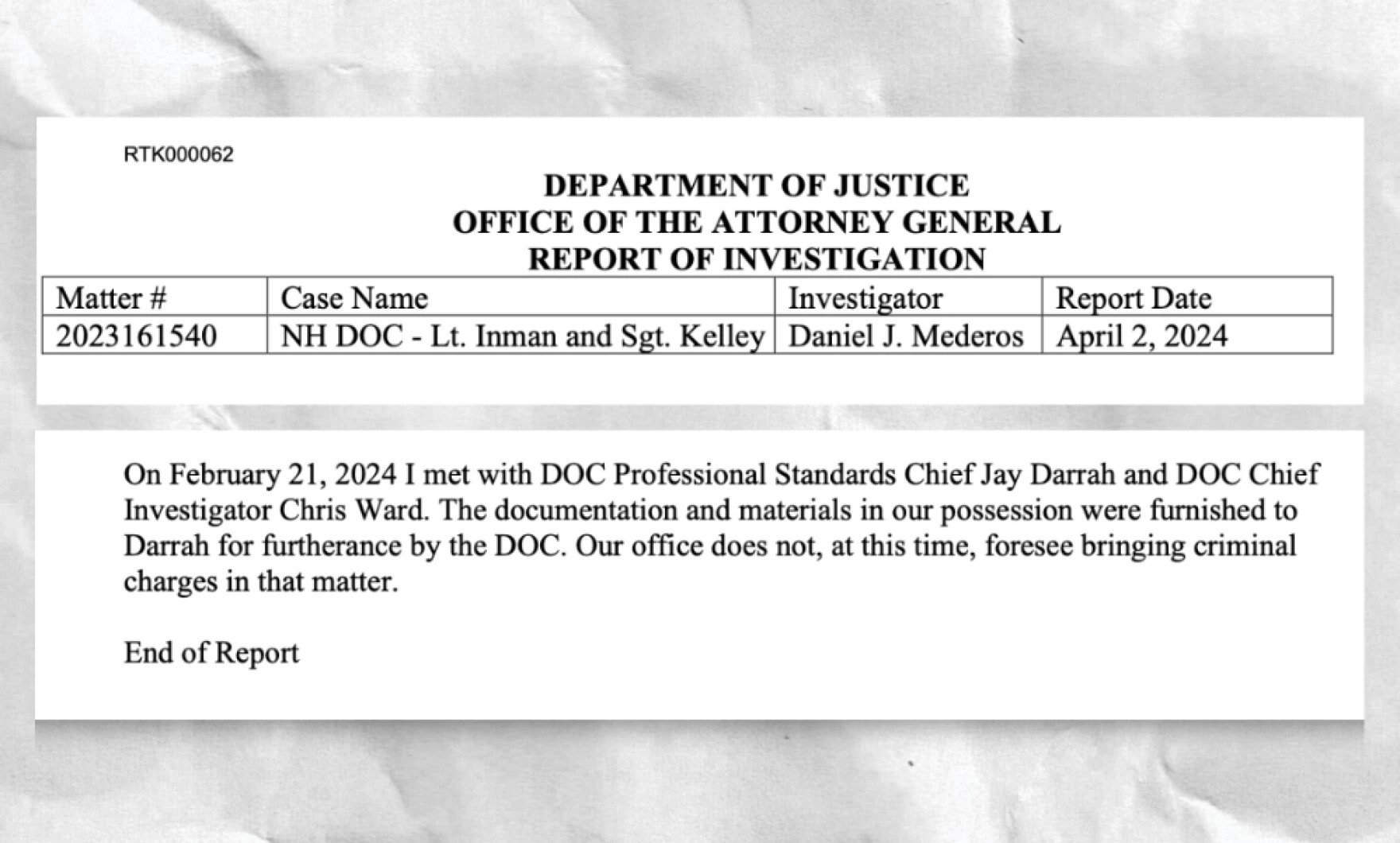
Above: excerpt of documents from the New Hampshire Attorney General’s Office, via an NHPR Records Request.
CREDITS
Operation Night Cat is a special three part series from NHPR’s Document team and Outside/In.
Host: Nate Hegyi
Reporting by Nate Hegyi, Lauren Chooljian, and Jason Moon
Mixing by Jason Moon
Editing by Taylor Quimby and Katie Colanari, with help from Rebecca Lavoie, Jackie Harris, Dan Barrick, Justine Paradis, Felix Poon, and Marina Henke
Outside/In’s Executive Producer is Taylor Quimby
Document’s Senior Editor is Katie Colaneri
Rebecca Lavoie is NHPR’s Director of On-Demand Audio
Original scoring by Jason Moon
Logo art by Nate Hegyi. Bobcat photo by Jill DeVito.
Operation Night Cat is a production of New Hampshire Public Radio
Submit a question to the “Outside/Inbox.” We answer queries about the natural world, climate change, sustainability, and human evolution. You can send a voice memo to outsidein@nhpr.org or leave a message on our hotline, 1-844-GO-OTTER (844-466-8837).
Audio Transcript
Note: Episodes of Outside/In are made as pieces of audio, and some context and nuance may be lost on the page. Transcripts are generated using a combination of speech recognition software and human transcribers, and may contain errors.
Nate Hegyi, narrating: This is Operation Night Cat. I’m Nate Hegyi.
It was a cloudy spring day in 2023 and Fish and Game warden Ron Arsenault had been summoned to an office building near the New Hampshire state capitol in Concord. He walked into a conference room, and sat down at this big, round table.
Nate Hegyi: Can you tell me about that big meeting?
Ron Arsenault: Yeah, well, I-I can tell you there was a lot of people there! [LAUGHS] A lot of different alphabets, you know? It was like four or five federal agencies involved.
Hegyi, narrating: Looking around, Ron saw special agents from the FBI, the IRS, the U.S. Postal Service, attorneys from New Hampshire’s Department of Justice, and investigators from the state’s public integrity unit – corruption busters.
Arsenault: And it was just a meeting of how, how we had started this case, and what we were at, and all the other stuff the other guys were finding at the search warrants. You know, it was just spiraling out and spider webbin’ every different direction. It was crazy.
[MUSIC IN]
Hegyi, narrating: This alphabet soup of law enforcement agencies had assembled because of all the potential crimes that Ron had uncovered during Operation Night Cat. First off, there was the illegal poaching.
Arsenault: Gray fox. Bobcat. Gray fox. Bobcat. Red fox. Red fox.
Hegyi, narrating: Evidence that a group of men were hunting at night, hunting out of season, baiting animals.
Kevin Bronson: It’s like they’re playing Grand Theft Auto up behind their house, except with animals.
Hegyi, narrating: Mostly violations and misdemeanors. But the dead bobcats, a protected species in New Hampshire, were being registered in other states where hunting them is allowed. And that would be a federal crime.
Arsenault: “Hey, we got some bobcats gettin’ cranked in New Hampshire at night, and they're taggin’ ‘em illegally goin’ across state lines.”
Hegyi, narrating: But some of these hunters were also corrections officers at the State Prison for Men where text messages had uncovered a whole host of other potential crimes – witness tampering, falsifying physical evidence, and mail theft.
Shawn Cochrane, on the phone: You have them outrightly admitting that they stole my fucking legal mail! That's a federal offense!
[MUSIC UP AND OUT]
Hegyi, narrating: With all of these potential charges, this was a huge opportunity for law enforcement, but there were also risks.
Arsenault: What the feds were afraid of was a thing called double jeopardy. So if we charge them for a violation for the bobcats, then they basically couldn't because they've already been charged for that.
Hegyi, narrating: The alphabets hashed out a plan to divide and conquer. Each agency got their own set of charges to follow up on, based on their jurisdiction.
Ron and his colleagues at Fish and Game, they would handle the lower level hunting crimes. The U.S. Fish and Wildlife Service wanted a stab at the bigger bobcat charges. Meanwhile, the FBI, the U.S. postal inspectors, and the state Attorney General’s office would look into what was going on inside the prison.
Hegyi: Were you feeling at this point that these guys were going to get their comeuppance for the stuff that they were doing inside the prison?
Arsenault: Uh, yeah, I wa- yeah, I was at the point where, like, “Alright, the people, you know, need, that need to know, know, and, you know, we can concentrate on our hunting violations…” which is what we did.
[THEME MUSIC IN]
Hegyi, narrating: When I was talking to Ron, he told me there are parallels to hunting a deer and tracking a criminal suspect.
Arsenault: Finding of evidence is like the hunt. You catch a poacher that you've been after for years, it's like a big buck for a hunter.
Hegyi, narrating: This investigation into Tom Kelley, Randy Inman, and the other poachers – it was like Ron had stumbled upon the biggest buck of his life.
More than five sets of law enforcement agencies had seen evidence of these alleged crimes. But, when they had them in their sights… most of these agencies never took the shot. Why not?
[THEME MUSIC UP]
Dean Williams, on the phone: It's the embarrassment… the embarrassment to say, how in the world did this happen? How did we get here?
Hegyi, narrating: From NHPR’s Document team and Outside/In, this is Operation Night Cat.
[THEME MUSIC UP AND OUT]
Hegyi, narrating: Episode 3, A Duck’s A Duck.
[BREAK]
Hegyi, narrating: From NHPR’s Document team and Outside/In, this is the final episode of Operation Night Cat. I’m Nate Hegyi.
There’s something I never mentioned up until now, which is that Ron Arsenault is kind of a reality TV star.
For nine seasons, he and his colleagues were the focus of “North Woods Law.” It’s a folksier version of “Cops,” which aired on Animal Planet.
[“NORTH WOODS LAW” OPENING THEME UP – GUITAR MUSIC, HAWK SCREECHES]
“North Woods Law” clip, Narrator: From the White Mountains of the Northeast to the shores of the Atlantic Ocean, the conservation officers of New Hampshire stop at nothing to protect the wildlife.
Conservation Officer: Did you kill the deer? Tell me the truth, right now. [FADES OUT]
Hegyi, narrating: In one moment, you might see a conservation officer dinging someone for catching too many bass. And in the next, another one is rescuing an injured loon.
[“NORTH WOODS LAW” GUITAR MUSIC, SOUND OF LOON WAILING]
“North Woods Law” clip, Conservation Officer: I just really don’t want to stress this thing more than it already is right now. [FADES OUT]
Hegyi, narrating: It’s a pretty family friendly show. But, to me, the twists and turns of Operation Night Cat have always seemed grittier, like something you’d see on HBO.
[MUSIC IN]
Hegyi, narrating: You could imagine the scenes of Tom Kelley, the guy at the center of the investigation, shooting coyotes from the sniper’s nest on his back deck.
[SOUND OF RIFLE CRACKING, RELOADING]
Hegyi, narrating: Scenes of Ron walking through the woods to find Tom Kelley’s bait pile.
[SOUND OF WALKING THROUGH LEAVES]
Hegyi, narrating: And you could imagine it all culminating in a dramatic arrest – officers surrounding Tom Kelley’s house, then bursting through the door.
[MONTAGE OF MOVIE AND TV CLIPS]
“The Matrix”: Freeze! Police!
“Jack Reacher”: Don’t move! Don’t move! Don’t move! Don’t move!
“Midnight Run”: Put your hands up against the wall. Your hands up against the wall!
Hegyi, narrating: But in the end, that’s not how Operation Night Cat went down.
Arsenault: We didn't take him out of his house, you know, kickin’ and screamin’ with handcuffs on. [LAUGHS] So, not like the, the TV shows.
Hegyi, narrating: Ron says he just showed up at Tom Kelley’s door with an arrest warrant and asked him to come down to the local police station.
But make no mistake. Even though they were leaving the big charges to the feds, Ron really threw the book at Tom Kelley.
Nine counts of misdemeanor illegal night-hunting. Sixteen counts of misdemeanor hunting without a license. And nearly two dozen other violations: illegal baiting, hunting out of season, illegally hunting black bears. Forty-seven charges in all.
Arsenault: It was one of those things when we started. I'm like, “I'm not going to cut the guy a break. I'm just gonna write him for everything.”
Hegyi: Yeah.
Arsenault: So, that's what I did. That's why there's so many.
[MUSIC UP AND OUT]
Hegyi, narrating: But then Ron handed the investigation over to the County Attorney’s office to actually prosecute the case.
Arsenault: Once you, basically, ask for help, you lose your control of the case.
Hegyi: What do you mean? When you lose your control of the case?
Arsenault: So, they kind of have control of what they can plea bargain out at the end of the day.
Hegyi, narrating: A plea bargain. Hunting at night and baiting out of season might be a big deal for Fish and Game, but for a county prosecutor, these charges are small potatoes.
Arsenault: They're dealing with murderers and rapists and stuff like that. So, they're like, “Oh, he shot at night. Ok. Well, not a big deal.” They aren’t as invested as the game wardens are.
Hegyi, narrating: Back when Ron was showing me videos of Tom killing bobcats, watching a deer suffer, he told me…
Arsenault: When you take it all together, you’re like, “Oh man, these guys are really bad. Yeah, these guys should never hunt again.”
Hegyi, narrating: But when it came to all those charges against Tom Kelley, county prosecutors struck a plea deal. In exchange for pleading guilty, Tom Kelley’s 47 charges were whittled down to just seven. He was fined a little under $5,000 dollars and lost his hunting privileges for just three and a half years.
Arsenault: And at the end of the day, everybody's like, “Well, you know, you won.” I’m like, “Yeah, we did win, you know. So, I guess we won at the end of the day.”
[MUSIC IN]
Hegyi, narrating: Randy Inman, the prison supervisor, he also got charged with nearly 50 violations. But after the plea deal, it amounted to less than $4,000 in fines, and lost his license for 10 years. The other three guys swept up by Fish and Game in the poaching ring got even less.
Arsenault: Even if it wasn't, like, 100% what we wanted, um, they were found guilty.
[MUSIC UP AND OUT]
Hegyi, narrating: After everything Ron had discovered – the biggest case of his career – this was a small victory. But remember, it was also just one small branch of Operation Night Cat. Ron had taken the first shot, but he knew there were more coming.
[ROAD SOUND FADES UP]
Hegyi, in the truck: Are you still feeling hopeful that… it’ll go through?
Arsenault, driving: I’m still feeling hopeful for the feds, you know, their investigations and stuff… [FADES UNDER]
Hegyi, narrating: But the way these multi-agency investigations work – they’re pretty siloed. Ron wasn’t expecting to be kept in the loop. And when I was driving around with Ron this past spring, all he’d heard so far was silence.
[ROAD SOUND FADES UP]
Arsenault, driving: You won't hear anything.
Hegyi, in the truck: Yeah.
Arsenault, driving: That's just how they work, which, I mean, it's fine, but I just want to know, like… are you still going forward with it?
[ROAD SOUND FADES OUT]
Hegyi, narrating: Still, Ron couldn’t help himself. He felt compelled to check in.
[ROAD SOUND FADES UP]
Arsenault, driving: I feel as though if I didn't do my job, I would certainly hope somebody would be my squeaky wheel to keep me goin’.
Hegyi, in the truck: Yeah.
Arsenault, driving: You know, because somebody needs to keep these people accountable.
[ROAD SOUND FADES OUT, MUSIC UP AND OUT]
Hegyi: Can you hear yourself in the, uh, in the headphones?
Kevin Bonson: I can't hear myself.
Hegyi: Ok, I gotcha.
Hegyi, narrating: Sgt. Kevin Bronson came into our studios at NHPR on an early spring morning. And I brought him into the studio because there’s a whole other thread to this investigation that we haven’t talked about yet.
Bronson: Hello, hello. Oooh, I can hear myself now.
Hegyi: There it is! [BRONSON LAUGHS] It's always a weird feeling to – when you can first hear yourself…
Bronson: Yeah...
Hegyi: …through the headphones.
Bronson: Like with “North Woods Law…”
Hegyi, off mic: Yeah?
Bronson: …when I first heard my voice on TV…
Hegyi, off mic: Yeah?
Bronson: …it was cringeworthy. [HEGYI LAUGHS] [FADES OUT]
Hegyi, narrating: Kevin was one of the Fish and Game officers who worked on Operation Night Cat. He was in charge of investigating another one of the guys in this poaching group – prison guard Randy Inman. Remember, Randy was the supervisor who allegedly helped Tom Kelley cover up an assault on an inmate.
When Fish and Game officers searched Randy Inman’s house back in January of 2023, looking for evidence in the poaching case, Kevin noticed something else.
Hegyi: I want to ask you a very strange question. What did the house smell like?
Bronson: What did it smell like…? Oh, it smelled like weed! [LAUGHS] Yeah. Uh, we, we walked in and we could smell marijuana.
Hegyi, narrating: Marijuana is illegal in New Hampshire. But it’s also been decriminalized. So, if you’re caught with a small amount, you’ll just get a hundred dollar fine.
But officers found a lot of marijuana in Randy’s house. More than 50 bags of weed gummies, dozens of THC vape cartridges, seeds to grow marijuna, and a kit to make edibles.
Most were found in a single room where Randy’s 19-year-old stepson from a previous marriage was staying. And in that room, they also discovered something else – psychedelic mushrooms.
Hegyi: There was a mushroom grow in the house.
Bronson: Yes, yep.
Hegyi: And you don't think that was Randy's? You think it was this kid who was living with him or who?
Bronson: It's hard to say. It was all in a kid's room. It wasn't in Randy's room. I asked Randy that night if, like, uh, what's the deal? Did he know this was going on? He said, “No, I had no idea.” You know, “kids will be kids” type, uh, type attitude. “I don't go in his room.”
[MUSIC IN]
Hegyi, narrating The feds consider psilocybin, the hallucinogenic compound in psychedelic mushrooms, to be a schedule one controlled substance. And growing it carries stiff penalties – up to 20 years in prison.
Randy told investigators he was aware of drugs being inside his house and that some of the paraphernalia found in the living room was his.
Bronson: It was surprising to me that somebody in law enforcement where it's illegal here, I'm smelling marijuana in the house.
Hegyi, narrating: During the search warrant, Randy also tried to hide his cell phone under a rock, but a Fish and Game dog named Winnie literally sniffed it out. From there, Kevin extracted a digital copy of Randy’s texts, photos, and videos.
I’ve seen redacted summaries of these texts in public records. They don’t mention mushrooms in particular. But they do suggest Randy was helping his stepson sell drugs by mailing them to other states.
Other texts suggest Randy was trading prescription pills. He and another corrections officer texted about leaving envelopes of pills and cash… in the gas caps of their vehicles… in the prison parking lot. A supervisor at the prison… potentially dealing drugs at work.
[MUSIC UP AND OUT]
Hegyi, narrating: But Kevin never charged Randy with any drug crimes. Just like the other threads of Operation Night Cat, this was out of their wheelhouse as Fish and Game officers. So, like everything else, it got handed off.
Bronson: We handed off our stuff to the AG’s office I think. And um, the AG ended up taking– I thought they were, I'm… . I'd hope something's still going to come out of it.
[MUSIC IN]
Hegyi, narrating: I’m going to save you the suspense about these other lines of investigation. The drugs. The alleged mail theft and assault. The bobcats crossing state lines. There have been zero charges related to any of it.
What seemed to us – and to Fish and Game wardens – like an explosive set of allegations and evidence… appears to have fizzled away.
So, what happened?
[MUSIC UP AND OUT]
Hegyi, narrating: No one we talked to seemed to know – or at least wanted to tell us – what came after that alphabet soup meeting.
So, our team filed public records requests to find out. And we discovered that almost immediately, the investigation hit a snag.
Before federal investigators could dig into the prison allegations, they needed their own, separate search warrant to get the evidence Fish and Game had already collected. That might sound complicated, but this is actually a pretty straightforward, procedural task.
And they did this. But then the search warrant sat, unsigned, in the U.S. District Attorney’s Office… for months.
Apparently, it sat for so long that the head of New Hampshire’s Public Integrity Unit – the state’s corruption busters – wrote a letter to the U.S. District Attorney, basically saying, “What’s the deal?”
The clock was ticking and the state had paused its own investigation to let the feds take first dibs. And in this letter, the head of the Public Integrity Unit wrote, quote, “Any potential state level crimes are becoming stale.”
[MUSIC IN]
Hegyi, narrating: Now, whatever the reason for the delay, documents show that a several weeks after that strongly worded letter, the search warrant was signed and executed.
But then, not long afterwards, the FBI and the U.S. Postal Inspection Service decided not to pursue any charges.
[MUSIC UP]
Hegyi, narrating: We asked the U.S. Attorney’s Office why they decided not to prosecute and they gave us a pretty curt reply. Quote, “Justice Department policy is to not discuss internal deliberations. We also do not confirm or deny the existence of investigations.”
After the feds declined to pursue charges, they handed the investigation back over to the state’s public integrity unit. The job of this unit is to prosecute wrongdoing by government officials like cops, state politicians, or prison guards. Then, just like the feds, they suspended any further criminal investigation.
[MUSIC UP AND OUT]
Mike Lewis, on the phone: It's strange. It's almost as if they're like, there's this, like, concession that, you know, some level of violence like this is gonna happen regardless of any articulated justification in a corrections situation.
Hegyi, narrating: This is Mike Lewis. He’s a former prosecutor with New Hampshire’s Justice Department.
When our team first got a hold of all of Tom Kelley and Randy Inman’s prison texts, it seemed like an open and shut case. The stolen mail, the beating, and the cover-up – it’s all laid out right there. But… we are not lawyers and what seems like solid evidence to the public, might not cut it in a courtroom.
Hegyi: Putting on your, your prosecutor's hat for a, for a second… You've seen these texts. Are the texts enough to charge someone?
Lewis, on the phone: The texts alone are not enough… But the texts are really concerning. I mean, they really are concerning.
Hegyi, narrating: What Mike Lewis sees here is an investigation that never really got off the ground. The text messages should have been the starting point for interviews or more records that could bolster a case.
Lewis, on the phone: You would want, um, you know, to see documented photographic evidence. You would, um, want to interview the victim and any other third party witnesses.
Hegyi, narrating: But from the documents we received, there’s no indication that took place.
Lewis, on the phone: They’re all hard cases to investigate and prosecute. But, you know, hard cases are just as worthy of thinking about as easier cases. Even if your, your interests in freedom are substantially, substantially diminished to almost nothing when you're in prison, um, that doesn't mean that, like, you know, it's open season on hurting you.
Julian Jefferson, on the phone: The whole point of the Public Integrity Unit is to take investigations further and find facts if they believe there's obvious gaps.
Hegyi, narrating: This is Julian Jefferson. He’s a law professor and former New Hampshire public defender. Like Mike, Julian agreed that the texts alone wouldn’t be enough to win a case in court. But also that everything we saw should’ve merited a more rigorous investigation.
Jefferson, on the phone: Particularly, uh, with the drug piece. You know, I, over, you know, years now have been representing people where the police are actively patrolling the streets, looking for evidence of drug users using, uh, and then charging them with possession of a controlled drug. Then to look at this evidence where you have these text messages of people in positions of authority – who on its face certainly seems like, you know, they are exchanging in potentially, you know, illegal drugs – that there's not this aggressive response to it. You know, and you can look at those things and say, “This feels unfair. You know, this feels unbalanced.”
Hegyi, narrating: We reached out to the New Hampshire Department of Justice to ask what happened and the spokesperson emailed us a statement. He said that while some of the findings were, quote, “concerning,” there wasn’t enough proof to bring criminal charges beyond a reasonable doubt. Instead, he told us, quote, “accountability has been administrative rather than criminal,” end quote.
And here’s what that means.
[MUSIC IN]
Hegyi, narrating: After all the other agencies passed on pursuing charges, the Department of Corrections conducted their own investigations – basically, HR reviews.
During those investigations, Randy Inman retired. He’s still pulling a pension from the state.
Chris Masse – the guy Tom Kelley was texting with about the stolen mail – he was demoted.
And Tom Kelley? Well, Tom Kelley was fired.
In his dismissal letter, the prison warden said Tom’s conduct would, quote, “cause a reasonable person to doubt the individual’s honesty, fairness, and respect for the rights of others and for the laws of the state or nation.”
[MUSIC UP]
Hegyi, narrating: There is still one thread in Operation Night Cat that may still be open. At one point during this past summer, Ron Arsenault was sure a federal indictment from the U.S. Fish and Wildlife Service was coming. I called him up to talk about it.
Hegyi: Hey Ron, can ya hear me?
Arsenault, on the phone: Hey, yeah!
Hegyi: How ya doin’?
Arsenault, on the phone: Good!
Hegyi, narrating: This is about the bobcats – the charges Fish and Game left to the feds to avoid double jeopardy. Ron had sources who told him charges were gonna be comin’ any day now.
Arsenault, on the phone: Yeah, I mean, glad they're doing something with the whole case. And, I mean, we did get them for some stuff, but we were pretty light, you know, in the contingent that they're going to be doin’ something.
Hegyi, narrating: But then, the indictment never came. That was months ago. And Ron is still waiting.
[MUSIC UP AND OUT, NEW MUSIC IN]
Jason Moon, narrating: Investigative reporting takes a lot of time. It’s also expensive. And it’s a team sport.
I’m Jason Moon, one of the producers of this series. Operation Night Cat took a whole year to report and a lot of behind-the-scenes work to deliver.
As you heard in the last episode, we sued the state for access to public documents. We drove roughly 1,700 miles around New Hampshire to interview sources and get documents. We paid fees to get court records. And we hired a fact-checker to confirm every detail in this story.
We know these costs are worth it to bring you the truth. But we also know we can’t do it without your support – especially now.
Federal cuts to NHPR, the station that produces this podcast, have reduced our funding by hundreds of thousands of dollars.
You can make a gift right now on your phone with Applepay or on the app of your choice. All you have to do is just hit the link in the show notes. And thank you.
[MUSIC UP AND OUT]
[BREAK]
Nate Hegyi, narrating: This is Operation Night Cat. I’m Nate Hegyi.
We tried to reach out to Tom Kelley and Randy Inman for this story. I called, I emailed, I texted, I wrote letters.
Tom pointed me to his lawyer, who didn’t agree to a recorded interview, but said the prison allegations were, quote, “a lot of hot air and gas.” He also said that Tom Kelley didn’t break the law because – again – no criminal charges were filed.
The lawyer told us that Tom is appealing to try to get his job at the prison back. And that his hunting violations were, quote, “minor.”
As for Randy Inman, I never heard anything from him. I did hear from someone else though… his ex-wife, Shannon Labella.
Shannon Labella, on the phone: It's just disgusting in every way and I'm disgusted I was ever a part of his life.
Hegyi, narrating: Shannon reached out to me after we published a news story about these investigations. And she corroborated one of the allegations suggested by state documents – that Randy was using prescription painkillers.
She said he had all sorts of substance abuse problems during their marriage, especially with prescription pills and alcohol. But she denied that her son had anything to do with the psychedelic mushrooms Fish and Game found at Randy’s house.
Hegyi: What was it like to be married to a guy who works inside that prison?
Labella, on the phone: Um, it was constant, um, overtime and just stress. Understaffed and fights and, you know, just seemed like not much control in there. And everybody did whatever they wanted as long as they didn't call in sick or refuse overtime. [HUMPHS]
Hegyi, narrating: Shannon also filled in more details on Randy’s hunting and trapping. That he was always out with his buddies. She says they could be reckless and violent.
Labella, on the phone: I went a lot of times. Not all the time, but pretty often. And one day, they were just shootin’ under a bridge at pigeons. No rhyme, no reason. They weren't usin’ it for bait or for any other purpose besides just to kill ‘em. And after that, I never went with them again.
Hegyi: Why do you think he liked… killing so much?
Labella, on the phone: Control. Power. Dominance. ‘Cause that's what he could do at work. I mean, he had total control. And when he was home, and, you know, we'd have an argument and he wouldn't be in control of it. You know, he made sure he regained it some way, somehow, by any means necessary.
Hegyi, narrating: Back in 2015, Randy was charged with assaulting Shannon. But she told me she was too afraid to take the stand and testify against him. The case was dismissed. He continued working in the prison for another eight years.
Labella, on the phone: I don't know if he's just a wolf in sheep's clothing or if it had to do with his job. Like I said, there is no job out there stressful enough that drives you to kill innocent things that have never harmed you a day in your life. So, to me, that's nothing but an excuse he's made for the horrible things he's done.
[MUSIC IN]
Hegyi, narrating: After talking to Shannon, I reached out to Randy one more time for his side of the story. He never responded.
[MUSIC UP AND OUT]
Hegyi: So, let's just start it off– Actually, first, Dean, do you want to give me your first and last name, uh, and the kind of work you did and do now?
Dean Williams, on the phone: Yeah, so, uh, my name is Dean Williams. Um, I'm the former executive director of the Colorado Department of Corrections. And before that, I was the commissioner of the Alaska Department of Corrections.
Hegyi, narrating: I wanted to get another perspective on what happened with this case from someone outside of New Hampshire. Dean has led two different state corrections departments and when he read the investigation reports and the text message threads, it set off alarm bells. But it also didn’t really surprise him.
Williams, on the phone: Corrections is an interesting world… um, because unlike most other public entites… You know, if there’s a plane crash, for example, it's thoroughly investigated. Right? Because you want to learn from the mistake. You want to learn why it happened to try to teach others and to – in case there's mechanical issues – so it doesn't happen again. Um, that's not what happens, though, in penal systems. There's a lot of pressure on corrections leaders to sort of, ah, bury things.
Hegyi, narrating: Dean told me that you’ll often hear two arguments on why criminal investigations in prisons get buried – the cost if victims sue and…
Williams, on the phone: It's the embarrassment. It’s the embarrassment to say… how in the world did this happen? How did we get here?
Hegyi, narrating: And that’s the kind of situation the state of New Hampshire knows all too well.
[WMUR NEWS THEME MUSIC]
Female Newscaster: Most victims of the systemic, decades-long abuse at the Youth Development Center are still waiting for settlement checks from the state… [FADES OUT]
Hegyi, narrating: Five years ago, a former resident of the state’s juvenile jail came forward. He said he was physically and sexually abused there.
And then, a dam broke. More and more victims came forward – more than 1,000 of them, including Shawn Cochrane, the guy from the last episode. These allegations span more than six decades… a culture of abuse that was taking place, unchecked, behind another brick wall.
The millions of dollars in settlements being paid by the state over this scandal – AKA, being paid by you, the taxpayer – are just one way to measure the cost.
[MUSIC IN]
Hegyi, narrating: And over and over and over again, people have wondered… how could this have happened?
Williams, on the phone: If you start down the road and say, “Well, look, this is embarrassing to us. This is going to make us look bad. This is going to cost us some money,” and that becomes the driving factor, it perpetuates and reinforces… this is the way we do business. And so, then, you have another event. Then you have another event after that. And these things, you know, becomes a chronic issue. And that's where systems get, get messed up, they get screwed up. Man, it will cost you sooner or later, but it will cost you way more than if you just fixed it to begin with.
[MUSIC UP AND OUT, SOUND OF FOOTSTEPS, WALKING INTO AN ECHOEY BUILDING]
Hegyi: I gotta say, Ron. This lake is, uh, beautiful in the fall!
Arsenault: Isn't it?
Hegyi: It's gorgeous!
Hegyi, narrating: The last time I met up with Ron Arsenault was in October of 2025. I was there to show him the report from the state saying they wouldn’t pursue criminal charges against Tom Kelley, Randy Inman, and the other corrections officers.
Now, up to this point, as far as he knew, the case was still open. Nobody had ever told Ron the state closed the case.
Hegyi: Take your time. It's about nine pages...
Arsenault: Really…
Hegyi: I mean, you can read through it or we can read– We can go to the end, which is the thing I really want to show you.
Hegyi, narrating: We sat quietly as Ron read through the report on my phone. Now, normally, Ron has the energy of a labrador retriever. But now, he looked tired and shutdown.
Hegyi: How does that make you feel?
Arsenault: Mm? It just makes me feel like there’s just no accountability. You know? That’s what it really comes down to.
Hegyi, narrating: Remember, Ron went above and beyond his line of duty to report what he had found. He spent hours pouring through text messages, calling attorneys, hoping there would be justice.
Arsenault: And after goin’ through all of it? You know, at the end of the day, I don't know if I'd do it again… because of all the stuff that just happens. It's like, you just did all that work… for what?
Hegyi, off mic: Yeah.
Arsenault: You know, and it's like, ugh. So, i-it just grinds on you, you know, and eventually, like, alright, I'm done. I'm a game warden. I'm findin’ out the hunting violations. That's what I'm, I'm here for. Uh, I'm not here for the drugs or the mail or, you know, the integrity units. Like, that's not my problem. I pointed that out and if they want to go with it, go with it,. You know, we have a thing, um, when a law enforcement officer finds, you know, violations, they have the duty to report, which is exactly what I did. And, you know, we’re taught, you know, “Oh, report all this stuff.” You know, it goes all the way down to, like, sexual harassment. You know, everything! “Report it and we'll do somethin’. Report it.” Bullshit. [LAUGHS] You know? It’s, it's like, “Ok, yeah you will. And then you won't.”
Hegyi: Why do you think they don't, they don't pursue charges on stuff like this?
Arsenault: ‘Cause it makes ‘em look bad! It's gonna make the, the state agency look bad and they're tryin’ to save face. I don't know if I'm supposed to say that or not, but it is what it is. And duck’s a duck.
[MUSIC IN]
Hegyi, narrating: When I met up with Ron, he was supposed to be getting dressed up for a big ceremony. New Hampshire’s congressional delegation had selected him for a unit citation award for his work on Operation Night Cat. But it was postponed because of a government shutdown. So, all he had was a letter from U.S. Sen. Jeanne Shaheen.
Arsenault: It's just a letter with an award, basically sayin’, “You did a good job.” I did my job. [LAUGHS QUIETLY]
Hegyi: Does that do anything for you at all? You have a letter from a U.S. senator?
Arsenault: No, no… It's cool, but at the end of the day, yeah, I mean, it'll probably go somewhere in a file. My wife will put it somewhere and…
Hegyi: Not gonna be framed?
Arsenault: Nah, I got my pictures of the eagles and stuff on my walls. Can't take them down. [LAUGHS]
Hegyi, narrating: So, the letter will go into a file somewhere in Ron’s house… just like the investigations into Tom Kelley, Randy Inman, and the other corrections officers are most likely tucked away into hard drives or file cabinets in some government building. Just like that video of Tom killing a bobcat is probably sitting on a laptop somewhere at the U.S. Fish and Wildlife Service office in Boston.
In that video, for a brief moment, after the rifle fires and a game camera flashes – everything is illuminated in light. The naked eye can see it all. The dead bobcat. The white snow.
And then, just as quickly, everything goes dark again.
[MUSIC UP AND OUT, THEME MUSIC IN]
Hegyi, narrating: Operation Night Cat is a special three part series from NHPR’s Document team and Outside/In.
If you liked this series, check out more of Document’s incredible accountability reporting, including their three-part investigation into the scandal at YDC. It’s called The Youth Development Center. There’s a link in the show notes.
If you liked this series, you might want to check out my weekly show – Outside/In. We did another three-part series a few years back about a scandal inside the world of competitive dog-sled racing. It was called The Underdogs. There’s a link in the show notes.
This episode was reported and written by me, Nate Hegyi, with help from Lauren Chooljian and Jason Moon.
Jason produced and mixed this episode. He also wrote the music.
It was edited by Taylor Quimby and Katie Colaneri, with help from Rebecca Lavoie, Jackie Harris, Dan Barrick, Justine Paradis, Felix Poon, and Marina Henke.
Fact Checking by Dania Suleman. Photography by John Tully, which you can check out at our website, NHPR.org/NightCat.
The bobcat photo in our logo comes from Jill DeVito.
Special thanks to Bill Chapman.
Taylor Quimby is the executive producer of Outside/In. Rebecca Lavoie is director of On-Demand at NHPR.
And Operation Night Cat is a production of New Hampshire Public Radio.
[THEME MUSIC UP AND OUT]